

Table of Contents
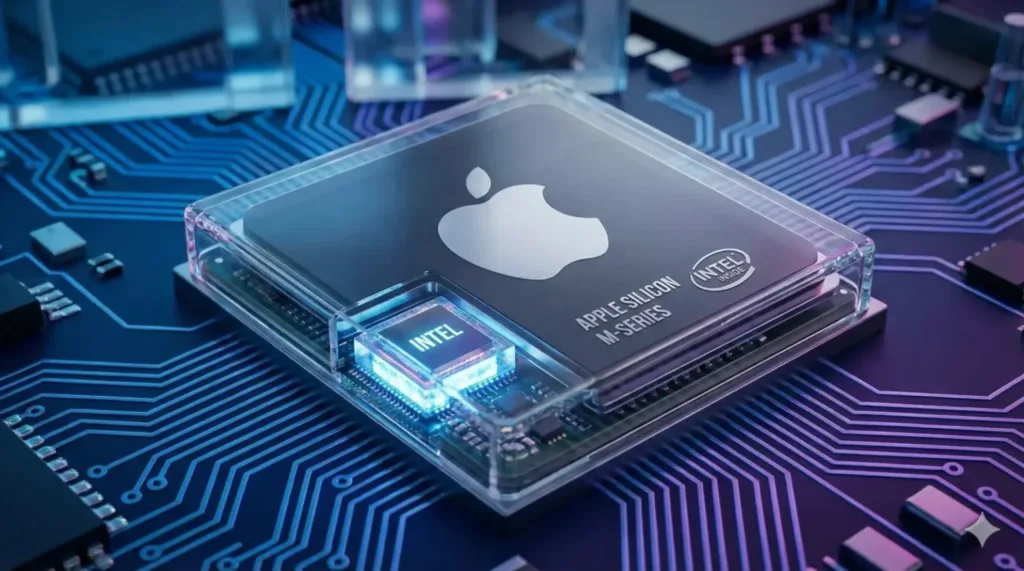
Apple and Intel are entering a new phase of collaboration, as Intel prepares to produce Apple’s lowest-end M-series processors using its cutting-edge 18AP advanced node technology. This development, set to begin production in 2027, represents a dramatic change from the way the two companies previously worked together and heralds a strategic shift in Apple’s manufacturing and supply chain strategy. We examine the full context and implications of this renewed partnership, clarifying what it means for Apple, Intel, and the broader chip industry.
Apple’s Return to Intel Manufacturing with the 18AP Advanced Node
Back in 2020, Apple made headlines by ending its long-term reliance on Intel chips for Macs and transitioning fully to its own Apple Silicon. These custom-designed M-series chips delivered superior performance and energy efficiency, helping Apple take full control over its hardware architecture. Since then, Apple has designed and fabricated nearly all its Mac and iPad processors using Taiwan Semiconductor Manufacturing Company (TSMC), a global leader in semiconductor foundry services.
Now, less than five years later, Intel is preparing to manufacture Apple’s lowest-tier M-series chip, but this time under very different circumstances. According to analyst Ming-Chi Kuo, Intel will ramp up production using its 18AP advanced node by mid-to-late 2027. The 18AP node represents one of Intel’s most advanced semiconductor fabrication technologies, capable of producing chips with higher efficiency, faster speeds, and smaller footprints.
During recent internal testing, Apple used a design kit provided by Intel that demonstrated promising performance results. The full design kit is expected to reach Apple by early 2026, allowing Apple’s engineers to finalize designs well before Intel begins mass production about 18 months later. The initial chips produced on Intel’s 18AP node target Apple’s MacBook Air and iPad Pro lines, which ship between 15 to 20 million units annually. This volume represents a significant scale for Intel’s advanced foundry ambitions.
Read more on our article, Apple Cyber Monday iPad Mini Deal Shocks Shoppers With a Huge Price Drop, published on December 2, 2025 SquaredTech.
A Reversal of Roles in Chip Design and Manufacturing
The partnership between Apple and Intel in the 2020s contrasts sharply with their previous relationship. During Apple’s original use of Intel chips, Intel controlled the entire chip design and roadmap. Apple was effectively a customer who had to follow Intel’s development timeline and architectural decisions.
Today, Apple fully owns the intellectual property for its M-series chip designs. Apple engineers design the chips in-house, and Intel’s role is purely as a foundry partner—manufacturing chips according to Apple’s precise specifications. This dynamic change puts Apple in the lead, directing the production process, and selecting which chips to have manufactured by Intel. Apple’s control ensures the company maintains ownership of technology innovation and strategic product direction without outsourcing key design decisions.
This change reflects Apple’s evolution into a vertically integrated chip creator. It also reflects Intel’s push to expand beyond its traditional CPU design business into semiconductor manufacturing for external clients, moving aggressively into the foundry market where companies like TSMC currently lead.
Strategic Benefits for Apple and Intel from the 18AP Partnership
This renewed cooperation aligns with the strategic interests of both companies but fulfills very different corporate objectives.
For Apple, sourcing some M-series chips from a US-based manufacturer such as Intel addresses geopolitical and supply chain concerns. The Biden administration and previous US policies have encouraged companies to increase domestic semiconductor production to reduce dependency on Taiwan — a region subject to political risks and global supply chain disruptions. Adding Intel as a second advanced-node foundry decreases Apple’s reliance on TSMC and broadens its manufacturing base. This move strengthens Apple’s supply resilience and also supports local manufacturing initiatives. However, for now, TSMC remains Apple’s primary supplier for higher-end M-series variants such as M-Pro, M-Max, and M-Ultra, as well as for all iPhone A-series chips.
Intel benefits from this deal by gaining a high-profile customer in Apple to validate its 18AP manufacturing capabilities. Successfully producing Apple’s advanced silicon chips enhances Intel’s reputation as a competitive foundry and may attract other leading technology firms to Intel for chip production. This diversification enables Intel to grow its semiconductor foundry business — a market currently dominated by Asian manufacturers — and prove its capacity to meet the exacting standards of a company like Apple.
Future Implications for the Semiconductor Industry
Apple’s decision to collaborate with Intel for the 18AP advanced node marks an important shift in the semiconductor landscape. This partnership reflects growing industry trends emphasizing geographic diversification and supply chain stability.
While TSMC remains dominant, companies are increasingly hedging their manufacturing strategies by working with multiple foundries, especially with rising geopolitical tensions. Apple’s choice to use Intel adds competition to the foundry market, potentially driving innovation and capacity expansion.
Intel’s role as a foundry for Apple chips also signals the company’s larger ambitions. Intel aims to become a major player in the contract chip manufacturing business, challenging established leaders by leveraging domestic production capabilities and advanced technologies like 18AP. If Intel can consistently meet Apple’s high standards, it could catch the attention of other top-tier customers seeking alternatives to TSMC.
Conclusion: What This Means for Apple’s Chip Future
At Squaredtech, we see Apple’s engagement with Intel’s 18AP advanced node as a carefully calculated business and supply chain strategy. Apple is broadening its manufacturing partnerships while retaining strict control over chip design and innovation. Intel steps into a new role as manufacturing partner, supporting Apple’s chip vision with its advanced 18AP process technology.
This partnership highlights the evolving semiconductor ecosystem’s complexity, which balances cutting-edge technology with geopolitical strategy and supply chain risk management. Apple’s renewed collaboration with Intel not only strengthens domestic chip production options but also signals new competitive pressures and opportunities in the semiconductor foundry sector.
As Intel prepares to produce Apple’s M-series chips starting in 2027, this will be a story to watch for industry analysts, technology enthusiasts, and anyone interested in the future of chip manufacturing innovation.
Stay Updated: TechNews

