Table of Contents
Valve’s Steam Machine is returning in early 2026 with powerful PC-level hardware, but a new pricing shift confirms it will cost much closer to a desktop PC than a traditional console. This change could reshape the next console cycle and give Xbox an unexpected advantage. Here is everything our editorial team has verified from early information.
Steam Machine Pricing Aligns With PC Costs
Valve engineer Pierre-Loup Griffais confirmed that the new Steam Machine will not follow the traditional console model of selling hardware at a loss. Instead, it will match the price of comparable PCs. Linus Tech Tips also reported that Valve intends to price the Steam Machine competitively, but without relying on game sales to recoup hardware costs.
This points to a base price around $700, a significant jump over typical console pricing. Many gamers expect consoles to remain below the $500 mark, placing the Steam Machine closer to mid-tier gaming PCs rather than living room consoles.
A major driver of this pricing challenge is the rising cost of PC components, especially RAM. Valve plans to equip the Steam Machine with 16GB DDR5 system RAM and 8GB GDDR6 VRAM, both crucial for high-resolution gaming. Industry analysts warn that RAM prices could increase further over the next two years, adding more pressure on system pricing.
Other factors such as tariffs, semiconductor shortages, and global supply chain issues also contribute to higher hardware costs. Although Valve hopes to offset some expenses through bulk component purchases, the company remains committed to offering hardware at cost rather than using subsidized pricing like Xbox and PlayStation.
Read more on our article, PlayStation 2025 Black Friday Deals Reveal a Massive Price Drop on the PS5 Lineup, published on November 24, 2025 SquaredTech.
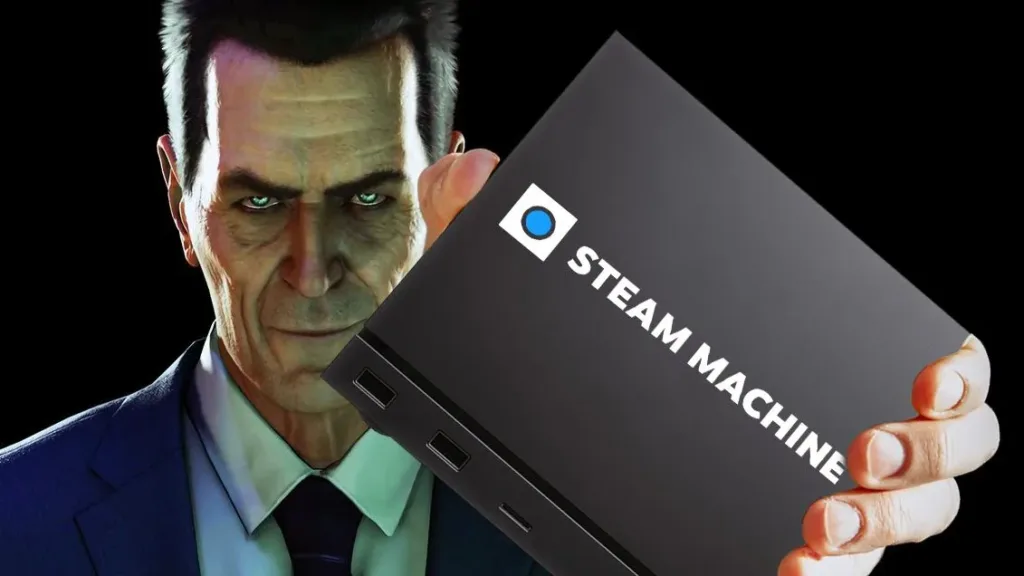
Image Source: Windows Central
Advanced Steam Machine Specifications and Features
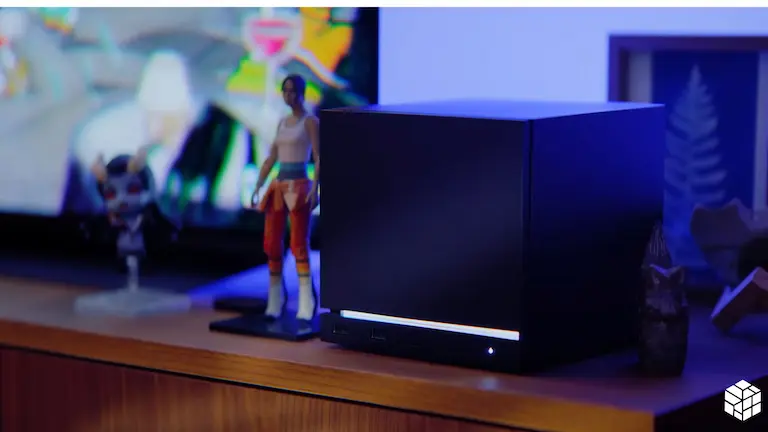
The new Steam Machine aims to deliver a true PC gaming experience in a compact chassis. It runs on a semi-custom AMD Zen 4 processor with six cores and twelve threads, capable of reaching up to 4.8GHz while staying within a 30W power envelope. This performance level is comparable to many mid-tier desktop gaming CPUs.
Graphics come from a semi-custom AMD RDNA3 GPU with 28 compute units and a sustained clock of up to 2.45GHz. With a 110W power target and GPU power similar to a Radeon RX 7600, the Steam Machine is expected to support native 4K output at 60 frames per second. AMD’s FidelityFX Super Resolution will allow even smoother performance without major sacrifices in image quality.
Storage options include 512GB or 2TB NVMe SSDs, with an additional high-speed microSD slot for expandable storage. Connectivity features include Wi-Fi 6E, Bluetooth support and multiple display outputs such as DisplayPort 1.4 and HDMI 2.0. The system supports resolutions up to 8K with HDR and FreeSync.
Valve will ship a redesigned Steam Controller with improved haptics, gyro functionality and dual pressure-sensitive trackpads. The device’s compact dimensions and two-kilogram weight make it more portable than most modern consoles.
With this configuration, the Steam Machine approaches the performance of the Xbox Series X and PlayStation 5, but in a more flexible PC-style form factor.
Xbox Stands to Benefit Amid Pricing Uncertainty
Microsoft may gain a major advantage from Valve’s pricing strategy. Rumors indicate the next Xbox will arrive in 2026 with a hybrid console/PC architecture priced between $600 and $700, comparable to the Steam Machine but bolstered by a much stronger game ecosystem.
Xbox’s advantage remains its content library, especially Xbox Game Pass, which continues to attract players despite recent subscription price increases. Microsoft’s growing cross-platform strategy and backwards compatibility initiatives add extra value for newcomers.
There are also strong rumors that the next Xbox will support native Steam integration, potentially letting players access both Xbox and Steam libraries on one device.
Meanwhile, PlayStation’s next-gen console, expected around 2027, may aim for a lower price point of $500–$600, maintaining Sony’s strong position through exclusive titles and long-standing brand loyalty. If Valve adheres to PC-like pricing, Sony and Microsoft could solidify their dominance among mainstream console buyers.
Here is how early comparisons look:
| Feature | Steam Machine | Next Xbox | PlayStation 6 Rumors |
|---|---|---|---|
| Estimated Price | $699 | $600–$700 | $500–$600 |
| Subsidized Pricing | No | Possible | Yes |
| Steam Support | Native | Rumored | No |
| Hardware Focus | Mid-range PC | High-end hybrid | Console optimized |
| Launch Date | Q1 2026 | TBA 2026 | 2027 |
Source: YouTube
Risks, Market Trends, and What Gamers Should Expect
Valve faces considerable risk if the Steam Machine’s final price is too high for mainstream gamers. Historically, consoles succeed by delivering strong performance at accessible prices. A $700 PC-like device may appeal more to dedicated PC gamers than casual users looking for an affordable living room system.
Another challenge is long-term game engagement. Titles like Dune: Awakening demonstrate how early hype can fade quickly if content depth is lacking. Even with powerful hardware, ecosystems and game libraries will determine long-term success.
Gamers should also expect early bundle deals and promotional offers when the Steam Machine launches in early 2026, potentially timed around major upcoming titles such as 007 First Light or Resident Evil Requiem. Meanwhile, anticipation around unconfirmed mega-titles like Half-Life 3 continues to shape conversations around Valve’s hardware plans.
For now, the Steam Machine’s pricing places it in an interesting position. Xbox appeals through content value. PlayStation aims for aggressive pricing and exclusives. The Steam Machine attracts PC gamers who want console convenience without sacrificing flexibility.
SquaredTech will continue to track these developments to help readers navigate the rapidly evolving gaming hardware landscape.
Stay Updated: Gaming