Table of Contents
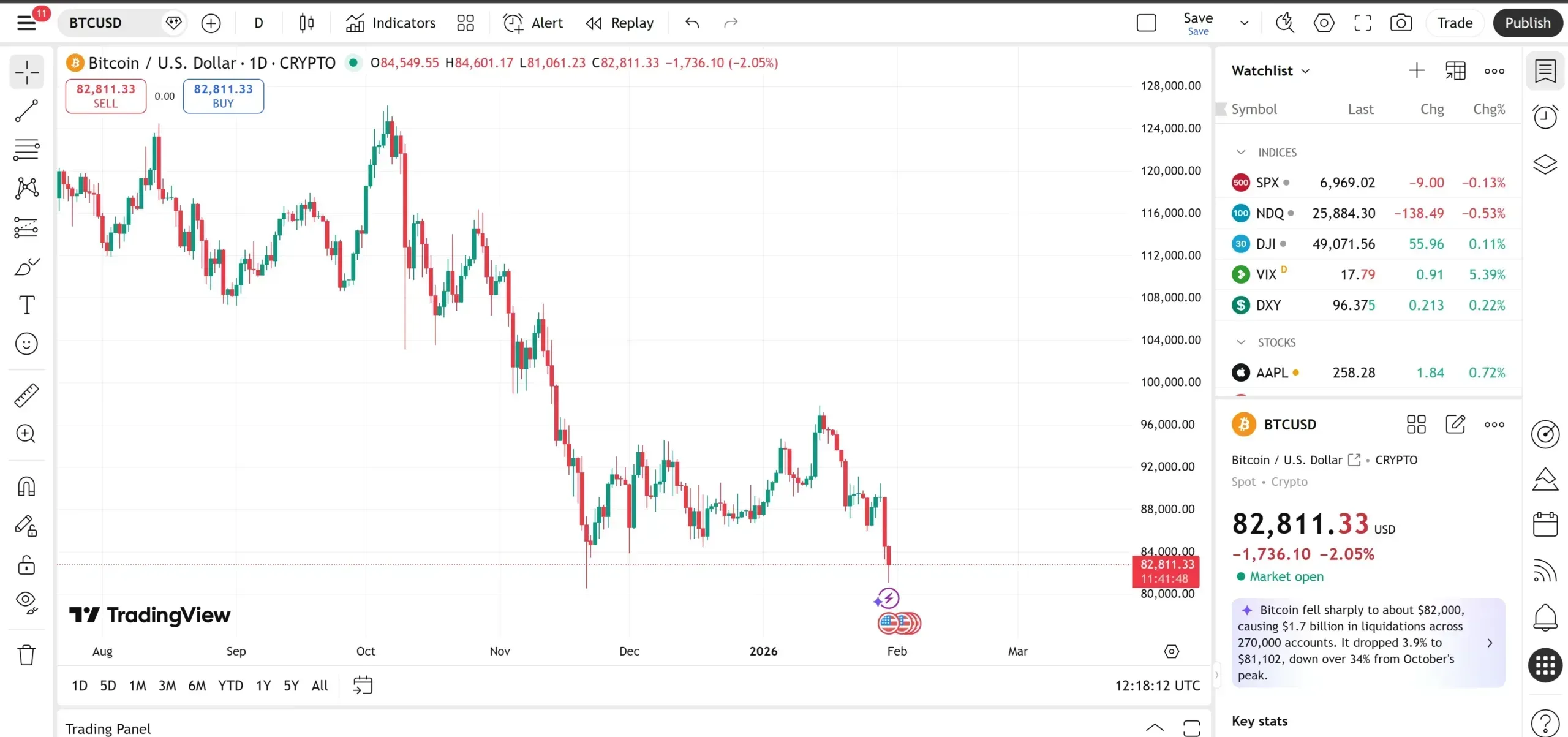
The latest drop in the Bitcoin price shows how exposed cryptocurrencies remain to expectations around US monetary leadership. On Friday, Bitcoin slid to a two month low as speculation over the next chair of the US Federal Reserve pushed investors away from risk assets and into the dollar.
Bitcoin traded about two point five percent lower near eighty two thousand three hundred dollars 82,300. This decline followed losses from the previous session and placed Bitcoin on track for a fourth straight month of losses. That would mark its longest losing streak in eight years. Since reaching record highs in October, the Bitcoin price has now fallen by roughly one third, reversing hopes of a sustained rally under a more crypto friendly US administration.
The trigger for the selloff came from growing market talk that former Federal Reserve Governor Kevin Warsh could replace current Fed Chair Jerome Powell. Warsh has argued publicly for major changes at the central bank, including a reduction in the size of the Federal Reserve balance sheet. That stance raised concern across markets that liquidity could tighten in the months ahead.
Bitcoin Price Reacts to Liquidity Fears
The Bitcoin price has often benefited during periods of high liquidity. When the Federal Reserve expanded its balance sheet, speculative assets gained support as excess cash flowed into markets. Bitcoin became one of the key beneficiaries of that trend.
Speculation about a shift in Fed leadership challenged that assumption. A smaller balance sheet signals less money circulating in financial markets. Investors responded by trimming exposure to assets that rely on easy money conditions. The dollar strengthened as a result, which added further pressure on the Bitcoin price.
Damien Boey, a portfolio strategist at Wilson Asset Management, explained that once investors expect liquidity support to fade, assets linked to balance sheet expansion tend to sell off together. This group includes cryptocurrencies, gold, and parts of the bond market. From our perspective at Squaredtech, this comment captures why Bitcoin remains tied to macro policy signals despite claims of independence from traditional finance.
Ether followed a similar path. The second largest cryptocurrency fell nearly three percent to around two thousand seven hundred thirty five dollars. This parallel move confirmed that the selloff reflected broader crypto market weakness rather than an issue unique to Bitcoin.
Bitcoin Price Also Feels Pressure From Tech Market Jitters
The decline in the Bitcoin price also followed weakness in global equity markets. A sharp drop in Microsoft shares after heavy artificial intelligence spending and a modest revenue beat sent a shock through risk assets. The stock fell about ten percent, which reduced confidence in high growth technology plays.
Sean Dawson, head of research at Derive dot xyz, noted that concerns around artificial intelligence spending added to Friday’s crypto selloff. While correlations between crypto and stocks have weakened at times, they remain visible during periods of stress.
At Squaredtech.co, we see this as a reminder that Bitcoin trades within a wider risk environment. Monetary policy fears and technology sector doubts can combine to weigh on sentiment quickly. For now, the Bitcoin price reflects caution rather than momentum. Clearer signals from the Federal Reserve and calmer equity markets may be needed before confidence returns.
Stay Updated: Crypto