Table of Contents
As editors at Squaredtech.co, we analyze Google’s latest midrange release with a critical eye. The Google Pixel 10A arrives as a near-identical rerelease of the Pixel 9A, and this choice raises serious questions about innovation in the midrange segment. Buyers face a clear dilemma: spend $499 on the new model or save $50 on the superior-value Pixel 9A, which remains widely available.
Pixel 10A Design Refinements
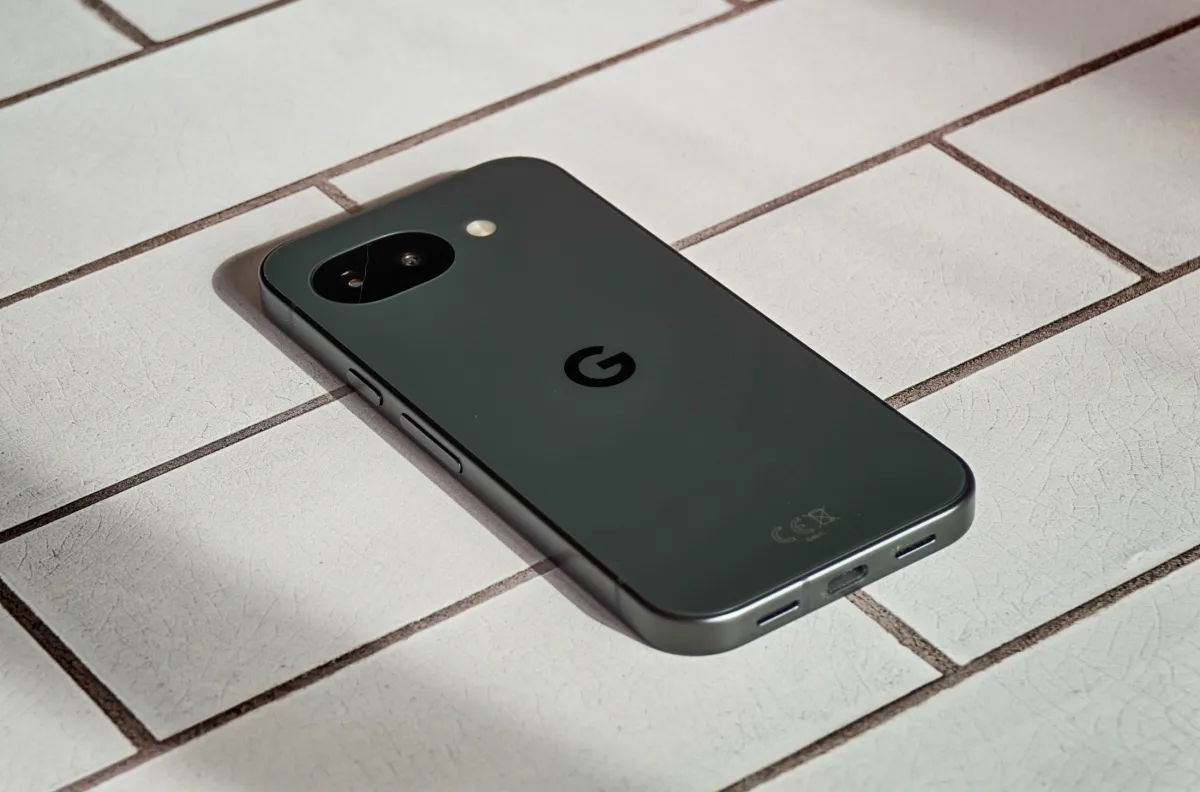
Google refines the Pixel 10A design with subtle exterior tweaks that prioritize flush aesthetics over bold changes. The phone weighs 3 grams less than the Pixel 9A at approximately 188 grams, measures fractionally shorter at 152.1mm and slimmer at 7.2mm, and features a thinner bezel around its 6.3-inch display. Cameras sit entirely flush with the body and recess slightly inside, which contrasts sharply with protruding lenses on flagship rivals like Samsung Galaxy models.
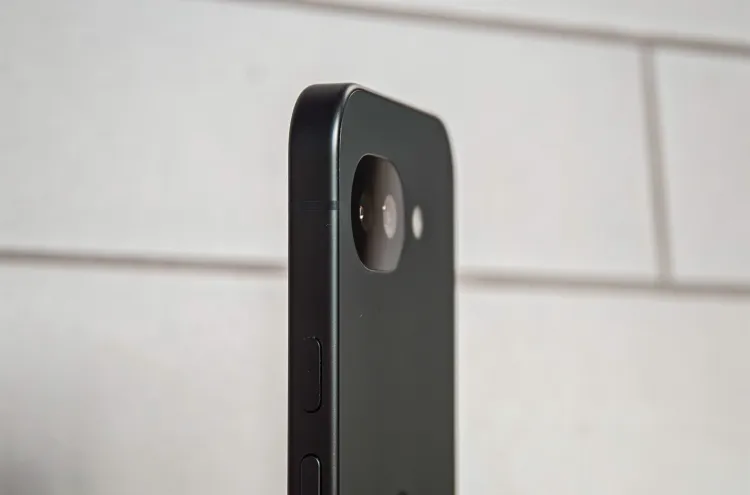
This flush camera island enhances grip comfort and resists snags in pockets. Google abandons the traditional camera bar for a minimalist back panel, and the Pixel 10A pushes this further with a marginally thicker body to embed sensors fully. The result creates the least obtrusive camera setup on any current smartphone, and software prowess compensates for smaller hardware.
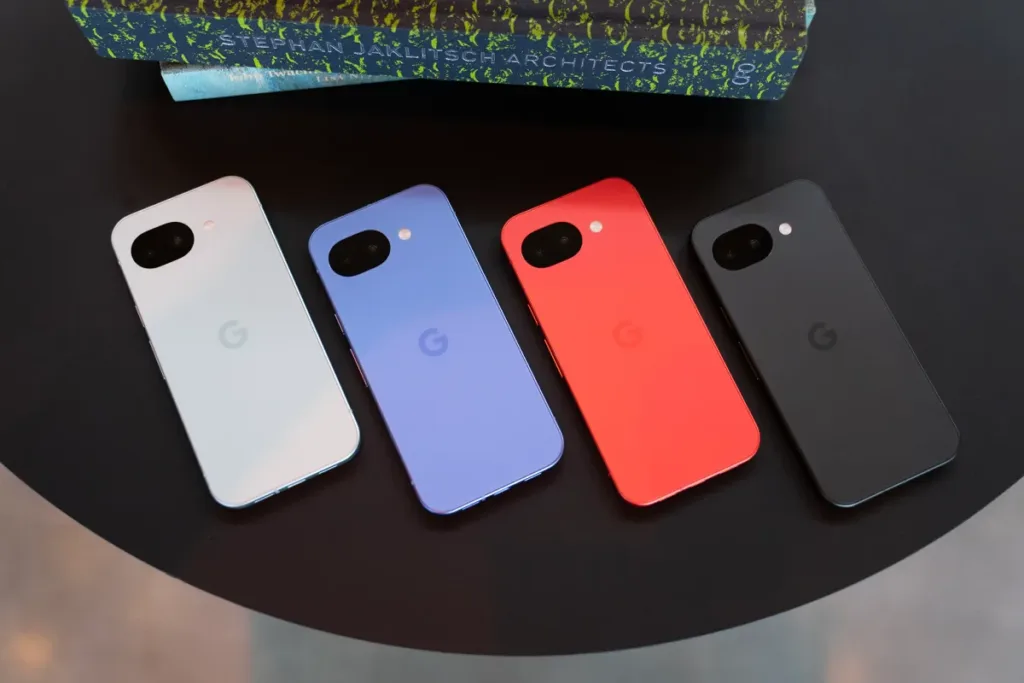
New colors include vibrant Berry, greenish Fog, Lavender, and conservative Obsidian, which offer more personality than the Pixel 9A’s Porcelain, Iris, and Peony options. The overall form factor stays simple, sleek, and one-handed friendly despite a slight size increase over the $799 Pixel 10. Lighter weight offsets the bulk, and IP68 water resistance adds everyday durability.
The Pixel 10A design succeeds in ergonomics but fails to evolve meaningfully from the Pixel 9A. We note that these tweaks appeal to users who prioritize subtlety, yet they do little to differentiate in a competitive market.
Pixel 10A Display and Build Upgrades
The Pixel 10A display upgrades include Gorilla Glass 7i protection, which Corning markets as a seventh-generation glass for midrange devices with improved drop and scratch resistance over the Pixel 9A’s Gorilla Glass 3. Peak brightness reaches 3000 nits, an 11% jump from the Pixel 9A’s 2700 nits, and contrast improves for better HDR10+ content viewing.
Both phones share a 6.3-inch Actua pOLED panel with 1080 x 2424 resolution and 60-120Hz refresh rate, but the Pixel 10A handles sunlight better and delivers sharper visuals in high-dynamic-range scenarios. The in-display fingerprint reader works reliably, and Widevine L1 support enables Full HD streaming without compromises.
Build quality emphasizes lightness and flatness, which makes the Pixel 10A feel premium at $499. Google extends seven years of OS updates to Android 23 in 2033, one year beyond the Pixel 9A’s timeline. These enhancements strengthen long-term value, though the lack of Class 3 face unlock limits security options compared to flagships.
From our analysis, the Pixel 10A display edges out competitors like older OnePlus Nord models in brightness and protection. Everyday users gain from reduced glare outdoors, but gamers miss higher refresh consistency found elsewhere.
Pixel 10A Performance and Battery Life
Google equips the Pixel 10A with the same Tensor G4 chipset as the Pixel 9A, an 8-core 4nm processor with Cortex-X4 at 3.1GHz, Mali-G715 GPU, and Exynos 5400 modem. It handles daily tasks like browsing, social media, and light editing smoothly, but trails Snapdragon 8 Gen 3 in raw power for intensive gaming.
Bluetooth 6.0 support introduces Channel Sounding for precise distance measurement, enhanced security against attacks, and efficient scanning, which improves accessory pairing like earbuds. Satellite SOS leverages the modem and Skylo network to connect users to Garmin Response coordinators for emergencies without cell service, a first for A-series Pixels.
Battery capacity matches at 5100mAh, with Google claiming 30+ hours of use or 120 hours in Extreme Battery Saver mode via software tweaks. Real-world tests show 53 hours endurance, slightly above the Pixel 9A’s 52 hours, enough for one full day but not two. Charging speeds rise to 30W wired (50% in 30 minutes with 45W PPS charger) and 10W wireless Qi, up from 23W and 7.5W.
Our team evaluates the Tensor G4 as sufficient for most, but its age by 2033 could limit future AI demands. Battery optimizations impress, yet rivals like Nothing Phone offer faster replenishment.
Pixel 10A Camera Capabilities
Cameras remain unchanged with a 48MP wide (f/1.7, 82° FOV, 1/2″ sensor) and 13MP ultrawide (f/2.2, 120° FOV), matching Pixel 10 hardware for Super Res Zoom up to 8x. Google processing excels in natural colors and night shots, resisting over-brightening, though small sensors produce noise in low light and blown highlights on ultrawide.
Exclusive software includes Camera Coach, an AI tool that analyzes scenes via Gemini and suggests framing like “zoom on subject” for better composition. Auto Best Take scans group photos to swap expressions automatically, building on standard Best Take. A 13MP front camera handles selfies adequately.
Google claims the setup as the best under $500 in the US, where alternatives demand $700+ for upgrades. Squaredtech.co tests confirm strong computational photography, but hardware limits zoom and video compared to flagships. These cameras suit casual users perfectly.
Pixel 10A Pricing and Value Analysis
The Pixel 10A launches at $499 for 128GB or $599 for 256GB, identical to the Pixel 9A, now discounted to $449. Preorders started February 18, 2026, with shipping March 5.
Iterative updates like Samsung Galaxy S26 or iPhone 17E at least refresh specs, shaming the Pixel 10A’s stasis. Google’s self-competition dominates: Pixel 9A stock persists, undercutting the newcomer.
Squaredtech.co concludes the Pixel 10A as the top US midranger now, but Pixel 9A wins for value. Wait six months for stock depletion, or buy discounted predecessor today. Satellite SOS and charging bumps tempt few; most save cash without regret.
Stay Updated: Gadgets