

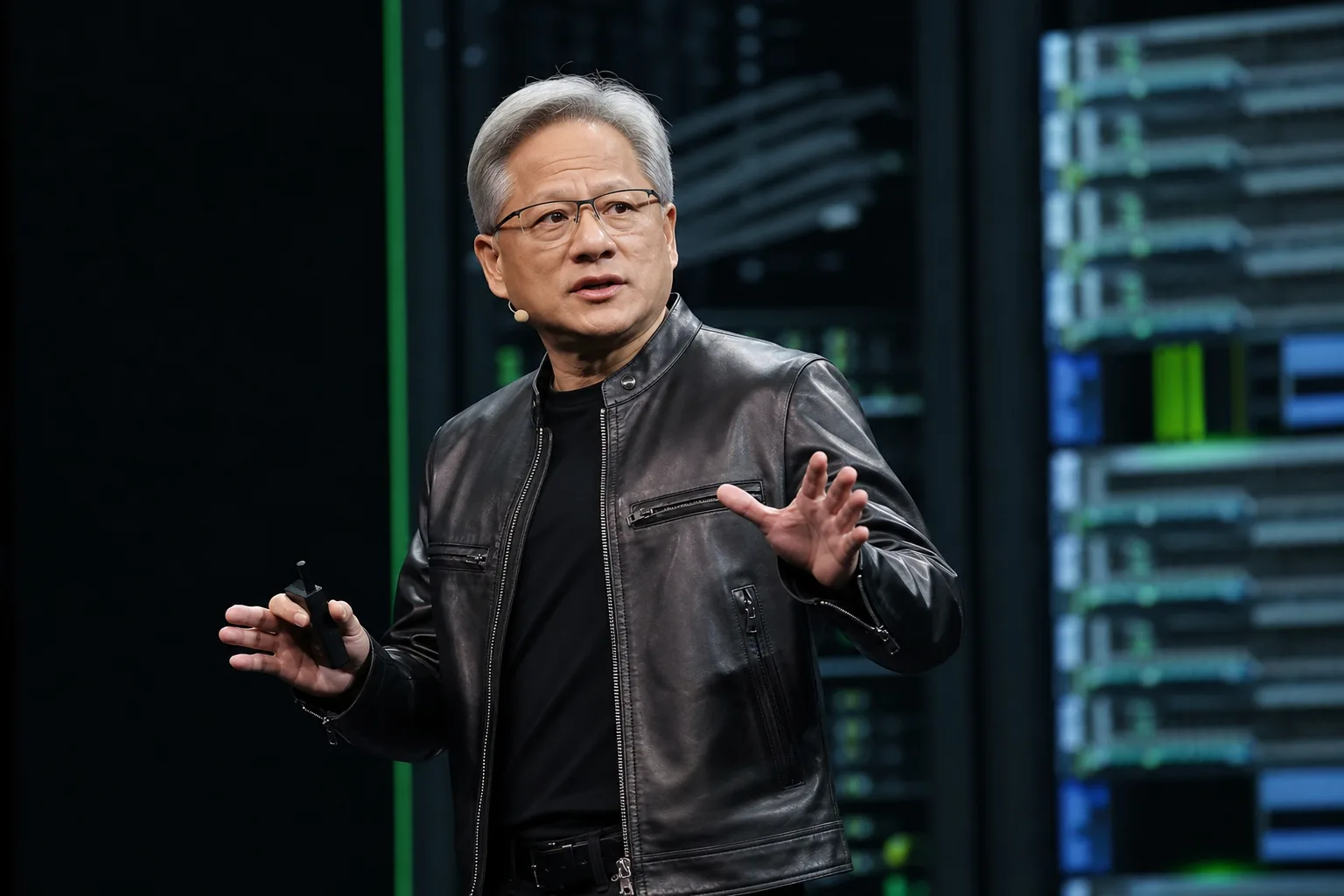
- Major outlets report that Nvidia spying allegations center on an intelligence memo involving CEO Jensen Huang and Megaspeed executive Alice Huang.
- The Nvidia spying allegations arrive as Washington intensifies scrutiny of who ultimately receives powerful American AI chips.
- Reporting on New Matrix raises separate questions about whether export-control approvals can be exploited through opaque corporate structures.
- Nvidia says it does not provide classified information to customers and primarily sells its best technology in America.
Table of Contents
Nvidia spying allegations land in a remarkably sensitive moment
The Nvidia spying allegations now circulating are the kind of story that makes an already tense US-China semiconductor fight feel less like a trade dispute and more like a Cold War thriller. According to reporting by The New York Times and the Financial Times, a US intelligence memo said Alice Huang, an executive at Singapore-based technology company Megaspeed, had been recruited by China’s Ministry of State Security to gather information on Nvidia chief executive Jensen Huang.
The memo reportedly also contained a personal allegation concerning the two executives. That claim has not been independently substantiated in the reporting described by the outlets, so it should be treated for what it is: an allegation attributed to an intelligence memo, not an established fact. Intelligence assessments can be consequential, but they are not court findings, and governments do not generally disclose the underlying evidence behind them.

Nvidia, for its part, pushed back on the implication that anything improper occurred. A company spokesperson told the Times that Jensen Huang’s interactions with Alice Huang were “not unusual” and said Nvidia does not share classified information with customers. That is a carefully calibrated response. It denies the core security concern without attempting to litigate every detail of a report built around a document the public has not seen.
Still, the Nvidia spying allegations matter because Jensen Huang is not merely another Silicon Valley CEO. He runs the company whose graphics processors have become the scarce industrial input of the AI era. Access to Nvidia hardware can shape what a startup can build, what a cloud provider can offer, and increasingly what a national security establishment can train and deploy.
Why Nvidia is an obvious intelligence target
If you were trying to understand the global AI race, Nvidia would be a sensible place to start. The company’s chips sit at the center of data centers used to train large language models, analyze intelligence, design drugs, simulate weapons systems, and run a growing pile of enterprise AI products that may or may not need to exist. Some of those uses are mundane. Some plainly are not.
That puts Nvidia in an unusual bind. It is a commercial supplier with customers worldwide, yet the products it makes are subject to a dense and shifting web of US export restrictions. Washington’s goal has been to limit China’s access to the highest-performing AI accelerators and related manufacturing capabilities, particularly where they could strengthen military or surveillance systems. The rules have changed more than once, forcing Nvidia to redesign or reconfigure products for the Chinese market.
The Commerce Department’s Bureau of Industry and Security administers many of those controls. On paper, the distinction is straightforward: permitted sales go through, prohibited ones do not. In practice, chips can travel through distributors, cloud services, shell companies, overseas affiliates, and an international market eager to turn a shortage into a profit opportunity. Think less locked vault, more airport security during a holiday rush.
My read is that the Nvidia spying allegations are as much about proximity as secrets. An executive with access to corporate leaders, industry relationships, customer conversations, and informal social settings may hear useful things even without touching classified material. Product roadmaps, supply constraints, export-license expectations, and the mood inside a strategically vital company all have intelligence value.
The New Matrix question may be more concrete
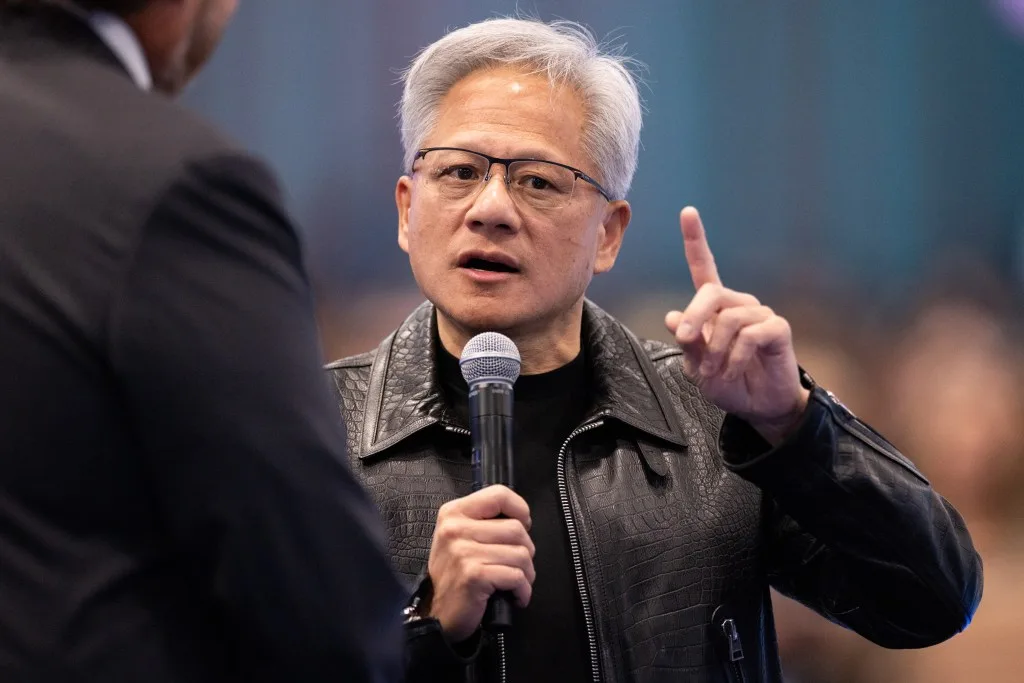
Separate Times reporting focused on New Matrix, a Chinese company that had received US Commerce Department authorization to purchase advanced Nvidia chips. Reporters visiting the company’s listed office address reportedly found what they described as a hollow gray shell, raising concerns that the entity could be a front connected to a blacklisted private-equity firm.
This part of the story deserves at least as much attention as the more lurid intelligence claim. The Nvidia spying allegations concern a reported recruitment effort and private interactions. The New Matrix reporting goes directly to a persistent enforcement problem: can regulators reliably determine who is actually buying restricted computing hardware, and for what end use?
Export controls are only as strong as the customer verification behind them. A legitimate-looking company registration and a plausible address are not much comfort if the real beneficiary is hidden behind intermediaries. And chips are peculiarly difficult to police after delivery. They are compact, valuable, and useful in a rack far from the purchaser named on the paperwork. Unlike a fighter jet, a GPU does not announce itself when it crosses a border.
Nvidia told the Times that it sells “the first, best and most of our technology in America.” That claim reflects a real business and political calculation. Nvidia’s largest strategic market is the United States, where hyperscalers including Microsoft, Amazon, Google, and Meta are spending extraordinary sums on AI infrastructure. But it does not eliminate the pressure around China, which remains too large a technology market for any chip company to dismiss casually.
What the allegations do and do not establish
The Nvidia spying allegations do not establish that Nvidia secrets were obtained, that Jensen Huang did anything improper, or that Megaspeed was involved in espionage. The reporting establishes that an intelligence memo reportedly made those claims. That distinction may sound fussy, but it is the difference between journalism and rumor dressed up in a blazer.
None of that makes every contact between Chinese business figures and US technology executives suspicious. Nvidia sells globally and operates in an industry built on cross-border supply chains, conferences, partnerships, and constant customer contact. Normal commercial interaction cannot become evidence of wrongdoing merely because geopolitics has gotten ugly.
Yet the environment has changed. The Nvidia spying allegations arrive after years in which semiconductor policy moved from a specialist concern to the front page of national strategy. The US has restricted advanced chip exports, encouraged domestic manufacturing through the CHIPS Act, and pressed allies to limit China’s access to key fabrication tools. China, meanwhile, has invested heavily in domestic alternatives. Everyone is watching Nvidia because its products remain the benchmark others are chasing.
The real test is enforcement, not gossip
Frankly, the personal details reported around this memo risk swallowing the more consequential story. The Nvidia spying allegations should also prompt policymakers to ask whether export screening has the staffing, data, and investigative reach to catch front companies before high-end chips ship. Nvidia and its peers should be asking whether ordinary customer due diligence is enough when a sale can carry national-security implications.
For Nvidia, this is the cost of becoming indispensable. The company cannot behave like a normal vendor selling normal hardware, even when that is what it would prefer to be. Every customer relationship, export approval, and executive encounter now sits under a harsher geopolitical microscope. If the New Matrix questions prove well-founded, the next fight will not be about what one memo alleged. The Nvidia spying allegations may fade, but the larger question will remain: whether the system built to control AI compute was ever designed to withstand the people determined to route around it.