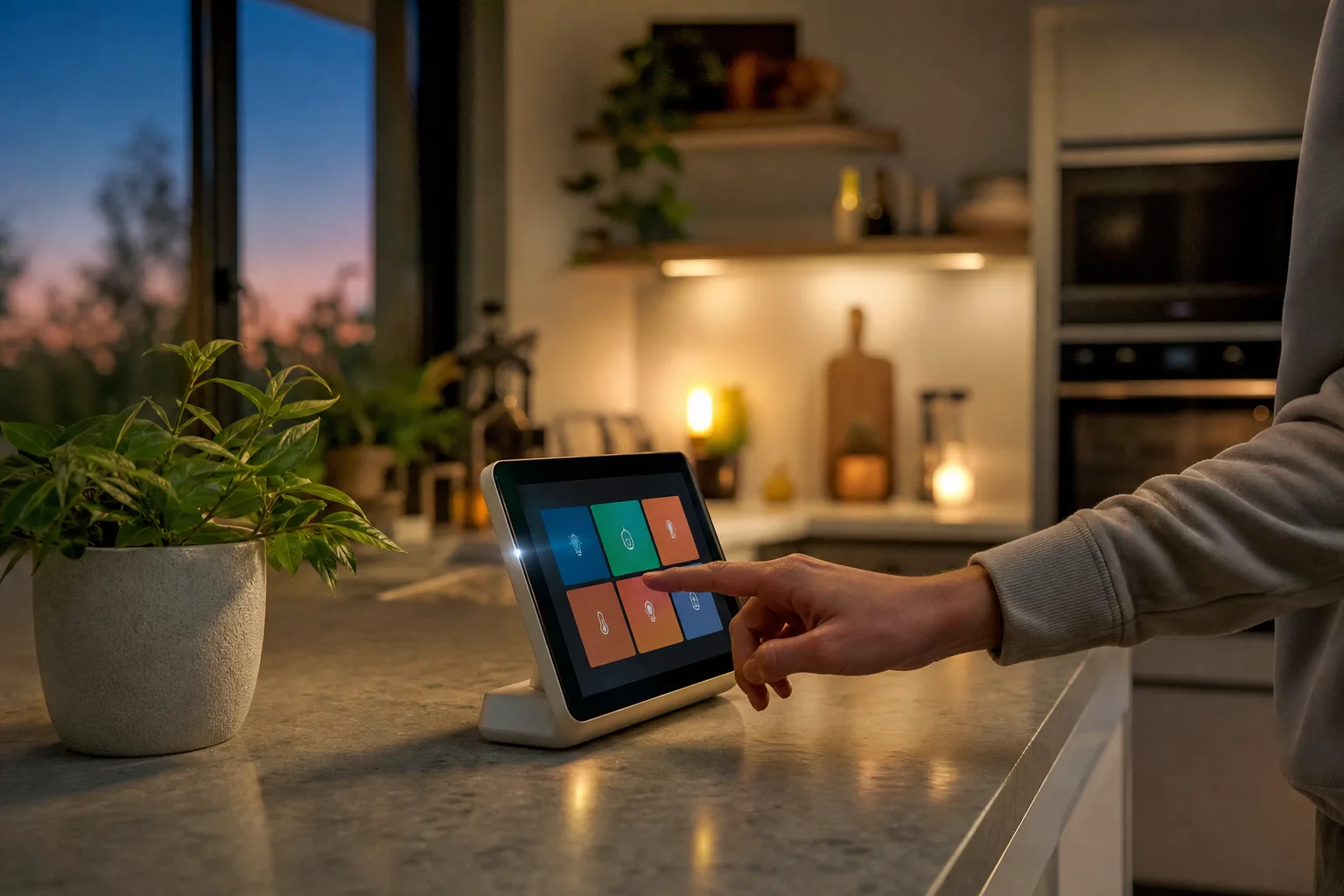
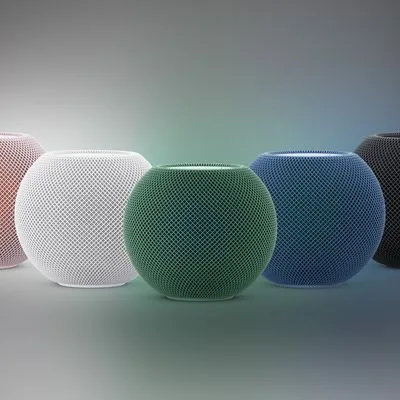
- Apple HomeView reportedly ships in mid-November, after Apple’s new Apple TV 4K and HomePod mini reach stores on October 30.
- Apple HomeView will reportedly pair an A18 chip and touchscreen with voice-led Siri controls, in countertop and wall-mounted versions.
- Apple appears to be limiting software at launch, with selected first-party apps and no dedicated App Store for the home hub.
- The device could give Apple a more visible role in connected homes, where Alexa and Google have struggled to sustain momentum.
Table of Contents
Apple HomeView is the screen Apple’s smart home strategy has been missing
Apple has spent years building the plumbing for a smart home without giving people a particularly compelling place to stand and use it. The reported Apple HomeView, expected to ship around mid-November, could finally change that. The pitch is straightforward: put Siri, Home controls, music, cameras, and glanceable household information on a screen where everyone can reach it.
Bloomberg’s Mark Gurman reports that Apple plans to unveil the device at its October 13 event, then release it roughly a month later. That would put it behind the new Apple TV 4K and refreshed HomePod mini models, which are reportedly scheduled to arrive in stores and with customers on October 30.
The timing fits Apple’s larger plan. The television box, small speaker, and new display are being positioned less as three unrelated gadgets than as parts of a home stack. The smart home business has always been fragmented; Apple’s best chance is making its own pieces feel like they belong together.

What Apple HomeView is expected to look like
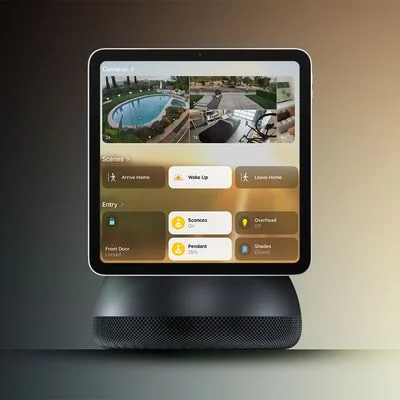
The reported hardware sounds deliberately familiar. The countertop Apple HomeView model is said to combine a display with a metal speaker base and come in space gray, silver, starlight, and pink. A second version is expected to mount on a wall, using a flatter square base and arriving only in space gray or silver.
That puts Apple squarely in the territory Google explored with the Nest Hub and Amazon has occupied with the Echo Show. But Apple’s apparent design choice matters. A wall-mounted home panel is a much more assertive bet than a speaker you leave on a kitchen counter. It says Apple wants this to become household infrastructure, closer to a thermostat or light switch than another personal device you occasionally charge.
At the center is reportedly an A18 chip, the same generation of silicon Apple uses to power its recent iPhones. That may sound excessive for turning on a lamp, but local processing could matter for faster Siri requests, camera views, visual recognition features, and future Apple Intelligence work. Smart displays live or die on whether they respond instantly. If users have to wait three seconds to pull up the front-door camera, they’ll just reach for their phones.
Gurman also says the speaker should outperform the new HomePod mini. That’s logical, given the larger enclosure, though Apple will need to be careful about product overlap. The company already has a habit of building a neat product ladder that confuses buyers at the first rung.
Voice first, touch when you need it
The reported Apple HomeView interface will be led primarily by voice, with touch input available on the display. On paper, that’s the right call. Smart-home voice commands are genuinely useful when your hands are full: setting a timer while cooking, turning off lights after getting into bed, or checking who rang the bell while you’re halfway across the room.
But screens are often better for the jobs voice assistants handle poorly. Nobody wants to dictate a long list of light zones or ask Siri to read out every camera feed. A display can turn those interactions into taps, sliders, and a quick household dashboard. The trick is avoiding the fate of many smart displays, which became expensive digital photo frames punctuated by weather forecasts.
Apple is reportedly taking a controlled approach to software. The Apple HomeView will support only a limited set of Apple applications and will not have its own App Store. Frankly, that’s both sensible and frustrating. Sensible because an open app catalog could turn a shared home device into a mess of subscriptions, notifications, and poorly designed interfaces. Frustrating because a smart home is full of niche needs: energy monitoring, pet cameras, appliance controls, and local services that Apple may not prioritize.
Apple’s own Home platform already supports accessories from a wide range of manufacturers, including devices built around the Matter interoperability standard. The challenge has never been ticking a compatibility box. It has been making Home feel as alive and useful as the hardware around it.
The real challenge is Siri, not the display
Apple has tried to make HomePod a household command center before, with mixed results. The speaker has its fans, especially among people already deep in the iPhone, Apple TV, and HomeKit ecosystem, but Siri’s uneven performance has limited its appeal. Apple’s voice assistant can execute a basic scene perfectly one minute, then stumble on a natural-language request that Alexa has handled for years.
That makes the Apple HomeView launch more consequential than another accessory refresh. A screen gives Apple a fallback when voice fails. You can tap a room, see whether a door is locked, or select a playlist. Yet it also makes Siri’s shortcomings more visible, because the product is explicitly meant to be the place where a household asks Apple for help.
There’s a broader market opening here. Amazon has repeatedly reworked Alexa’s business model and pushed toward paid AI features, while Google’s smart-home ambitions have moved in fits and starts. Remember when smart displays were supposed to be everywhere? They didn’t disappear, but the category stalled because the software rarely earned a permanent spot in the home.
My read is that Apple HomeView has a better shot than most if Apple treats it as an interface for the whole household rather than a smaller iPad with fewer apps. A shared calendar, camera alerts, intercom tools, music, home controls, and a genuinely capable Siri could be enough. It doesn’t need to do everything. It needs to nail the dozen moments per day when grabbing a phone feels like overkill.
Why timing matters for Apple’s connected-home push
The reported mid-November window gives Apple a holiday-season opening, when speakers, displays, and home gadgets tend to move well as gifts. Pricing will be crucial, and it remains unknown. A premium price might fit Apple’s hardware margins, but it would make comparison with Google’s and Amazon’s often-discounted displays unavoidable.
The name itself, reportedly uncovered in a trademark filing before Gurman’s report, is revealing. Apple HomeView is plain, almost aggressively so. The word “View” frames the product as something you look at, while the voice-first controls aim to keep it from demanding constant attention. That’s a more grounded pitch than chasing a futuristic robot-home fantasy.
Apple’s test is simple enough: make the display useful at a glance and make Siri dependable when the house is noisy, busy, and full of people speaking naturally. If it can do that, Apple may finally have a smart-home product that feels central rather than supplemental. That’s a big “if”—and the part that matters most.