
Perplexity just quietly dropped one of the more interesting AI efficiency stories of the year. The company announced that its Perplexity AI fine-tuning of GLM 5.2 — a Chinese open-weight model developed by Zhipu AI — delivers performance comparable to Anthropic’s Claude Opus 4.8 at roughly one-third of the cost. That’s not a minor incremental improvement. That’s the kind of cost ratio that reshapes how companies think about deploying AI agents at scale.
- Perplexity AI fine-tuning of GLM 5.2 achieves near-frontier performance at just 34% of Claude Opus 4.8’s cost.
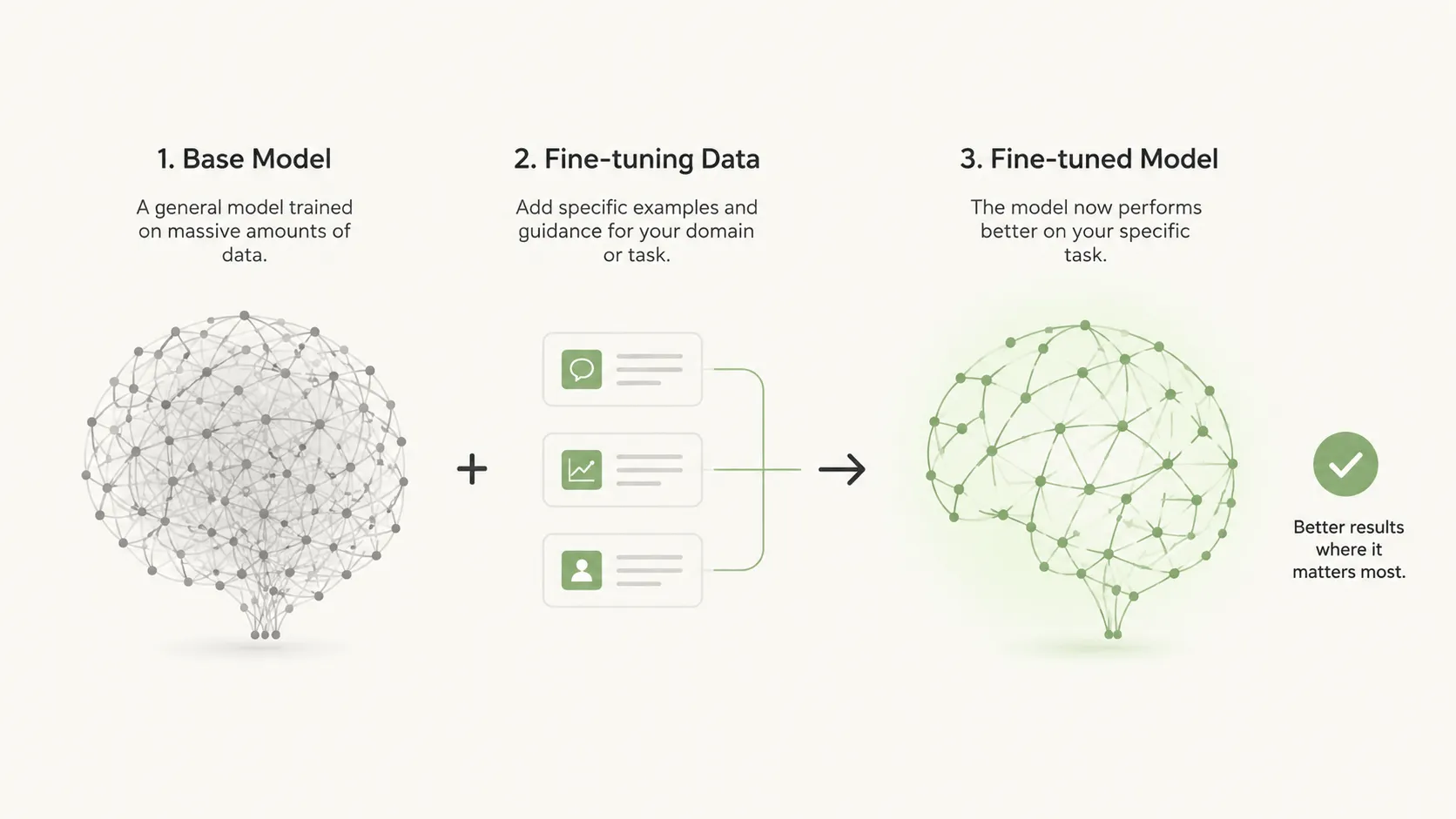
- The Perplexity AI fine-tuning approach uses post-training to adapt GLM for its Computer task harness.
- When paired with a frontier model advisor, the fine-tuned GLM matches Opus 4.8 grade performance.
- The model is currently available as a research preview inside Perplexity Computer.
Table of Contents
What Perplexity Actually Built
The announcement came via a post from Aravind Srinivas on July 9th, where he explained the company has been ‘post-training a version of GLM that is trained to escalate to a frontier model inside the Computer harness.’ The result, he said, is a model that ‘functions at Opus 4.8 grade performance at a fraction of the cost’ when paired with an advisor model.
That last part is important and easy to miss. This isn’t a head-to-head swap where GLM simply replaces Claude. What Perplexity has built is an orchestration system — the fine-tuned GLM handles the bulk of task execution inside Perplexity Computer, its agentic product, and knows when to kick a problem upstairs to a more powerful frontier model. Think of it less as a replacement and more as a highly efficient first responder that calls in the specialist only when the situation demands it. Perplexity AI fine-tuning is what makes that intelligent escalation behavior possible in the first place.
Why Perplexity AI Fine-Tuning GLM 5.2 Makes Strategic Sense
GLM — which stands for General Language Model — is developed by Zhipu AI, a Beijing-based AI lab spun out of Tsinghua University. The GLM series has been quietly competitive with Western open-weight models, and GLM 5.2 represents a capable, cost-efficient base to build on. For Perplexity, choosing a Chinese open-weight model for Perplexity AI fine-tuning isn’t some ideological statement — it’s a pragmatic engineering decision. If the base model is strong enough and the licensing allows it, why start from scratch or pay premium API prices for every inference call?
The exact cost figure Perplexity cited is 0.344x the cost of Claude Opus. Put another way, you’re getting near-comparable output for about 34 cents on the dollar compared to running Opus directly. For a product like Perplexity Computer — which, in executing a complex multi-step agentic task, might make dozens or hundreds of individual model calls — that difference compounds fast. An agentic workflow that costs $10 in Claude Opus calls might cost $3.44 using this setup. Multiply that across millions of users and you’re talking about a fundamentally different unit economics picture. That’s precisely why Perplexity AI fine-tuning of an open-weight model was the right architectural choice here rather than simply negotiating bulk API discounts.
The Bigger Trend: Fine-Tuning as a Competitive Weapon
What Perplexity is doing here fits squarely into a broader pattern that’s been accelerating throughout 2025 and into 2026. As frontier model capabilities have plateaued somewhat — or at least become harder to differentiate in everyday tasks — the real competition has shifted to inference efficiency, specialization, and cost. Companies that can fine-tune capable open-weight models for their specific use case, rather than routing every query through expensive proprietary APIs, gain a structural advantage that compounds over time.
We’ve seen this play out with Meta’s LLaMA series enabling countless companies to build cheaper, faster, specialized derivatives. Mistral AI built an entire business model around the idea that a smaller, well-trained model beats a bloated frontier model for most practical applications. Perplexity’s Perplexity AI fine-tuning strategy is a natural evolution of that logic — applied specifically to agentic computer use tasks rather than general Q&A or coding.
Perplexity AI Fine-Tuning and the Agentic AI Race
The specific context here — Perplexity Computer — matters a lot for understanding why this announcement is significant beyond just the cost numbers. Agentic AI, where models autonomously execute multi-step tasks on a computer, is one of the most actively contested spaces in AI right now. Anthropic has Claude’s computer use. OpenAI has Operator. Google has Project Mariner. Everyone is racing to make their AI capable of actually doing things on a computer rather than just talking about them.
Running these agentic workflows is inherently expensive because each step — clicking, reading the screen, deciding what to do next — requires a model call. A frontier model like Claude Opus, while powerful, is overkill for many of these individual micro-decisions. What you actually want is a model that’s smart enough to handle routine orchestration work, but disciplined enough to escalate when it hits something genuinely hard. That’s precisely what Perplexity AI fine-tuning has produced with this GLM 5.2 variant.
Srinivas framed it clearly: the model is ‘trained to escalate to a frontier model inside the Computer harness.’ This is a hybrid architecture — not a single model doing everything, but a tiered system where the cheaper model does the heavy lifting and the frontier model acts as a backstop. It’s an elegant engineering solution to a cost problem that every company building agentic products is wrestling with right now.
Research Preview — What That Actually Means
Perplexity has released this as a ‘research preview,’ which is a phrase worth taking seriously and with a grain of salt simultaneously. On one hand, it signals genuine caution — the model isn’t being positioned as production-ready perfection, and Perplexity is presumably still evaluating failure modes and edge cases. On the other hand, research previews in this industry have a habit of quietly becoming default infrastructure once users get comfortable with them.
The ‘near-frontier performance’ framing is also doing some work here. Near-frontier is not frontier. There will be tasks where the GLM-based orchestrator makes decisions that Claude Opus 4.8 would handle better, and those failure cases will define how much real-world trust this system earns. Perplexity’s claim is essentially that for the distribution of tasks Perplexity Computer actually encounters, the performance gap is acceptable and the cost savings are worth it. That’s a reasonable bet — but it’s still a bet, and users in the research preview phase are implicitly helping to validate whether Perplexity AI fine-tuning can consistently deliver on its promise across diverse real-world workloads.
What This Signals for the Industry
If Perplexity’s approach proves out, it will accelerate a trend that’s already underway: the decoupling of frontier model performance from frontier model pricing, for a growing range of real-world applications. The implication for companies like Anthropic and OpenAI is uncomfortable — their moat has always been that their models are simply better. But if fine-tuned open-weight derivatives can close the gap to an acceptable level for specific high-volume use cases, the ‘better’ argument starts to matter less than the ‘cheaper’ one for a large slice of customers.
For Perplexity specifically, this kind of Perplexity AI fine-tuning capability is a meaningful differentiator. It means they can keep improving Perplexity Computer’s performance trajectory without their costs scaling linearly with every model upgrade cycle from Anthropic. That’s the kind of infrastructure leverage that separates companies that survive long enough to matter from those that get squeezed on margins before they can build a real business. Whether the GLM 5.2 variant holds up under scrutiny from the research community will be worth watching closely over the coming weeks.
Frequently Asked Questions
What is Perplexity AI fine-tuning of GLM 5.2 actually doing?
Perplexity post-trained GLM 5.2 specifically for its Computer task harness. The model is designed to escalate difficult tasks to a frontier model when needed, acting as an efficient orchestrator rather than a full replacement for top-tier models.
Does the fine-tuned GLM fully replace Claude Opus 4.8?
Not exactly. Perplexity’s fine-tuned GLM is described as delivering ‘near-frontier’ performance, not identical output. It works alongside a frontier advisor model, meaning it handles most tasks cheaply but defers to a frontier model when the job demands it.
What is Perplexity Computer?
Perplexity Computer is Perplexity’s agentic AI product that uses an orchestrator model to manage and delegate tasks, which is exactly the role the fine-tuned GLM 5.2 now fills.
Why does AI model cost matter so much right now?
Running frontier AI models at scale is expensive. For agentic products that make many model calls per task, inference cost can make or break a business. The fine-tuned GLM delivers near-frontier performance at a fraction of the cost of a frontier model, representing a significant operational advantage.