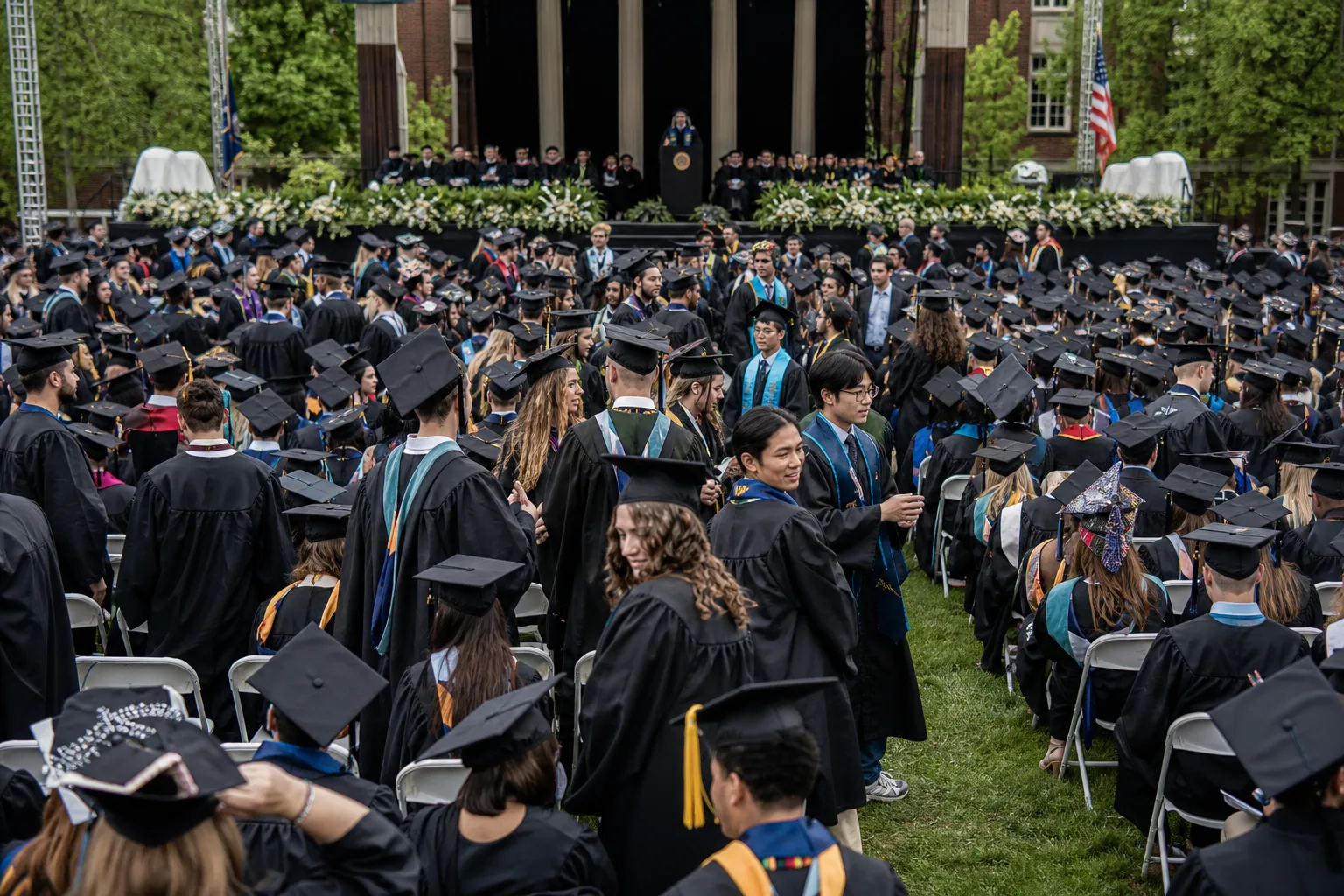
The Sundar Pichai Stanford protest has put Google’s most controversial government contract back in the spotlight — and this time, artificial intelligence wasn’t the flashpoint. At Stanford University’s 2026 commencement ceremony, well over 100 graduating students stood up and walked out as the Google CEO took the podium, chanting ‘Free, free Palestine’ and ‘Shame on you.’ It was organised, it was visible, and it sent a message that’s hard to ignore.
- The Sundar Pichai Stanford protest saw over 100 graduates walk out chanting ‘Free, free Palestine’ during his commencement speech.
- The Sundar Pichai Stanford protest centred on Project Nimbus, Google and Amazon’s reported $1.2 billion cloud contract with Israel.
- Google staffers had already raised alarms in February 2026, with 900 employees demanding transparency over government technology ties.
- Tech commencement speakers have faced repeated disruptions in 2026, reflecting growing friction between the industry and the public.
Table of Contents
What Actually Happened at Stanford
The Informationʼs Erin Woo, who was present at the ceremony, reported the scene in real time. In footage from the event, Pichai continues delivering his speech as dozens of graduates file toward the exits, banners in hand. Reviewing a transcript of the address, Pichai had barely gotten started — the walkout wasn’t a reaction to anything he said on stage. It was pre-planned, a deliberate statement aimed at where Google does its business, not how its CEO phrases a sentence. The Sundar Pichai Stanford protest was coordinated well in advance, and that level of organisation made it impossible to dismiss as impulsive crowd behaviour.
Some of the banners held by graduates made reference to ICE, adding another dimension to the protest beyond the Israeli conflict. That detail connects to a separate but related controversy: in February 2026, roughly 900 Google employees signed an internal letter demanding the company come clean about its technology partnerships with the US federal government, specifically over fears that Google’s tools were being used to support the Trump administration’s immigration enforcement operations. The discontent, in other words, isn’t isolated to one contract or one country.
Project Nimbus: The $1.2 Billion Contract at the Centre of It All
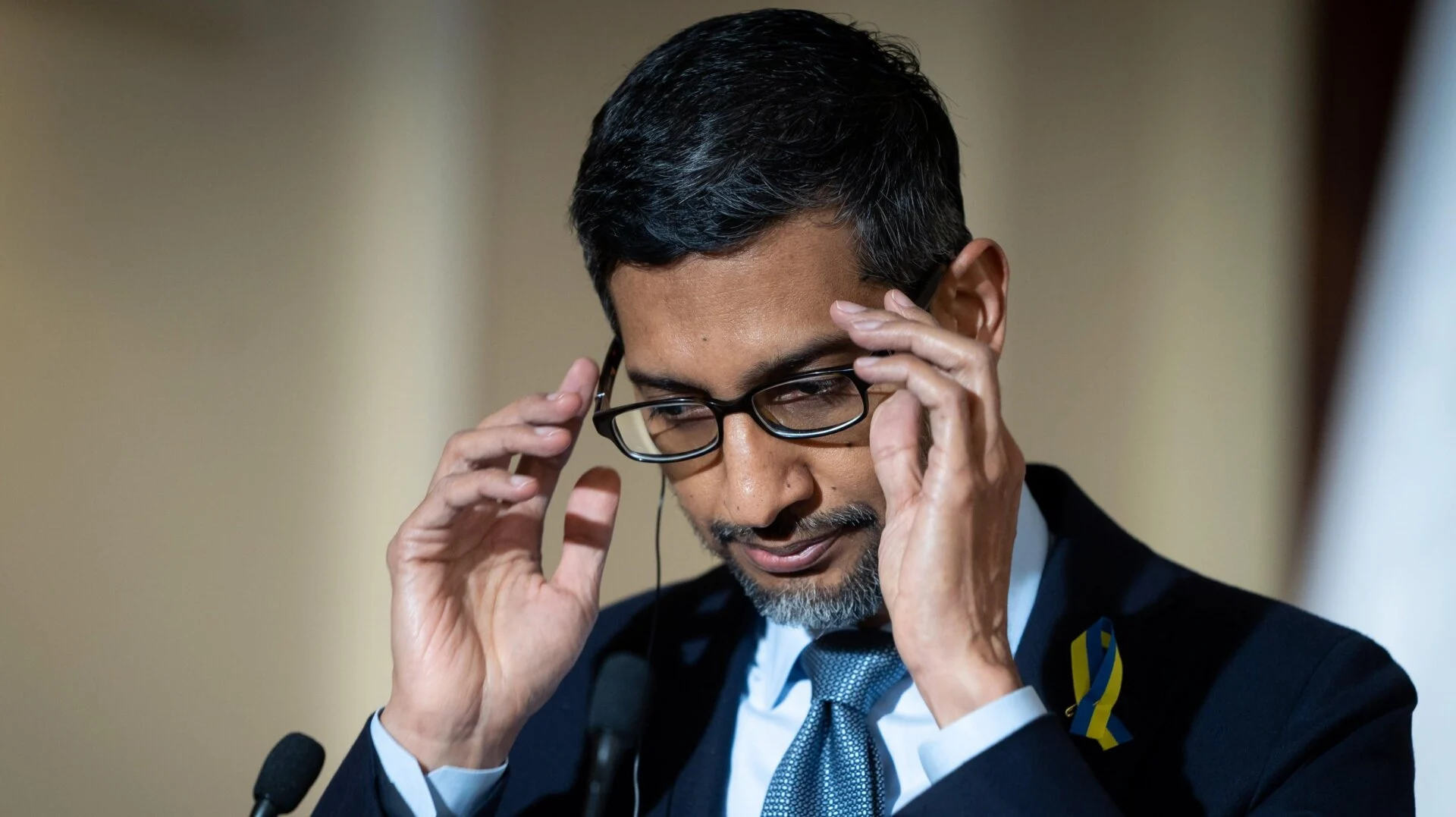
The engine behind the Sundar Pichai Stanford protest is Project Nimbus, a joint venture between Google and Amazon that provides the Israeli government and military with cloud computing infrastructure, advanced AI capabilities, and related services. The contract is reportedly worth $1.2 billion — or around 4 billion shekels by Israeli accounting — making it one of the more significant government cloud deals either company has signed outside the United States.
Much of what the public knows about Project Nimbus comes from leaks rather than official disclosures. That opacity is precisely what critics find unacceptable. The Electronic Frontier Foundation has been among the most vocal organisations calling out Google and Amazon for what it describes as a deliberate lack of transparency around what the contract actually covers and how those technologies are being applied on the ground. When the details of a billion-dollar government contract have to be pieced together from internal leaks, it’s reasonable for people — employees, graduates, the public — to ask what exactly is being hidden and why. For those who organised the Sundar Pichai Stanford protest, that lack of transparency was the central grievance.
Google hasn’t been forthcoming, and that silence has a cost. It feeds speculation, emboldens protesters, and makes it harder for the company to defend itself when criticism scales from a Reddit thread to a commencement walkout broadcast across social media.

Sundar Pichai Stanford Protest in Context: A Rough Season for Tech Speakers
Pichai isn’t the only tech figure who’s had a rough time at a graduation podium this year. About a month before the Sundar Pichai Stanford protest, former Google CEO Eric Schmidt was met with loud booing at a University of Arizona commencement. Schmidt’s disruption was messier — part genuine reaction to his comments on AI, part premeditated, with some graduates reportedly shouting ‘Epstein files!’ in reference to Schmidt’s alleged connections to Jeffrey Epstein. Schmidt, frankly, did not read the room. But the premeditation factor matters here too: it suggests that organised disruption at commencement ceremonies has become a legitimate form of protest in 2026, not just spontaneous crowd frustration.
Real estate executive Gloria Caulfield and music industry figure Scott Borchetta also encountered hostile crowds this graduation season, though in their cases the anger was squarely aimed at their public defences of AI. That’s a different kind of protest — one driven by students worried about their career prospects and creative livelihoods in an AI-dominated economy. The Sundar Pichai Stanford protest is something else entirely: a foreign policy and ethics objection, aimed at a company’s choice of client rather than its products.
Why This Keeps Happening to Google
There’s something worth examining in the fact that Google keeps showing up at the centre of these moments. Schmidt booed at Arizona, Pichai walked out on at Stanford — both former and current leadership facing public rebuke on campuses. It’s not entirely coincidence. Google occupies a peculiar position in the tech landscape: it’s simultaneously one of the most trusted consumer brands on the planet and one of the most entangled with government and military contracts that its users know almost nothing about. The Sundar Pichai Stanford protest made that contradiction visible in a way that a press release or internal memo never could.
The company’s workforce reflects that tension too. The 900 employees who raised concerns about immigration enforcement tools in February weren’t fringe voices — they represent a broader internal culture at Google that has historically pushed back on projects it finds ethically questionable. The 2018 walkout over Project Maven, Google’s AI contract with the US military, eventually led the company to withdraw from that deal. Project Nimbus has survived similar internal pressure so far, but the external pressure is clearly escalating.

The Bigger Question Tech Can’t Keep Dodging
What the Sundar Pichai Stanford protest really illustrates is the growing gap between how tech companies present themselves — open, innovative, beneficial to humanity — and how their biggest contracts actually play out. It’s easy to talk about AI’s potential to solve climate change or cure disease on a commencement stage. It’s much harder to explain, in that same setting, why your company’s cloud infrastructure is powering a military operation that has killed tens of thousands of people, according to international health authorities.
Pichai carried on with his speech. The students who walked out carried on with their protest. Neither side persuaded the other of anything in that moment. But the image of a Google CEO continuing to speak while a stream of graduates marched out behind him is a striking one — and it will follow Project Nimbus into every future conversation about Big Tech’s responsibility to the public, not just to its shareholders and government clients.
The question that keeps reasserting itself — on campuses, inside Google’s own offices, and in the broader policy debate — is whether a company’s choice of customer is a matter of corporate strategy alone, or whether it carries moral weight that the market can’t price. If graduation season 2026 has proven anything, it’s that a growing number of people, including some of the most educated and technically literate graduates entering the workforce, have already made up their minds on that question.
Frequently Asked Questions
What triggered the Sundar Pichai Stanford protest?
The walkout was driven by opposition to Project Nimbus, a joint Google and Amazon contract worth a reported $1.2 billion that provides the Israeli government and military with cloud computing and AI services. Students chanted ‘Free, free Palestine’ and ‘Shame on you’ as they exited.
What is Project Nimbus and why is it controversial?
Project Nimbus is a joint contract between Google, Amazon, and the Israeli government and military, reportedly valued at $1.2 billion. Critics say it lacks transparency, and the Electronic Frontier Foundation has called out both companies for their alleged lack of transparency around the deal.
Has Google faced internal pressure over its government contracts?
Yes. In February, around 900 Google employees called for transparency about the company’s technology ties to the US federal government, citing concerns that its tools were being used to support the Trump administration’s immigration enforcement efforts.
Is Pichai the only tech CEO to face disruptions at a 2026 commencement?
No. Former Google CEO Eric Schmidt was loudly booed at a University of Arizona ceremony roughly a month earlier, with disruptions tied to his comments on AI and alleged links to Jeffrey Epstein. Real estate and music executives have also faced hostile crowds this graduation season.