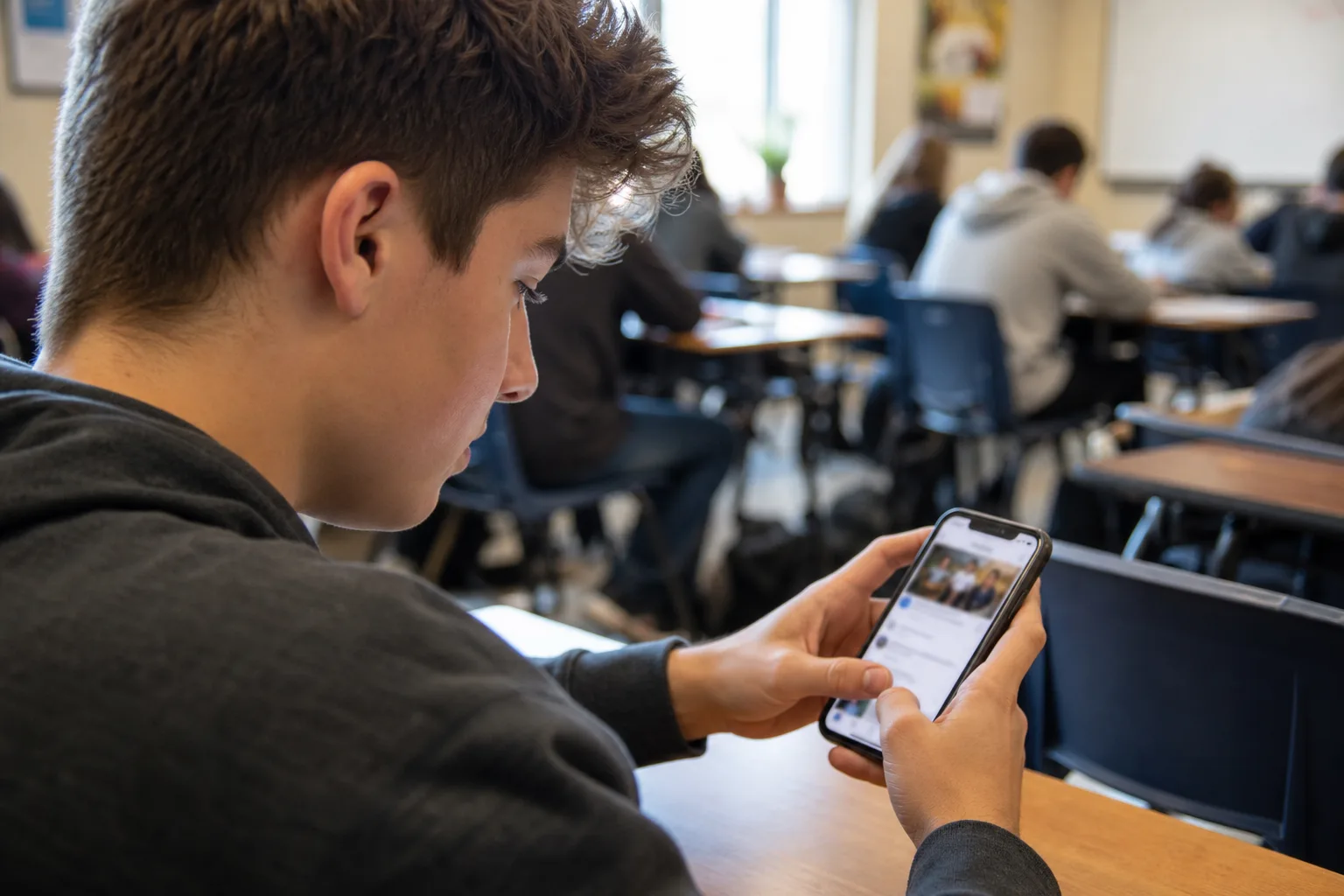
- Canada’s social media ban prohibits children under 16 from creating accounts on any social media platform nationwide.
- The Canada social media ban also introduces new safety obligations for AI chatbot services following a high-profile shooting case.
- A newly formed Digital Safety Commission will enforce the rules and can grant exemptions to platforms with strong child safeguards.
- Platforms must remove deepfakes, label AI content, and provide clear tools for reporting harmful material under the new law.
Table of Contents
Canada Social Media Ban Officially Enters the Legislative Arena
The Canada social media ban is now real legislation. Marc Miller, Canada’s Minister of Canadian Identity and Culture, introduced the Safe Social Media Act this week — a bill that bars anyone under the age of 16 from holding a social media account and places a new set of enforceable obligations on both social media platforms and AI chatbot services. It’s a significant shift, and it positions Canada alongside a growing bloc of countries that have decided the industry can’t be trusted to self-regulate when children are involved.

The timing isn’t coincidental. Australia passed its own under-16 social media restriction in late 2024, drawing global attention and setting off a wave of similar proposals across multiple jurisdictions. Indonesia and Malaysia have followed with their own versions. Now Canada is formally in that group — and the Canada social media ban has some distinct wrinkles worth paying close attention to.
What the Safe Social Media Act Actually Requires
At its core, the Canada social media ban does exactly what it says: platforms can’t allow users under 16 to create or maintain accounts. But the legislation goes well beyond a simple age gate. Platforms operating in Canada will be legally required to design their products with child safety as a baseline consideration — not an afterthought bolted on after regulators complain.
Concretely, that means removing deepfakes and any content that, in the bill’s language, ‘sexually victimizes a child or revictimizes a survivor.’ Platforms will also need to introduce labels for AI-generated content, clear and accessible mechanisms for reporting harmful material, and effective tools for blocking users. None of these are especially radical demands — many platforms claim to do most of them already. But the difference here is enforceability. These will be legal obligations, not voluntary commitments buried in a terms-of-service update nobody reads.
The specific technical standards that platforms must meet — beyond the headline age restriction — will be defined by the Digital Safety Commission of Canada, a newly created body established through a parallel piece of legislation called the Digital Safety Commission of Canada Act. That Commission will also be responsible for enforcement and, importantly, will have the power to grant exemptions to platforms it judges to be maintaining ‘sufficient safeguards’ for children. That’s a meaningful carve-out, and it gives the Commission considerable discretion over who actually has to comply in full.
AI Chatbots Get Their Own Section — and It’s Not Hard to See Why
One of the more interesting aspects of the Canada social media ban is that it extends its reach to AI chatbot services, even though it stops short of applying the same under-16 age restriction to them. Miller was direct about the reasoning: ‘Chatbots are not as well-studied as the harm caused by social media platforms. They don’t have the same social role.’

That’s a defensible position, but the Canada social media ban still carves out a dedicated regulatory lane for AI platforms — and the reason why becomes clear quickly. The legislation was at least partly shaped by the Tumbler Ridge shooting, a case in which OpenAI’s technology was reportedly connected to the incident in ways that raised urgent questions about how AI chatbots handle crisis communications and whether they can be manipulated into facilitating harm.
Under the bill, AI platforms operating in Canada will be expected to actively mitigate the risk of their chatbots ‘communicating harmful content’ or engaging in harmful behavior. They’ll also need to put ’emergency measures’ in place for dealing with crisis situations — the exact shape of which will presumably be fleshed out by the Digital Safety Commission. It’s deliberately broad language at this stage, which either reflects genuine regulatory humility about a fast-moving space, or signals that the harder policy work is being punted downstream. Probably a bit of both.
What’s telling is that Canada chose to regulate chatbots in this bill at all, rather than waiting for a dedicated AI regulatory framework. It suggests lawmakers are increasingly reluctant to let AI platforms operate in a gray area while social media takes all the heat for youth safety failures. Canada’s Department of Canadian Heritage has been pushing for greater digital platform accountability for several years, and the Canada social media ban feels like the moment those threads come together.
How the Digital Safety Commission Changes the Enforcement Equation
Legislation without enforcement teeth tends to be ignored — and the tech industry has a long history of treating regulatory threats as negotiable. The Digital Safety Commission of Canada is designed to prevent that outcome. It’s a standalone body with dedicated enforcement powers, not a responsibility tacked onto an existing regulator already stretched thin.
The Commission’s ability to grant exemptions is a double-edged feature of the Canada social media ban. On the positive side, it creates an incentive for platforms to build genuinely strong child safety systems — if you can demonstrate ‘sufficient safeguards,’ you get more flexibility. On the other hand, it also creates a lobbying target. Large platforms with significant legal resources will almost certainly push hard for broad exemptions, and the Commission’s independence from that pressure will be tested quickly.
This dynamic is already playing out in Australia, where the government has faced pressure from platforms challenging the practicality of its under-16 ban and questioning how age verification would even work at scale. The Canada social media ban will run into the same questions. Age verification is technically messy: effective methods often require collecting more personal data from users, which creates its own privacy concerns — particularly for minors. The bill doesn’t appear to prescribe a specific verification mechanism, which makes sense at the legislative level but leaves a significant implementation gap that the Commission will need to fill.
The Bigger Picture: A Global Regulatory Reckoning
What’s emerging globally isn’t a coordinated policy — each country is passing its own version of these restrictions with different age thresholds, different enforcement models, and different carve-outs. But the direction of travel is unmistakable. Governments across very different political contexts — Australia’s center-left Labor government, Canada, and several Southeast Asian nations — are arriving at similar conclusions about social media and minors. The Canada social media ban is one of the most comprehensive examples of this trend so far.
For the platforms themselves, the patchwork is the problem. Meta, TikTok, Snapchat, and others are now facing a fragmented global regulatory landscape where compliance in one jurisdiction doesn’t guarantee compliance in another. A feature that satisfies Canada’s Digital Safety Commission might fall short of Australia’s requirements, or conflict with privacy rules in the EU. The operational and legal costs of managing that complexity are significant — and they fall most heavily on smaller platforms that don’t have the compliance infrastructure of a Meta or a Google.
There’s also a broader question about whether the Canada social media ban’s age-gating provisions actually work as a safety measure. Evidence from jurisdictions that have tried it in other contexts — gambling, alcohol, age-restricted content — is mixed at best. Teenagers are resourceful, and a determined 15-year-old isn’t going to be stopped by a date-of-birth field. The more substantive parts of the Safe Social Media Act — the requirements around harmful content removal, AI labeling, and chatbot crisis protocols — may ultimately do more practical good than the headline age restriction. Whether Canada’s new Commission has the resources and the mandate to enforce those provisions rigorously will determine whether the Canada social media ban actually changes anything on the ground, or just changes the political conversation.
Frequently Asked Questions
What is the Canada social media ban and who does it apply to?
The Canada social media ban, introduced through the Safe Social Media Act, prohibits anyone under the age of 16 from holding a social media account. It applies to social media platforms and is enforced by the newly created Digital Safety Commission of Canada.
Does the new Canadian law also regulate AI chatbots?
Yes, though AI chatbots aren’t subject to the same age gate as social media. The Safe Social Media Act requires AI platforms to reduce the risk of chatbots communicating harmful content and to introduce emergency measures for crisis situations, partly in response to the Tumbler Ridge shooting.
Can social media platforms get an exemption from the under-16 rule?
The Digital Safety Commission of Canada can grant exemptions to platforms it believes maintain sufficient safeguards for children. The specific standards platforms must meet beyond the age restriction will be set by the Commission itself.
Which other countries have introduced similar social media age restrictions?
Canada joins Australia, Indonesia, and Malaysia in banning teenagers from social media. The source does not provide further details about the specifics of those countries’ legislation.