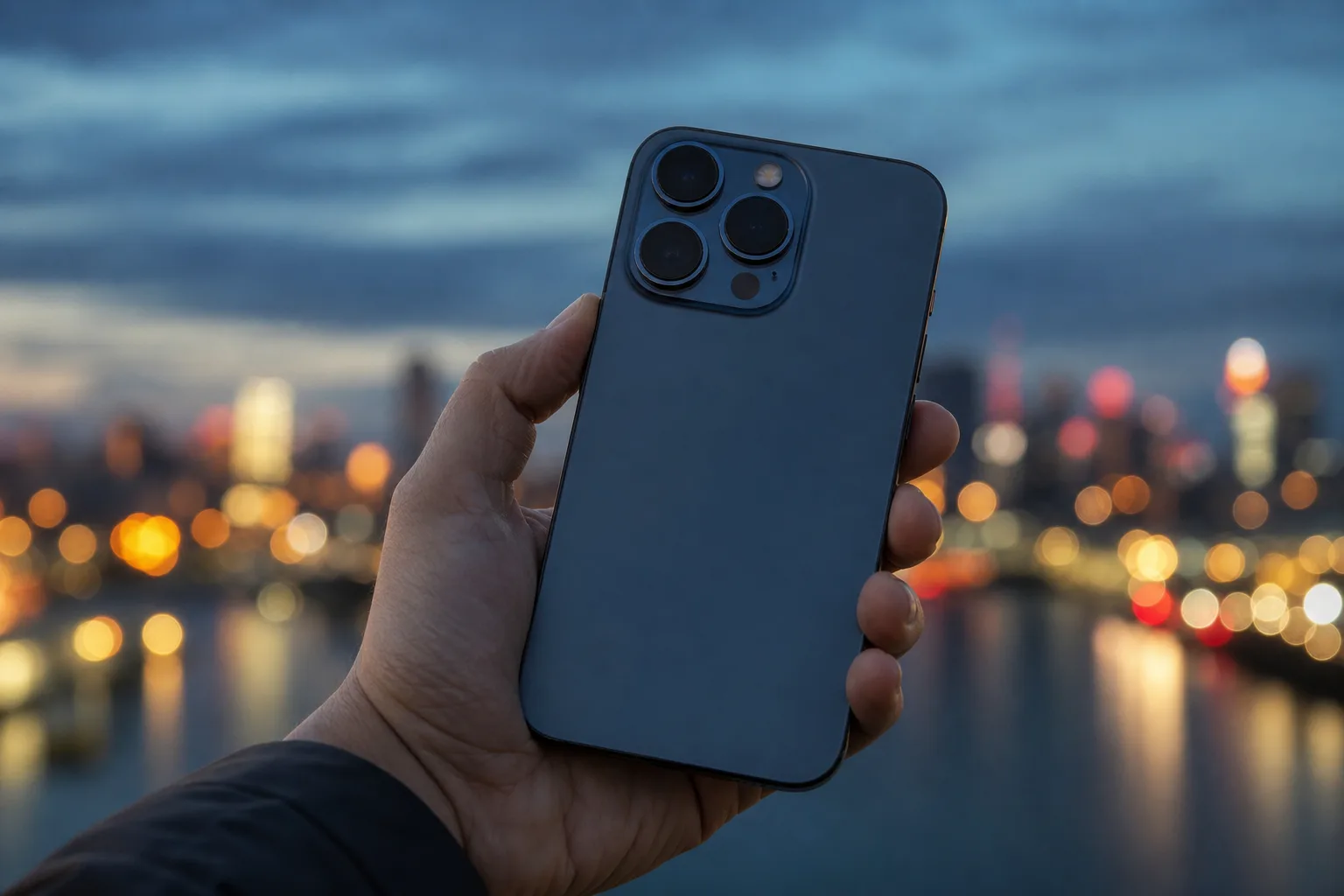
- The Huawei Pura 90s headline points to another camera-first flagship, but independent specifications and availability details remain unclear.
- A Huawei Pura 90s could challenge camera-phone rivals on imaging, while Huawei’s software constraints still matter outside China.
- Huawei’s Pura strategy treats photography as the product’s main identity rather than a routine specification-sheet contest.
- The real 2026 question is whether Huawei can pair ambitious optics with a global app experience buyers will accept.
Table of Contents
Huawei Pura 90s and the camera-phone promise
The Huawei Pura 90s is being presented in a Fstoppers headline as a photography flagship for 2026, which is exactly the sort of claim Huawei wants attached to its premium phones. The company has spent years trying to make the camera the reason to care first, rather than a box-ticking feature added after the display, chip and battery are settled.
Here’s the catch: the available source material offers a title, not the underlying review text, specifications, test images, pricing or regional launch details. Readers should treat the device name and its supposed position in Huawei’s lineup cautiously until Huawei publishes a product page and full technical documentation. There is no point inventing sensor sizes, zoom ranges or benchmark results simply because a phone has a very large name.
Still, the framing is revealing. A 2026 phone described chiefly as a photography flagship tells us where the premium smartphone fight remains most interesting. Processors are fast enough for almost everyone. Displays are excellent across a wide price range. Cameras, meanwhile, are where companies can still produce a result people immediately notice: the night shot that holds together, the portrait that does not turn hair into watercolor, the concert zoom that is usable rather than merely technically possible.
That is Huawei’s territory. Or, at least, it has been.
What Huawei’s Pura line is trying to protect
Huawei renamed its P series as Pura. The rebrand was more than marketing department housekeeping. The old P line had become closely tied to Huawei’s camera credentials, from the early Leica partnership through later work with its own XMAGE imaging brand. Pura gave the company a way to carry that reputation forward while drawing a line under an era that had changed dramatically.
A potential Huawei Pura 90s would therefore arrive with unusually heavy expectations. Huawei cannot simply say that its newest phone has more megapixels or another AI photography mode. Apple, Samsung, Google, Xiaomi, Oppo and Vivo all have formidable imaging stories now, and computational photography has narrowed some of the old hardware gaps. The easy wins are gone.
My read is that Huawei’s strongest advantage has never been raw specification theatrics. It has been a willingness to tune phones for photographs rather than for the demo counter. Colour rendering, dynamic range, low-light exposure and motion handling can decide whether a photo feels convincing. Those details are boring in a launch keynote and enormously important when you are looking back at pictures from a holiday six months later.
Huawei’s own Pura 70 Ultra product page helps fill in the picture. It does not confirm anything about the Huawei Pura 90s, but it does establish the direction from which any successor would likely come.
The harder problem is not the lens
Frankly, the best camera hardware in the world does not erase Huawei’s biggest international complication: software. Since US trade restrictions cut Huawei off from Google Mobile Services on new devices, its phones outside China have required compromises that many mainstream buyers simply do not want to make. AppGallery has grown, and Huawei’s ecosystem has become more capable, but Google apps, banking apps, wearables and everyday workplace tools remain a practical consideration.
This is where a Huawei Pura 90s faces a different test from a Xiaomi Ultra, a Galaxy S Ultra or a Pixel Pro. Someone buying a Samsung phone can walk into a store, transfer their data and expect the familiar Android app universe. A Huawei buyer in many markets needs to know precisely what will work, what needs a workaround and what may not work at all. That is a poor trade for plenty of people, however lovely their sunset photos look.
China is a separate story. Huawei’s home-market momentum, its HarmonyOS push and its cultural cachet give the company room to compete without Google’s services hanging over every purchasing decision. But a great domestic flagship and a great global flagship are not automatically the same product. Remember when Huawei was routinely competing with Apple and Samsung for global phone leadership? The camera has stayed strong; the distribution and software equation changed.
Photography claims need evidence, not adjectives
The Fstoppers headline gives the Huawei Pura 90s a flattering assignment, but the useful questions for any eventual review are straightforward. Does it capture moving subjects cleanly in poor light? Does the telephoto camera retain natural texture, or does image processing sand everything down? Can the main sensor handle bright skies without making faces look murky? How reliable is video autofocus? And does the phone produce consistent results across every camera, rather than one excellent main lens and two passengers?
Those are not glamorous questions. They are the questions that separate a camera phone people admire on social media from one they trust at a family event.
There is also a growing fatigue with the industry’s computational overcorrection. We have all seen it: grass that looks painted, faces sharpened into strange masks, moon shots that inspire more debate than confidence. Huawei has generally been good at pursuing dramatic images without crossing quite as far into cartoon territory as some rivals, though every manufacturer can get carried away when algorithms are involved.
If the Huawei Pura 90s genuinely earns the photography-flagship label, it will need to show restraint as well as ambition. A phone camera should help preserve a moment, not audition to replace it.
A flagship can win the test and lose the market
There is no reason to dismiss Huawei’s imaging work. The company has repeatedly proven that it can produce phones capable of making competing flagships look conservative. But the premium phone market is no longer won solely by the person who takes the prettiest night photo. Buyers are choosing ecosystems, retail support, software longevity, repair options and the boring compatibility details that only become visible after the credit-card charge clears.
That makes the potential Huawei Pura 90s more interesting than another annual camera upgrade. It would test whether Huawei can turn hardware excellence into a proposition that travels beyond its strongest markets. If it can, Samsung and Apple have a serious photographic rival to worry about. If it cannot, Huawei may keep making some of the world’s most intriguing camera phones for an audience that remains frustratingly limited.