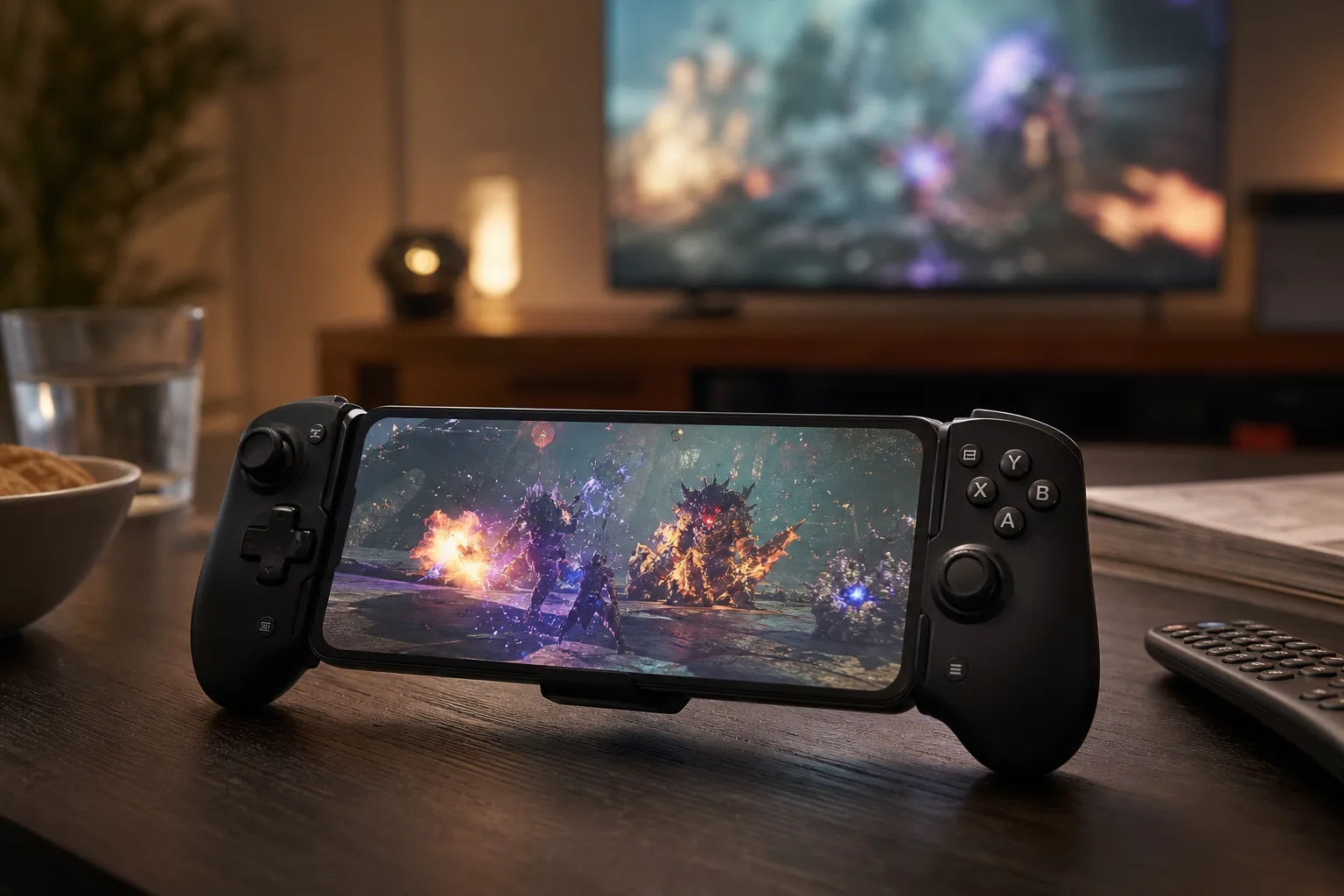
- Apple is reportedly developing an iPhone game controller with physical sticks, a D-pad, haptics, and potential motion sensors.
- A Beats-branded iPhone game controller could give Apple a lower-priced route into accessories while expanding its gaming ambitions.
- The reported hardware may also improve Apple TV gaming, where controller support has existed without a compelling first-party option.
- Apple still needs games people genuinely want to play before a controller becomes more than another handsome accessory.
Table of Contents
Apple’s iPhone game controller could fill an obvious gap
Apple has spent years insisting that the iPhone is a serious gaming machine, then left players to bring their own hardware. That may be changing. Reports from Bloomberg’s Mark Gurman, following references spotted in macOS beta code, suggest Apple is developing an iPhone game controller of its own, potentially with Beats branding.
The timing makes sense. Apple now sells high-end games such as Resident Evil Village, Death Stranding, and the Assassin’s Creed Mirage mobile port through its platforms. Modern iPhones have enough graphics horsepower to run work that would have sounded absurd on a phone a few years ago. Touch controls, though, remain the splinter in the whole proposition. You can have console-level lighting and textures, but a virtual thumbstick is still a smudgy suggestion of a real input device.
That is the problem an Apple-made iPhone game controller could solve. It would also represent a small but telling change in posture. Apple already carries controllers from Backbone and SteelSeries in its stores, yet the company has historically preferred to let third parties address gaming’s awkward physical bits.
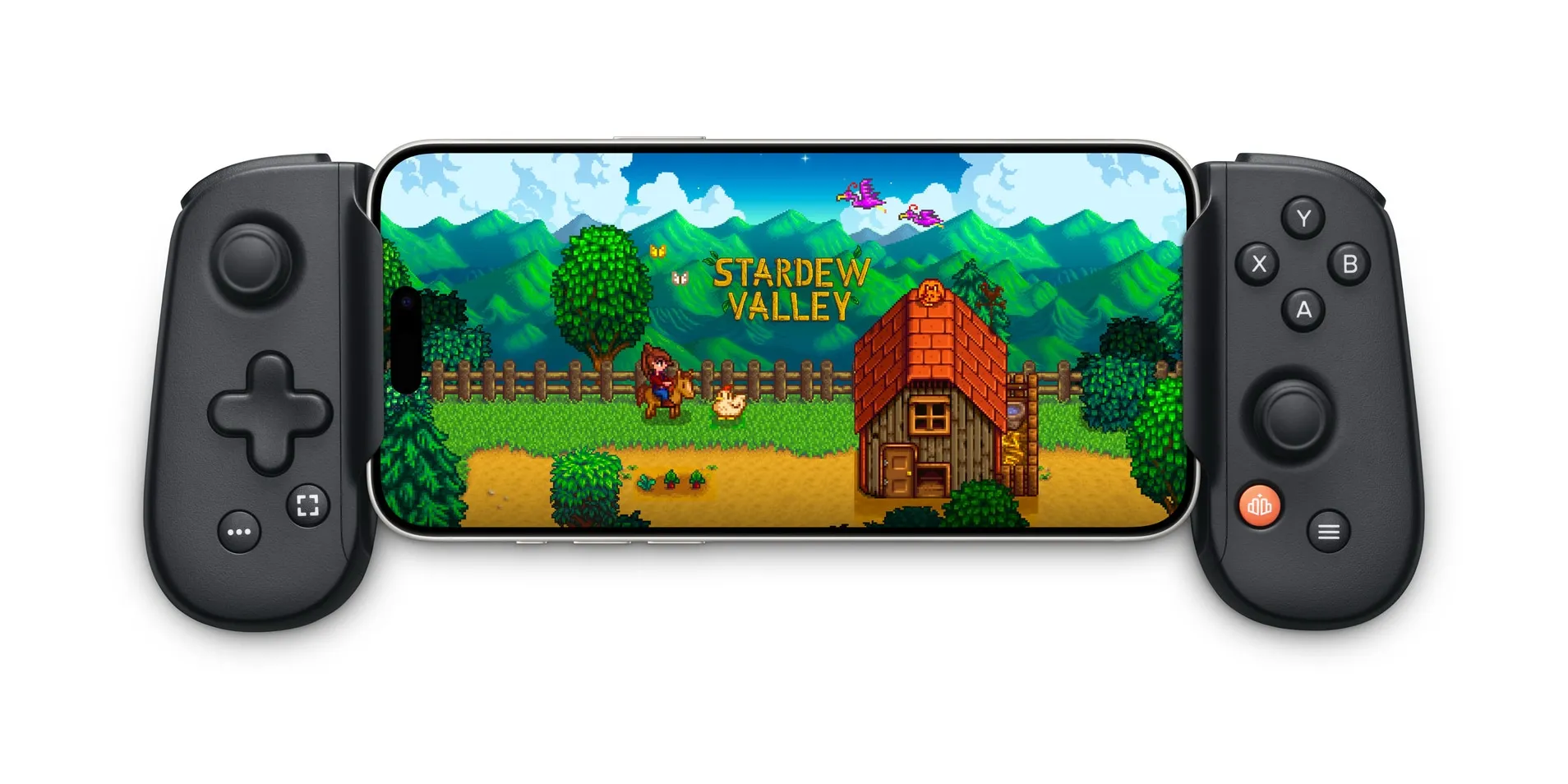
The alleged work appears to involve two accessories, identified in code as T6502 and T1057. The references point to familiar controller ingredients: a directional pad, analog sticks, haptic motors, and perhaps accelerometer and gyroscope sensors for motion input. Those clues don’t tell us whether Apple is building a handheld-style clamp for an iPhone, a conventional wireless pad, or both. They do indicate that this is more than a stray internal experiment.
Why Beats may be the right home for an iPhone game controller
Gurman reports that Beats executives are overseeing the project, raising the prospect of a Beats iPhone game controller rather than an accessory wearing the Apple logo. Frankly, that is probably the smarter branding choice.
Beats has become Apple’s useful outlet for products that can be colorful, youth-oriented, and priced with less ceremony than a flagship Apple device. Its headphones often trade some of Apple’s premium material choices for a more approachable pitch. A controller fits that mold well. Nobody needs an aluminum-and-glass gamepad designed to match a MacBook Pro. Players need comfortable sticks, reliable wireless connectivity, decent battery life, and a price that doesn’t make an Xbox controller look like the sensible alternative.
There is also a marketing advantage. An Apple iPhone game controller might invite expectations of immaculate industrial design and a painful price tag. Beats can credibly sell something more playful. Think of it as the difference between buying a formal jacket and buying sneakers: both can be expensive, but only one feels natural to toss in a backpack before a flight.
Apple has used Beats more aggressively as an accessory brand in recent years, including the Beats Solo Buds and the Powerbeats Pro line. A controller would extend that strategy into an area where Beats has genuine cultural recognition among younger buyers, even if it has no established gaming pedigree.
The competition has already shown Apple the blueprint
Apple is not entering empty territory. The Backbone One has become the best-known phone-mounted option, while Razer’s Kishi line, GameSir devices, and several lower-cost rivals offer variations on the same basic idea. They turn a phone into something closer to a Nintendo Switch, with physical controls on each side. Standard Bluetooth pads from Sony, Microsoft, and others also work across Apple devices.
Apple’s own controller support documentation confirms compatibility for PlayStation and Xbox wireless controllers across iPhone, iPad, Mac, and Apple TV. This is why the rumored hardware is interesting but not automatically essential. Compatibility has not been Apple’s issue. Cohesion has.
Buy a Backbone, and you are buying into a third-party accessory ecosystem with its own app, design compromises, upgrade cycle, and occasional phone-fit headaches. Buy a console controller, and you have a great pad that is not especially portable. A first-party iPhone game controller could be tuned around Apple’s hardware dimensions, connection behavior, software prompts, and case designs in ways that external vendors cannot always anticipate.
Apple would need to resist its usual accessory instincts. A controller that only fits one iPhone generation, requires a particular case, or launches at a luxury price would be a gift to Backbone. The company’s advantage should be frictionlessness, not another dongle-shaped tax on owning an iPhone.
Apple TV is part of the bigger bet
The most consequential version of this story may not be mobile at all. A wireless Beats or Apple iPhone game controller could give Apple TV 4K a much clearer gaming identity. Apple has supported controllers on the set-top box for years, but it has never supplied the obvious box art: buy this controller, open these games, play on your television.
Apple Arcade helped establish a subscription catalog, although its appeal has leaned toward polished casual titles rather than the blockbuster console experiences many players expect. Meanwhile, Apple’s recent push for AAA ports has been technically impressive but commercially murky. Big games arriving on iPhone can generate headlines; persuading someone to play a 30-hour action game on a touchscreen is another matter entirely.
A good controller reduces that objection. It also creates a cleaner bridge between iPhone, iPad, Mac, and Apple TV. Start a game on the train with a phone-mounted pad, then continue on the TV at home with the same account and familiar controls. Apple loves that sort of ecosystem loop because every piece makes the others feel more useful.
Hardware alone will not make Apple a gaming destination
Still, Apple should be careful not to confuse an accessory with a strategy. The company has chips capable of extraordinary mobile graphics and an installed base no console maker can touch. Yet gaming on Apple platforms remains fragmented: Apple Arcade lives beside the App Store, premium ports arrive sporadically, and developers face the old question of whether iPhone users will pay upfront for ambitious games.
That is why an iPhone game controller would matter most as a commitment signal. Developers could see a more direct path to supporting physical controls. Players could see Apple treating games as something more than a demo for its silicon. And Apple TV could finally have an official answer when somebody asks what it is for beyond streaming.
My read is that Beats is the right label and a controller is the right piece of hardware. But the real test is whether Apple pairs it with a steady, visible slate of games worth playing. Without that, even the best iPhone game controller is just a very nice steering wheel attached to a parked car.