

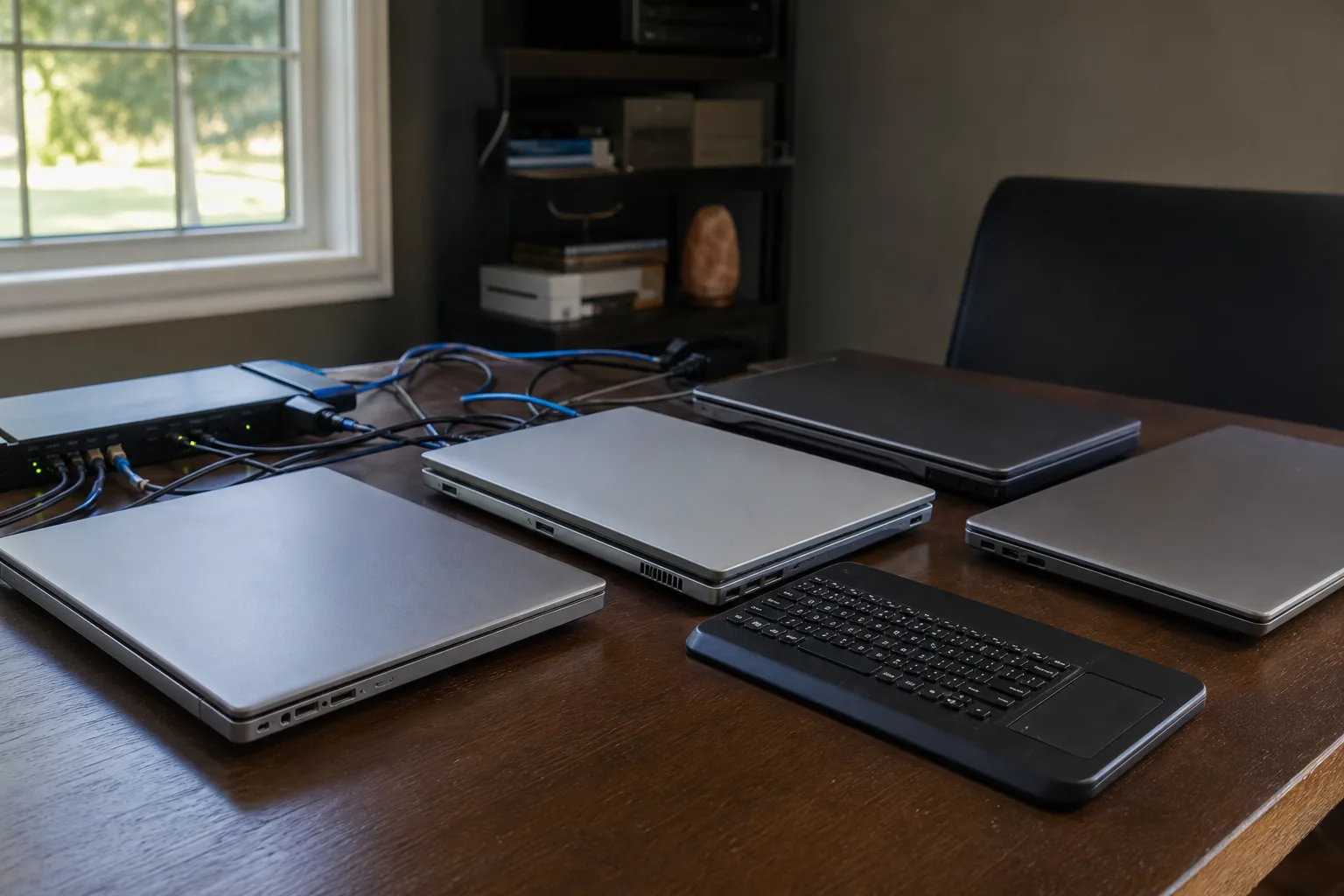
- The FBI targeted North Korean IT workers through 40 Texas searches, seizing roughly 187 employer-issued laptops and remote-access equipment.
- North Korean IT workers allegedly used U.S. laptop farms to appear domestic while sending employment income back to DPRK-controlled accounts.
- Two U.S. facilitators were arrested, while prosecutors also charged 12 Chinese defendants in related identity and money-laundering cases.
- The cases show why remote hiring controls now matter as much as conventional endpoint security for technology employers.
Table of Contents
The laptop farm was the missing piece
The striking part of the FBI’s Texas operation isn’t the 187 laptops themselves. It’s the physical infrastructure behind a problem many companies still dismiss as an HR oddity. North Korean IT workers reportedly needed real U.S. homes, real internet connections, and real people willing to receive corporate hardware so they could pass as ordinary remote employees. For North Korean IT workers, that domestic-looking setup was essential to sustaining the deception.
Between September 21 and 25, the FBI searched 40 residences in Texas in an operation called Lonestar Roundup. Agents collected company-issued computers and KVM devices, the hardware that lets someone control a machine remotely while preserving the illusion that it is being used locally. Two U.S. nationals, Michael James Bostelle and Juan Cecilio Pena Carrillo, were arrested on allegations including wire fraud, money laundering, and identity theft. Prosecutors separately announced charges against 12 Chinese defendants.
This is a useful correction to the popular mental picture of cybercrime. We tend to imagine a hooded attacker battering at a firewall from halfway around the world. Sometimes the more effective route is far less cinematic: get hired, receive a managed MacBook or Windows laptop, attend standups, submit code, and collect a salary. From inside the company, the access is already there.
The U.S. Justice Department says an Ohio-based scheme operating from 2019 through July 2025 affected 70 U.S. companies and brought in roughly $3 million for North Korean operators. That figure should get the attention of every executive who thinks an identity check at onboarding is a solved problem.
How North Korean IT workers got past remote-work checks
Groups tracked by security researchers as Famous Chollima, also called WageMole, have built a business around fraudulent remote employment. North Korean IT workers allegedly relied on stolen, borrowed, rented, or fabricated identities, then used VPNs and proxy services to mask their actual location. Sanctions limit North Korea’s access to global finance, so overseas technology work offers a comparatively low-drama way to bring foreign currency into the country.
The laptop farm closes the last-mile gap. A company may ship its computer to the address on an employee’s paperwork, check the device’s IP address, and reasonably conclude that the worker is U.S.-based. But if a facilitator receives the laptop in Texas and installs remote-control software, an operator elsewhere can use it as a digital puppet.
CrowdStrike says the operators have become unusually resourceful about getting devices to those locations. Tactics include reporting a laptop stolen so a replacement is sent to a farm, changing delivery addresses during shipment, cycling through residences, and exploiting access to IT staffing workflows. As public scrutiny has increased, CrowdStrike says the group has also moved toward spoofed device identifiers and, in some cases, reused identifiers across different victim organizations.

That last detail matters. Device fingerprinting is often sold as a quiet but dependable fraud signal. If one machine’s identity appears across multiple employers, though, it can become an obvious clue — provided anyone is correlating the data. Many companies simply aren’t. Recruiting, IT asset management, security operations, and payroll still tend to run as separate fiefdoms, which is exactly the crack this operation slips through.
North Korean IT workers are an insider-risk problem
Calling this solely an employment scam undersells the risk. The immediate harm may be salary payments routed through intermediaries to DPRK-controlled accounts, but the employer has also handed an unverified person a legitimate foothold in its systems. North Korean IT workers operating under false identities may gain access to source code, customer data, cloud consoles, privileged credentials, or internal collaboration tools, depending on the role.
Fraudulent hires can be used for more than revenue generation. Some operators have allegedly attempted data theft, extortion, malware deployment, and cryptocurrency theft after gaining access. Not every fake remote worker turns into an active intruder, of course. But that is hardly comforting. Hiring someone under a false identity is already a security incident, not a payroll discrepancy to sort out later.
The official Justice Department disclosures point to a networked operation rather than a few opportunists running laptops from spare bedrooms. The alleged facilitators handled shipments, installed remote software, and moved money. The overseas side supplied the technical labor and false identities. It has the practical shape of a service business — an illegal one, obviously, but organized enough to scale.
What companies should change now
There is no single magic check that will catch every fraudulent applicant. Video interviews can be coached or conducted through stand-ins. Identity documents can be convincing. IP geolocation is weak evidence in a world of VPNs, corporate networks, and remote desktops. Frankly, any employer treating one of those signals as definitive is inviting trouble.
What helps is combining the evidence. Companies defending against North Korean IT workers should verify identity and work authorization through established processes, watch for abrupt shipping changes, require clear asset-chain records, and investigate device telemetry that conflicts with an employee’s claimed location. Security teams also need a formal way to flag strange onboarding patterns to HR without turning every remote worker into a suspect.
For sensitive engineering and infrastructure jobs, organizations should examine whether the machine is being accessed through unexpected remote-control tools, whether its activity aligns with the employee’s normal time zone, and whether multiple workers show overlapping device or network fingerprints. Those checks need privacy guardrails, but pretending the problem does not exist is not a privacy policy. It is negligence with better branding.
A disruption, not a finish line
CrowdStrike described the Texas action as the start of a broader U.S. law-enforcement push against Famous Chollima’s domestic infrastructure. That sounds right, but it also signals the limits of the raid. Seizing 187 laptops hurts. It doesn’t erase the underlying incentives, the pool of compromised identities, or the supply of people willing to rent out an address for easy money.
Still, North Korean IT workers now face a less forgiving environment than they did even a year ago. Their methods depend on trust in remote work, fragmented corporate processes, and the assumption that a U.S. shipping address proves a U.S. worker. Lonestar Roundup has made that assumption considerably harder to defend. The next question is whether employers will adjust before the next laptop farm simply opens in another state.