

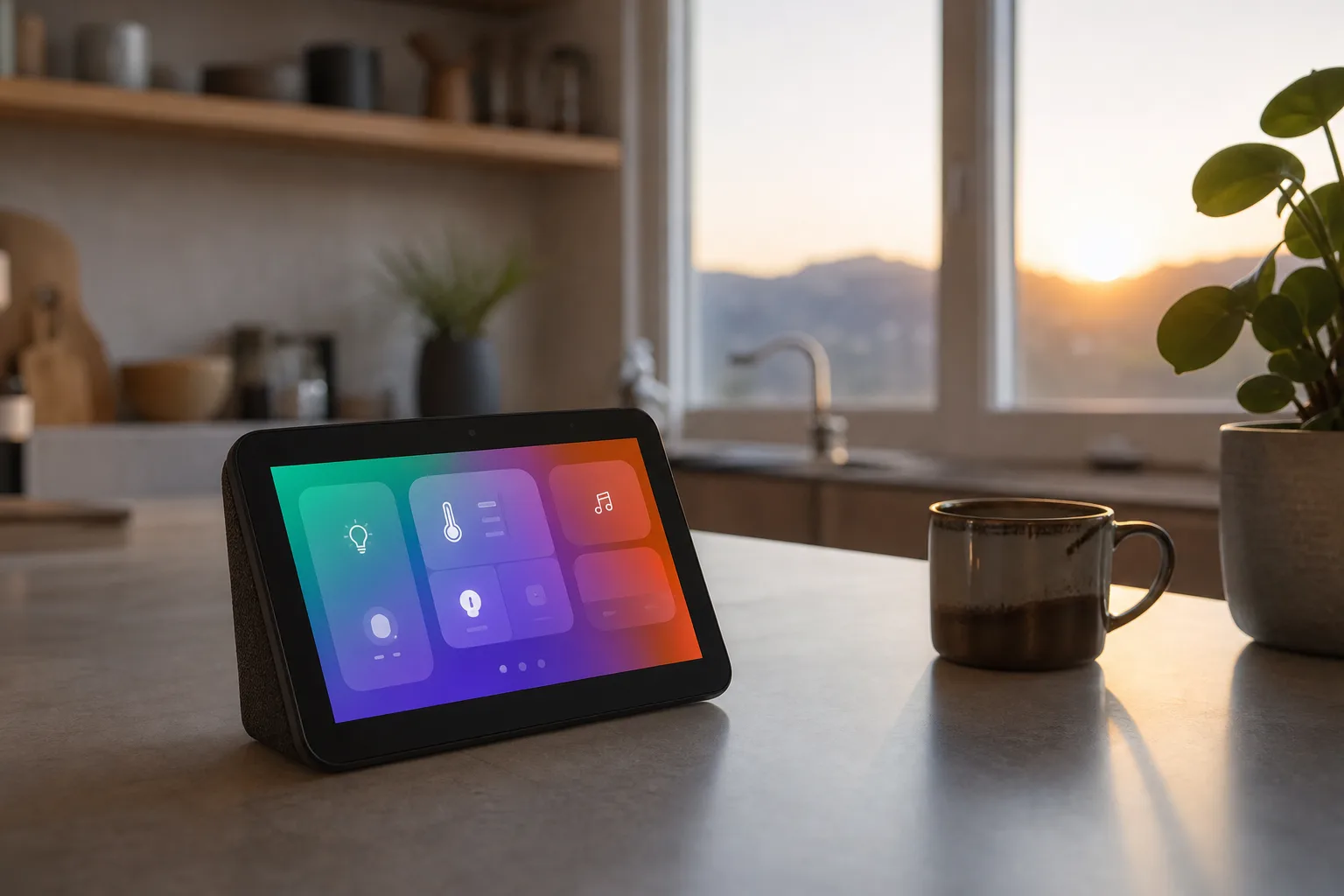
The smart speaker era was supposed to make voice computing feel inevitable. Instead, plenty of us now use Alexa, Google Assistant, or Siri mainly to set timers, switch off lights, and ask about tomorrow’s weather. An Apple smart home display could be Apple’s attempt to make that category useful again — and, frankly, it has a lot of work to do.
Apple may be preparing a challenge to Google and Amazon in the smart-home market. Apple has not publicly announced such hardware, so treat the timing and exact lineup as rumor rather than a calendar appointment. The larger direction, though, is easy to see. Apple has spent years assembling the pieces for a more serious home business, even if it has never put them together with much urgency.
- An Apple smart home display could finally give Apple a dedicated household device beyond the iPhone, iPad and HomePod.
- The Apple smart home display reportedly may arrive, though Apple has not confirmed any launch plans.
- Apple’s strongest opening is privacy and ecosystem integration, while Siri reliability remains the central consumer-facing risk.
- Matter support has lowered compatibility barriers, but Apple still needs a reason for households to switch from Google or Amazon.
Table of Contents
Why an Apple smart home display matters now
Google’s Nest Hub and Amazon’s Echo Show established the basic idea years ago: put a modest touchscreen, a microphone, a speaker, and an assistant in the kitchen or living room. The screen can show a camera feed, a calendar, a recipe, music controls, or a video call. It is hardly a new category. That is exactly why Apple can’t get away with releasing a pretty slab and calling it a day.
Still, Apple has an unusually clear gap in its lineup. The HomePod is an audio-first device with no display. An iPad can act as a home-control panel, but it is expensive, portable by design, and usually belongs to one person. A dedicated Apple smart home display could sit in a shared space and become the household’s persistent interface: the thing that shows who is at the door, turns down the thermostat, surfaces a family schedule, and controls the lights without someone hunting for their phone.
That shared-screen idea is more important than it sounds. Smartphones are intensely personal computers. Homes are not. There is room for a device that belongs to everyone in the house, provided it does not become another gadget demanding attention from the counter.
Apple’s existing Apple Home platform already handles connected lights, locks, cameras, sensors, and automation through the Home app. The company also supports Matter, the industry interoperability standard backed by Apple, Google, Amazon, Samsung, and hundreds of device makers. Matter has not made smart homes magically simple — anyone who has paired a temperamental light bulb knows better — but it has reduced the old fear that a purchase will be trapped in one vendor’s walled garden.
The Apple smart home display has a Siri problem
Hardware is not the hard part. Apple can build an attractive display, make it feel premium, and integrate it tightly with iCloud, Apple Music, FaceTime, Photos, and HomeKit-compatible accessories. That is the easy part by Apple standards.
Siri is the question hanging over everything.
For years, Siri has been capable enough for short commands but frustratingly brittle once a request becomes even slightly conversational or ambiguous. Ask for a specific playlist, control a room with an oddly named accessory, or make a request involving multiple people, and the assistant can still behave like an automated phone tree from 2012. Google Assistant, before Google’s own retrenchment and AI transition muddied the picture, generally set a higher bar for answering broad questions. Amazon, meanwhile, built Alexa’s reputation around smart-home control and third-party skills, even if its business model has struggled.
An Apple smart home display cannot simply inherit those Siri limitations and expect buyers to be patient because the industrial design is nice. Apple’s increasingly visible push into generative AI may help, particularly if the company can make Siri better at understanding context, resolving household requests, and presenting useful information instead of merely responding with voice. But a smart display is a brutal product for unfinished assistant software. It sits there, in full view, every day. When it fails, everyone notices.
Privacy could be Apple’s strongest differentiator. For an Apple smart home display, a kitchen screen that recognizes routines, displays family information, and potentially uses a camera creates obvious concerns. Apple has long marketed privacy as a product feature rather than a regulatory afterthought. If the company can offer clear on-device processing, transparent camera controls, and sensible user profiles, an Apple-branded household screen may feel less intrusive to some buyers than alternatives built around advertising or retail ecosystems.
A bigger home reset would signal more
A display by itself would be a cautious experiment. A group of related releases would imply Apple sees the home as a platform worth rebuilding.
Apple has several logical directions to pursue. It could refresh the HomePod line, introduce a home-focused security camera or doorbell, or offer a lower-cost control device that spreads Apple Home beyond its current enthusiast audience. The company has also been linked in past reporting to cameras, displays, and more ambitious home robotics concepts. None of that amounts to confirmation, and readers should be wary of the familiar Apple-rumor habit of turning a supply-chain hint into a finished product.
But the strategy is visible even without a product leak. Apple needs more places for its services and devices to matter between the moments when people pick up an iPhone. The home is a natural place to try. A screen could highlight Apple Music, Photos, TV content, FaceTime, and Home controls, while also making users more likely to buy compatible accessories. That is the same ecosystem logic Apple has used successfully with the Apple Watch and AirPods.
The difference is that a home hub must earn its space. Nobody needs another glowing rectangle on the kitchen counter. The winning Apple smart home display would need to be calm, glanceable, and occasionally indispensable — more like a good wall clock than a tiny television shouting for attention.
Google and Amazon have left Apple an opening
Apple is not entering a thriving, settled market. Google has shifted its consumer assistant story toward Gemini, while Amazon is attempting to turn Alexa into a more capable AI assistant after years of carrying the cost of a largely unprofitable device ecosystem. Both companies have enormous installed bases, but both have also shown that cheap hardware and voice commands alone do not create a durable smart-home business.
That leaves the Apple smart home display an opening, especially among households already using iPhones, Apple TVs, HomePods, and Apple Home accessories. Apple does not need to beat Amazon on price or Google on web knowledge. It needs to make home control feel more dependable, more private, and less cluttered than what is already on the market.
My read is that Apple’s biggest opportunity is not to reinvent the Nest Hub. It is to turn the Home app from something people occasionally open during setup into an ambient household utility. If the rumored Apple smart home display arrives and merely becomes a photo frame with Siri attached, it will join the long shelf of smart-home products that sounded more useful in the demo than they felt on a Tuesday morning. If it can make a complicated home feel boringly reliable, though, Apple may finally have found what the category has been missing.