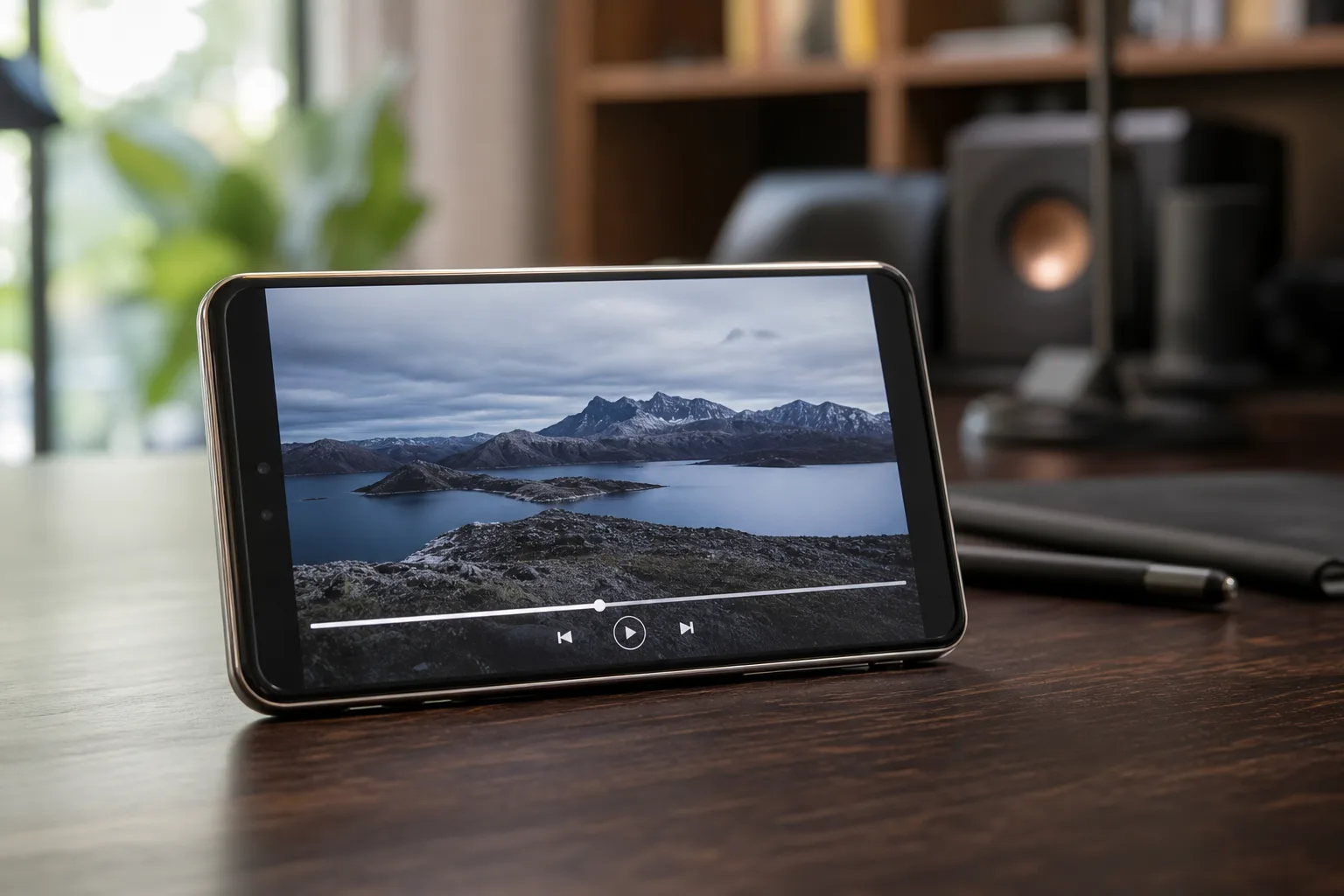
- The reported Oppo wide-format phone would challenge the tall, narrow proportions that have defined Android flagships for years.
- A wider Oppo wide-format phone could improve typing, video viewing, and one-handed reach, depending on its final dimensions and weight.
- Phone makers are searching for fresh hardware ideas as cameras, chips, and displays become increasingly similar across premium models.
- Oppo’s reported design direction echoes wider devices from earlier smartphone eras, but modern components could make the trade-offs more manageable.
Table of Contents
The tall-phone formula is starting to look tired
The Oppo wide-format phone reportedly in development sounds like a small design tweak. It isn’t. After years in which nearly every premium Android handset has stretched upward like a remote control, a flagship built around a noticeably broader body could be one of the more interesting hardware decisions Oppo has made in a while.
Details remain thin, and that matters. There is no confirmed product name, launch date, display measurement, or official specification sheet to dissect yet. But the basic idea is clear enough: smartphones do not need to be tall to stand out.
Frankly, it’s about time somebody seriously tested that template. The Oppo wide-format phone would be a welcome break from that sameness.
Modern phones became taller for practical reasons. Bigger screens sell, while a narrow chassis remains easier to wrap a hand around. The move to 18:9, 19.5:9, and similarly elongated displays also gave manufacturers room for more scrolling content without making devices immediately impossible to hold. It worked. Then everybody copied everybody else, and the market settled into a rather dull consensus.
Pick up a current flagship from Samsung, Google, Xiaomi, OnePlus, or Oppo and you’ll find variations in camera bumps, frame materials, and software skins. From the front, though, the silhouette is often almost comically familiar. A broader handset would at least force a real conversation about how people use these things.
Why an Oppo wide-format phone could feel better in daily use
A wider screen has an obvious appeal for video. Most films, television shows, and online clips are composed for landscape viewing, yet the default smartphone has increasingly been optimized for portrait scrolling. That’s not a scandal; phones are social-media machines now. Still, anyone who has watched a movie on a very tall device knows the ritual: rotate the phone, accept the black bars, and try not to cover the speaker grille.
An Oppo wide-format phone could make landscape content feel less compromised without crossing into small-tablet territory. Think of it as the difference between eating dinner from a narrow plate and a slightly wider one. The amount of food may be similar, but one arrangement simply gives you more room to work with.
Typing may be the bigger benefit. Wider keyboards create more separation between keys, which could reduce the constant stream of mistypes that comes with narrow phones. Games with virtual controls could benefit too, particularly titles that put movement controls on one side and action buttons on the other. And split-screen multitasking, an Android strength that plenty of people forget exists, becomes more useful when neither app is squeezed into a thin vertical strip.
For an Oppo wide-format phone, those gains would need to outweigh the compromises that come with a broader chassis.
There’s also a subtle ergonomics argument. A tall phone can be awkward because reaching its top edge often requires a hand shuffle or a second hand. A wider, shorter device could keep more of the display within reach. That doesn’t automatically make it a one-handed champion — width has its own limits — but it may be a more honest compromise for normal human hands.
The trade-off is obvious: a wide device can feel bulky in a pocket and less secure to grip. Apple learned versions of this lesson with the larger iPhone Plus models, while Samsung has spent years walking a tightrope between giant displays and usable width. Oppo would have to nail the curves, weight distribution, and frame thickness. A few millimeters can turn a comfortable phone into a slippery brick.
Smartphone design needs more than another camera ring
The reported Oppo wide-format phone arrives at a moment when flagship hardware is desperately looking for a new visual language. Camera modules have become the main battlefield because they’re the first thing buyers see, and because companies need some outward sign that this year’s model is different from last year’s. Hence the giant circles, enormous squares, and lenses arranged like dashboard gauges.
But camera styling is decoration. Form factor changes how a product behaves.
Foldables are the obvious exception. Oppo’s Find N line, for example, has previously taken a squarer approach than Samsung’s narrow book-style Galaxy Z Fold devices. That design has had genuine fans because the closed phone feels closer to a conventional handset, while the opened display is less tall and gangly. The broader-phone concept may be an extension of that same instinct: screens should fit the jobs people actually do, rather than merely maximize a diagonal measurement for a marketing slide.
There’s precedent beyond foldables, too. Older smartphones often had broader proportions, and devices such as the BlackBerry Passport went dramatically wide in pursuit of productivity. The Passport was a fascinating oddball, not a mass-market blueprint. But its failure doesn’t prove width itself was a mistake. BlackBerry also paired the concept with a physical keyboard, an unusual square display, and software that was already losing relevance. Context matters.
A modern Android flagship has better displays, thinner batteries, more efficient processors, stronger cameras, and apps designed around flexible layouts. An Oppo wide-format phone would be entering a much friendlier technical environment than the experiments of a decade ago.
The software is where this gets real
Hardware proportions are only half the job. Android can adapt to many screen sizes, but app design remains inconsistent. Some apps make intelligent use of width with expanded sidebars, richer tablet-style layouts, or sensible split panes. Others merely stretch a phone interface until every button looks stranded in the middle of empty space.
Google has spent several years pushing developers toward large-screen optimization, largely because Android tablets and foldables finally became strategic again. Its large-screen developer guidance lays out the case for responsive layouts across different display sizes and orientations. Oppo would need that ecosystem work to pay off. Otherwise, the Oppo wide-format phone risks feeling purpose-built for video and keyboards, while the rest of the interface remains a conventional tall-phone experience squashed sideways.
ColorOS could help. Oppo has enough control over its software to tune its launcher, multitasking tools, camera app, and media interfaces for a distinct screen shape. The company shouldn’t overdo it. Nobody needs another phone maker inventing a dozen gestures that only work on one model. But practical additions such as more useful split-screen presets, a well-designed floating-window system, and landscape-aware home-screen widgets could turn a shape experiment into something users notice every day. That polish could be especially important if the Oppo wide-format phone is meant to establish a new flagship category.
Oppo may be testing whether buyers still care about shape
That’s the larger bet. Most people do not shop for aspect ratios. They shop for cameras, battery life, price, brand familiarity, and whatever color looks good in the store. Yet physical shape has a sneaky way of defining satisfaction after the first week, once the launch-day excitement has worn off and you’re using the phone in bed, on a train, or with one hand while carrying coffee.
If the reported Oppo wide-format phone becomes real, it probably won’t reset the entire market overnight. Samsung isn’t going to abandon the Galaxy S formula because one rival makes a broader slab. Apple, meanwhile, tends to change proportions only when it can make the shift feel inevitable. That’s its particular magic trick.
But Oppo does not need to start a stampede for this to matter. It needs to prove that a flagship can feel materially better because its screen is shaped differently, not simply because it has a newer Snapdragon chip and another 200-megapixel camera. My read is that the industry has room for exactly this kind of experimentation. The risk isn’t that Oppo makes a phone too wide. The risk is that it backs away and gives us one more perfectly competent, instantly forgettable rectangle.