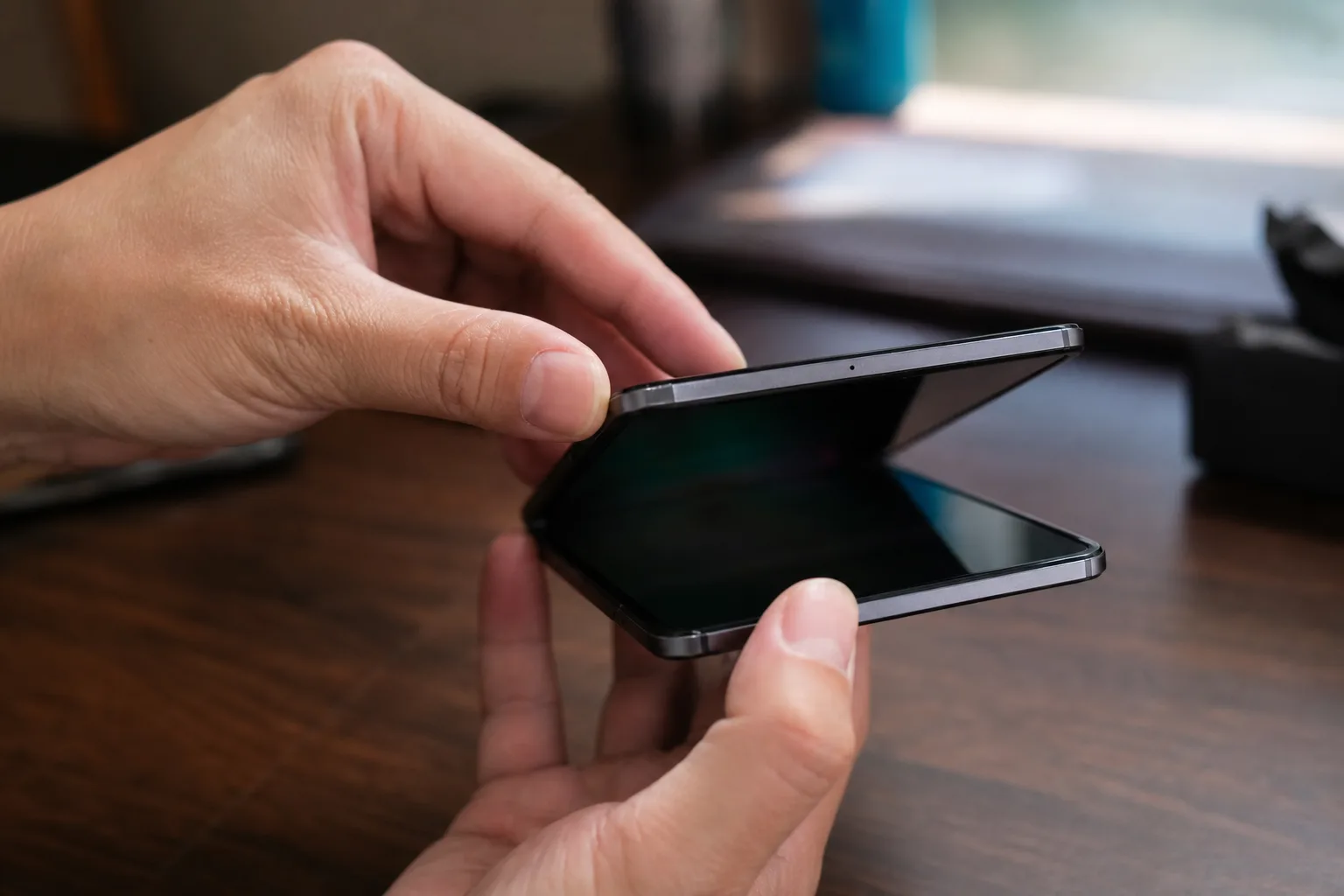
- The Galaxy Z Fold 8 Ultra reportedly widens the opening gap by 20%, solving a frustrating grip problem on its ultra-thin predecessor.
- Samsung’s Galaxy Z Fold 8 Ultra retains the Fold 7’s slim folded profile while reshaping its rails and chamfers for better everyday handling.
- The revised chassis should let owners open the phone without repeatedly pushing fingernails toward the delicate inner display.
- A small ergonomic improvement may matter more than headline camera and battery upgrades for people who unfold their phones dozens of times daily.
Table of Contents
Galaxy Z Fold 8 Ultra and the problem with thinness
The Galaxy Z Fold 8 Ultra may have its most meaningful improvement in a place no benchmark will catch: the tiny space where two halves of the phone meet. Samsung spent years chasing the dream of a foldable that doesn’t feel like a brick in your pocket. By the Galaxy Z Fold 7, it had largely arrived. At 8.9mm thick when shut, that phone finally felt plausibly phone-shaped rather than like two phones reluctantly taped together.
But thin hardware has a funny habit of creating new annoyances while fixing old ones. The Fold 7’s flat rails and tightly closed body gave users very little to grab when opening it. That sounds trivial until you remember what a book-style foldable is supposed to do: open constantly, without ceremony. If you need perfect thumb placement or a fingernail to access your expensive mini-tablet, the industrial design has missed a basic human-factors test.
Reported specifications for the Galaxy Z Fold 8 Ultra suggest Samsung has finally addressed that trade-off. The new phone is said to offer a 20% wider opening gap than the Fold 7, along with reworked side rails and a more pronounced chamfer. It is the kind of adjustment most buyers will never see on a comparison chart. They’ll feel it within five minutes.
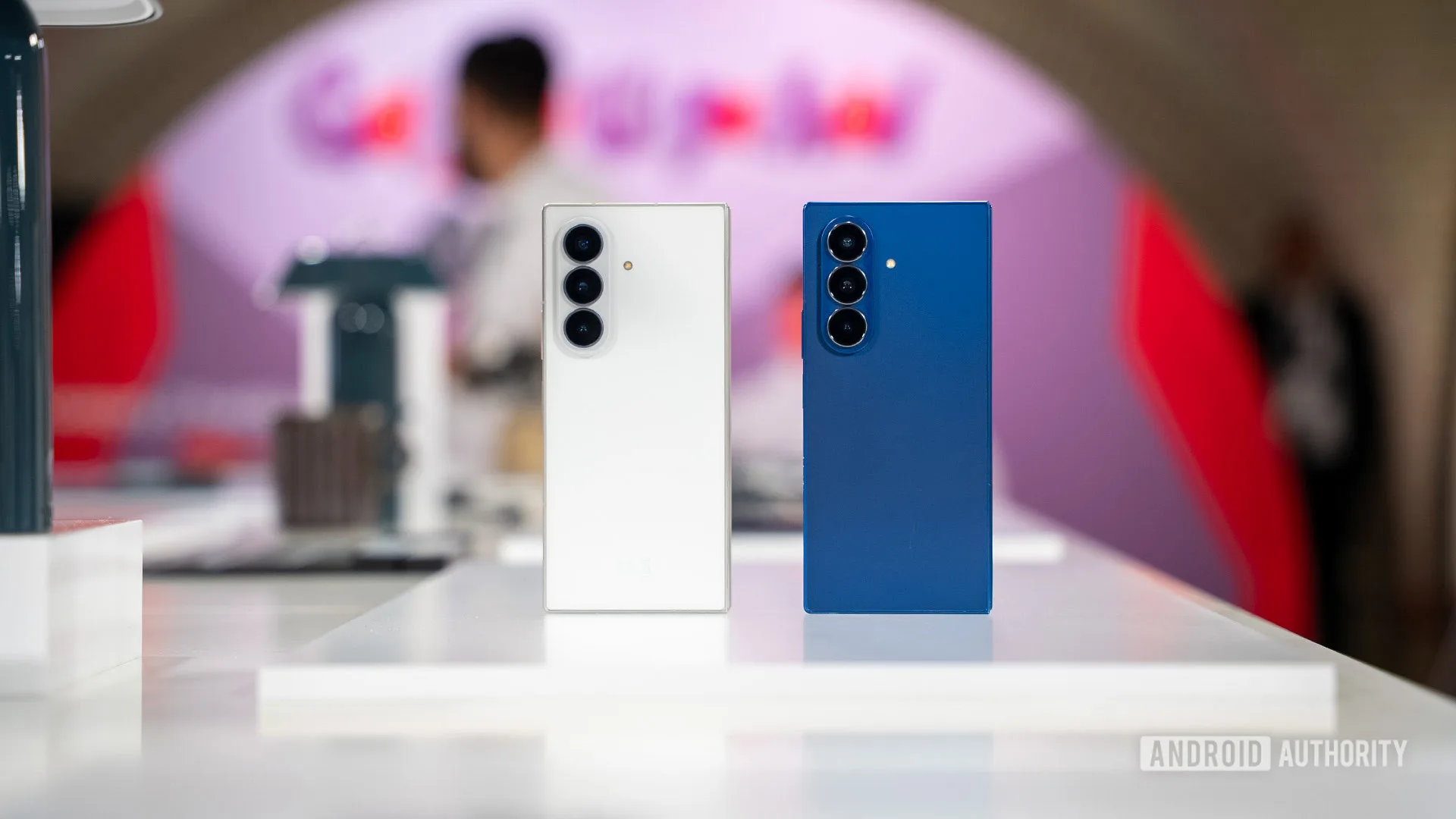
A millimeter can decide whether a phone feels finished
Samsung’s recent Fold design has been an exercise in aggressive slimming. The Galaxy Z Fold 6 measured 12.1mm when folded, giving each half enough physical depth to hold comfortably. The Fold 7 cut that down by roughly 3mm overall. Its individual rails were reportedly about 4.2mm thick, versus roughly 5.6mm on the Fold 6.
That missing sliver of metal is more consequential than it sounds. On a conventional slab phone, a slightly sharp edge may be annoying but manageable. On a foldable, the edges are also the handles for the product’s central action. Samsung carried forward a mostly squared-off visual language that worked when its Fold models were thicker, then squeezed it into a form factor where there simply wasn’t enough purchase.
My read is that this is the predictable downside of an industry that treats thinness as a universal virtue. Nobody wants a chunky folding phone, obviously. But a device can be too thin in the wrong places, much as a kitchen knife can have a beautiful handle that is miserable to use. The Fold 7’s problem wasn’t its overall size. It was that its clean, flush seam left owners searching for a starting point.
That search can lead straight to a fingernail, which is not ideal around a flexible display. Samsung calls the inner panel covering Ultra Thin Glass, but the practical reality is more complicated than the name implies: foldable screens still rely on layered materials and need careful treatment. Samsung’s official newsroom reportedly highlights durability advances in its Fold range, yet no amount of lab testing changes the fact that a nail pressed into the wrong part of a soft display stack is a risk most users would prefer to avoid.
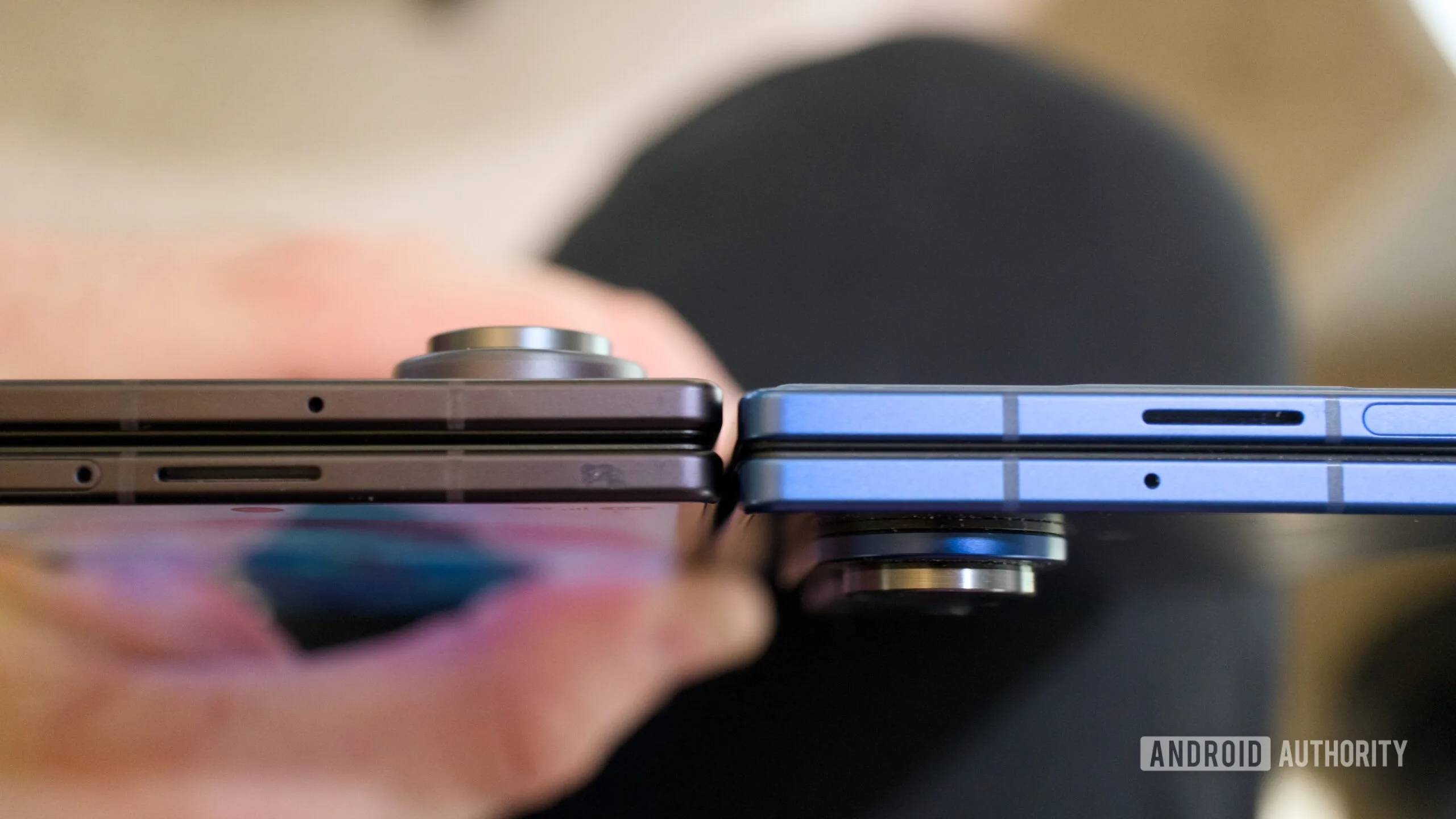
The Galaxy Z Fold 8 Ultra fixes the interaction, not just the measurement
The important trick here is that Samsung apparently hasn’t made the Galaxy Z Fold 8 Ultra meaningfully fatter. Its stated unfolded thickness is 4.1mm, a hair below the Fold 7’s figure, while its folded thickness remains effectively the same. Instead, the company seems to have trimmed the aluminum chassis and altered the edge geometry, leaving a slightly wider gap between the display halves.
That distinction matters. A wider gap could sound like a regression if you’re obsessing over visual symmetry, and Samsung has spent plenty of time trying to make its foldables close as neatly as possible. Yet a phone is not a showroom object. It is handled while walking, while carrying coffee, while trying to answer a message before the elevator closes. A purposeful gap is a feature when it gives your fingers somewhere to work.
The raised protective bezel around the internal display is also reportedly retained, so Samsung isn’t exposing the panel to more damage merely to improve access. If the final hardware behaves as described, the Galaxy Z Fold 8 Ultra could mark a welcome shift in priorities: less fascination with the number on the spec sheet, more attention to the repeated physical action a customer performs every day.
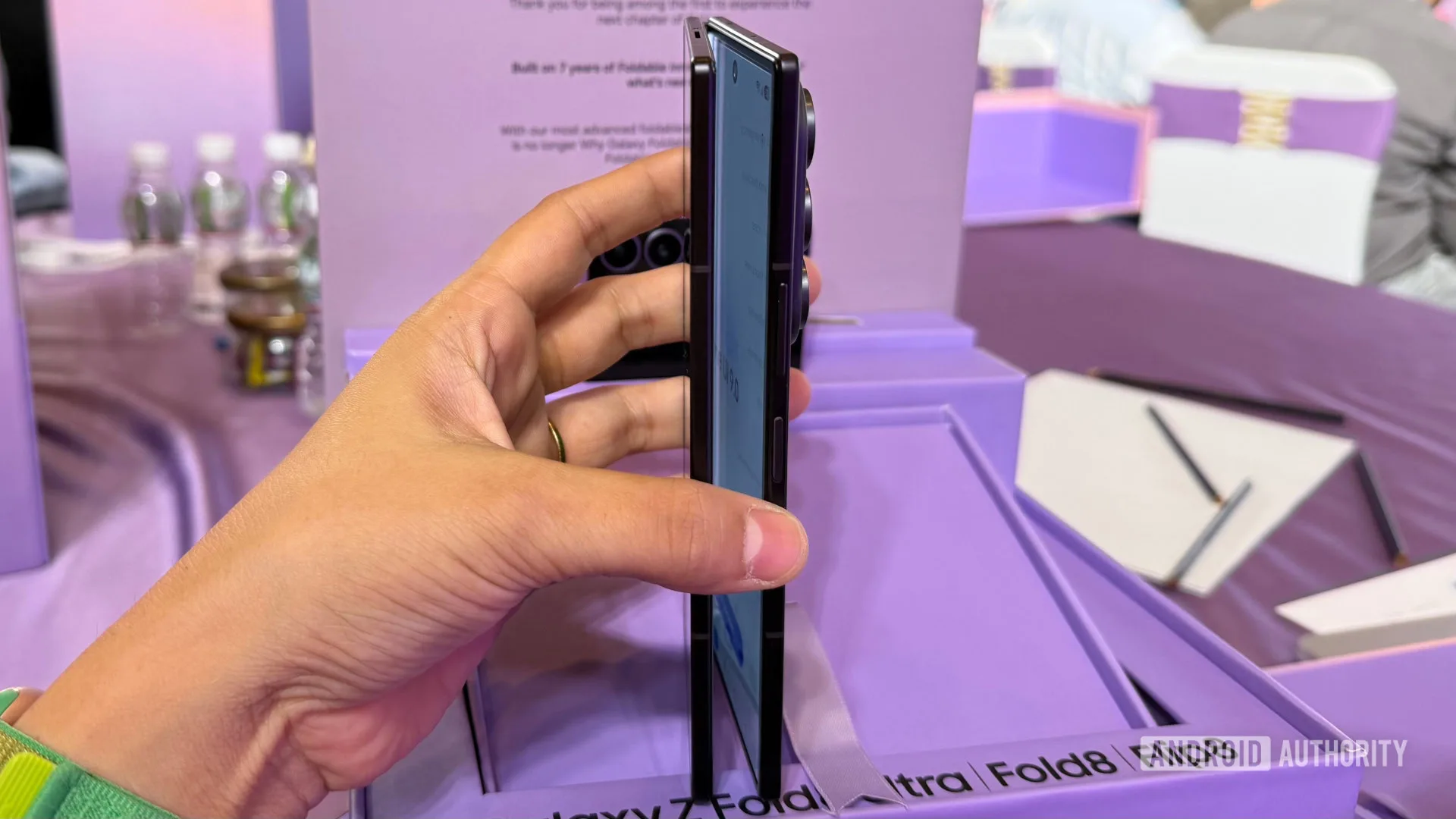
Why this small change could outlast the headline upgrades
There are flashier reported upgrades attached to the Galaxy Z Fold 8 Ultra, including a 5,000mAh silicon-carbon battery and a 50MP ultrawide camera. Both are welcome. Battery capacity has long been the awkward compromise in thin foldables, and Samsung’s ultrawide cameras have historically lagged behind what buyers get on its top non-folding Galaxy phones.
Still, cameras are used when you want to take a photo. Battery improvements reveal themselves at the end of a long day. Opening a Fold happens all the time. It is the interaction that makes the category make sense in the first place. That’s why this design revision could prove more valuable than a megapixel count, especially for anyone who uses the inner display for documents, multitasking, games, or simply reading without squinting.
Samsung is hardly alone in learning this lesson. Chinese foldable makers such as Honor, Oppo, and Vivo have pushed relentlessly toward thinner book-style devices, while Google’s Pixel Fold approach leaned more heavily on a usable shape than sheer thinness. The race now needs to move beyond who can shave off another tenth of a millimeter. A foldable should feel inviting to unfold, not like a sealed packet of batteries.
Frankly, the Galaxy Z Fold 8 Ultra may be Samsung acknowledging that the final mile of foldable design is about friction, literal and otherwise. The company got the Fold slim enough. Now it has to make that thinness disappear from the user’s mind. If the revised seam does that, Samsung will have made one of the smartest upgrades in this generation of folding phones.