

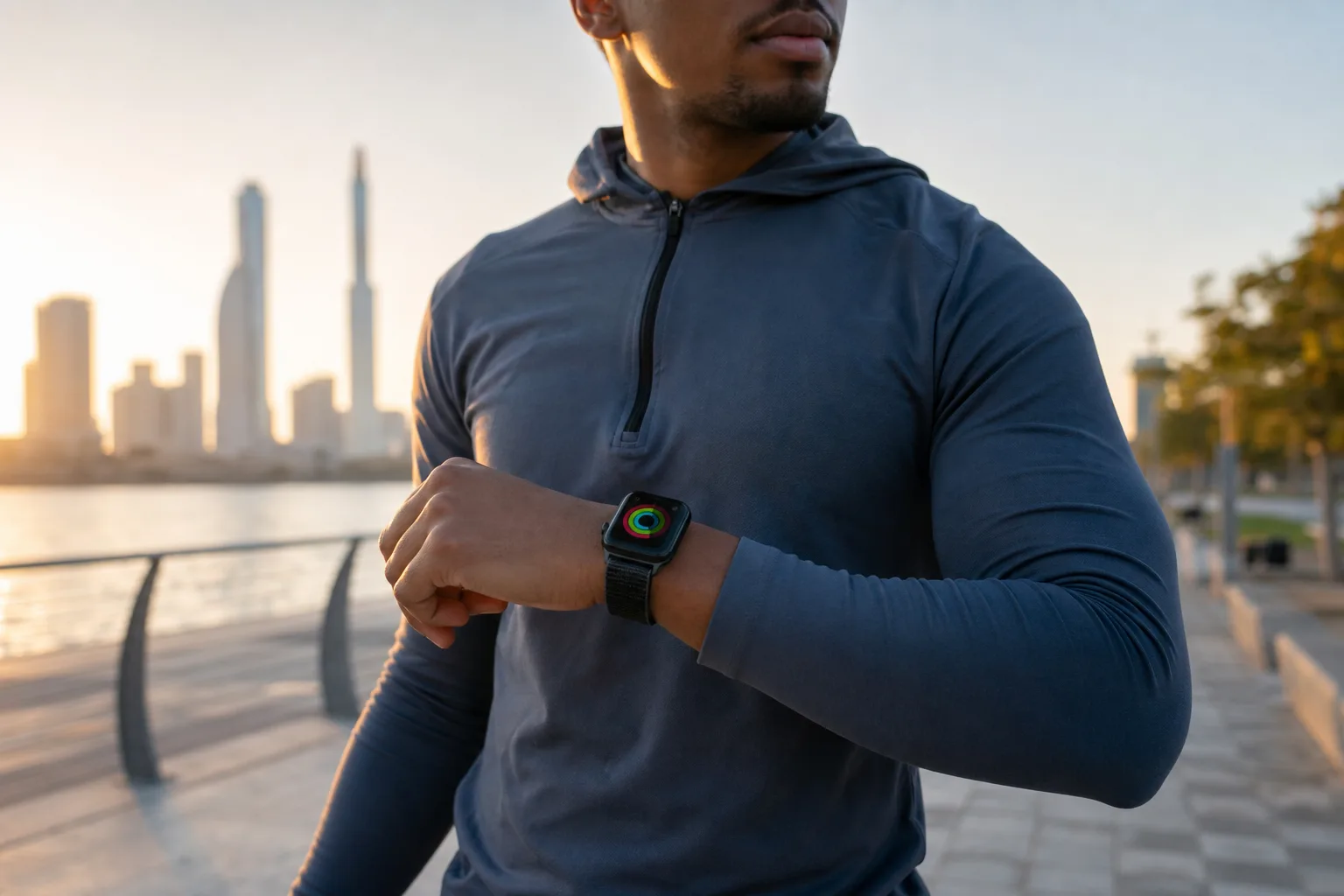
- Apple Watch Series 12 is reportedly in late testing, with Apple prioritizing new silicon and health tracking over a visual redesign.
- Apple Watch Series 12 could finally deliver a meaningful performance jump after two generations that used effectively unchanged processor hardware.
- Apple Watch Ultra 4 is expected alongside the standard model, while a new Apple Watch SE reportedly is not on this year’s roadmap.
- Apple’s longer-term glucose-sensing project remains technically difficult. If it arrives later this decade, it could give the watch its next real reason to exist.
Table of Contents
Apple Watch Series 12 looks inward, not outward
The Apple Watch has reached that awkward middle age familiar to every successful gadget: it’s good enough that Apple can’t radically change it every September without breaking something people like. That appears to be the story with the Apple Watch Series 12, which Bloomberg’s Mark Gurman reports is in late-stage testing ahead of Apple’s usual September hardware season.
Three versions are reportedly being tested: GPS and cellular configurations of the mainstream watch, plus the Apple Watch Ultra 4. The notable decision is what Apple apparently isn’t doing. Gurman says buyers should not expect a major exterior redesign this year. Instead, Apple is said to be concentrating on faster internal hardware and new health and fitness functions.
Frankly, that’s the sensible call. Apple Watch design changes are often more consequential than they look because a new case shape can strand a drawer full of bands, complicate accessories, or make an established product suddenly feel unfamiliar on the wrist. A watch is not a phone; people wear it all day, sleep with it, sweat on it and, in some cases, rely on it to flag potentially serious health events. Stability has value.
Still, no major redesign doesn’t mean Apple gets a free pass. The current product line has become slightly too predictable. The Series watches remain excellent general-purpose wearables, but the yearly pitch has blurred into better display brightness, a new case finish and a couple of software tricks. The Apple Watch Series 12 needs its internal upgrades to be noticeable in ordinary use, not merely present in a specification table.
Why a new chip matters more than it sounds
Performance is the most credible part of the reporting. Apple last introduced a meaningfully new watch processor with the Series 9 and Ultra 2 in 2023. Later models have received new chip names, but their performance has reportedly remained essentially unchanged. That sort of branding shuffle is common in consumer tech, but it becomes conspicuous when the device is approaching its third birthday underneath.
A faster chip in the Apple Watch Series 12 could improve much more than app launch times. The watch has to juggle workout metrics, sensor readings, notifications, GPS, display management and increasingly sophisticated on-device intelligence while preserving a battery life that remains merely acceptable. The Ultra has more room to breathe; the regular Series model does not.
Apple also has an obvious reason to refresh the silicon architecture: software ambitions. WatchOS keeps adding features, while Apple Intelligence has pushed the company toward more local processing across its product range. I wouldn’t expect a chatbot on anyone’s wrist — thank goodness — but smarter workout summaries, better anomaly detection and more context-aware Siri requests all benefit from a chip that isn’t doing yesterday’s job with yesterday’s horsepower.
The catch is battery. A speed increase that costs users their all-day battery promise would be a bad trade. Apple has conditioned customers to charge the standard watch nightly, like brushing their teeth. It should not make that ritual any more anxious.
Health is the Apple Watch Series 12 pressure point
The real question is which health feature Apple can ship without overpromising. DigiTimes has reported that Apple is developing a new version of the watch’s high-blood-pressure notification capability. The distinction matters: a notification tool would not necessarily be a blood-pressure cuff replacement. It could instead identify patterns associated with hypertension risk and prompt the wearer to seek proper medical testing.
That would fit Apple’s established approach. Its irregular-rhythm alerts, ECG function and sleep-apnea notifications aim to identify signs worth discussing with a clinician rather than diagnose every condition from the wrist. Apple’s healthcare materials reportedly frame the watch as a screening and monitoring device, with clinical care still doing the actual diagnosing.
For the Apple Watch Series 12, that restraint could be more important than a flashy feature list. Blood pressure is one of the most meaningful consumer-health metrics Apple has not cracked, and it is also one of the easiest areas to get wrong. False confidence is dangerous; a deluge of false warnings isn’t much better. Any hypertension-related capability will face scrutiny around accuracy, regulatory clearance and how clearly Apple explains its limits.
Then there’s the project everyone will ask about: non-invasive blood-glucose detection. Gurman says Apple remains on a path toward bringing that capability to market later this decade, a project reportedly dating back to the Steve Jobs era. That long gestation tells you everything. Measuring glucose reliably without puncturing skin is an extraordinarily hard physics, sensor and validation problem, not an app feature waiting for a keynote slide.
My read is that Apple should resist turning a distant research goal into annual rumor bait. If it gets glucose sensing right, it could transform the Apple Watch from a useful wellness device into something far more consequential for millions of people. If it ships a vague approximation, it risks damaging the trust that makes its existing health tools matter.
The Ultra 4 has a clearer job to do
The Apple Watch Ultra 4 is reportedly on the same September track, and it may face a simpler challenge. The Ultra already has its identity: larger case, more battery headroom, rugged construction and a price aimed at endurance athletes, divers and people who simply want the biggest Apple Watch available. It does not need a reinvention.
What it needs is differentiation. If the same processor and health upgrades arrive across both models, Apple must give Ultra buyers a reason to pay its premium beyond titanium and extra battery. Better GPS consistency in difficult terrain, deeper sport metrics, more useful mapping tools and genuine multi-day endurance would all make more sense than another cosmetic tweak. Garmin remains the company to watch here, because it still understands that serious outdoor users measure battery in days, not bedtime routines.
There is reportedly no new Apple Watch SE planned this year, which also tracks. Apple updated the SE line last year with an always-on display and faster performance, so another quick refresh would be hard to justify. That leaves the Apple Watch Series 12 to carry the mainstream story and the Ultra 4 to protect the high end.
Apple’s bigger watch rethink can wait — for now
Gurman’s report points to a more substantial Apple Watch rethink arriving in a year or two. That timeline feels plausible. Apple tends to stretch a mature hardware design until several changes can arrive together: thinner construction, different display technology, new sensors, revised charging or a real battery breakthrough. One isolated improvement rarely justifies the disruption.
For now, the Apple Watch Series 12 sounds like a practical release rather than a thrilling one. But practical can be exactly what the category needs. A genuinely faster watch, a responsibly designed blood-pressure warning feature and software that makes health data less cryptic would improve daily ownership more than a new silhouette ever could. The test is simple: whether Apple can make this quiet maintenance year feel useful every time the watch is on your wrist.

