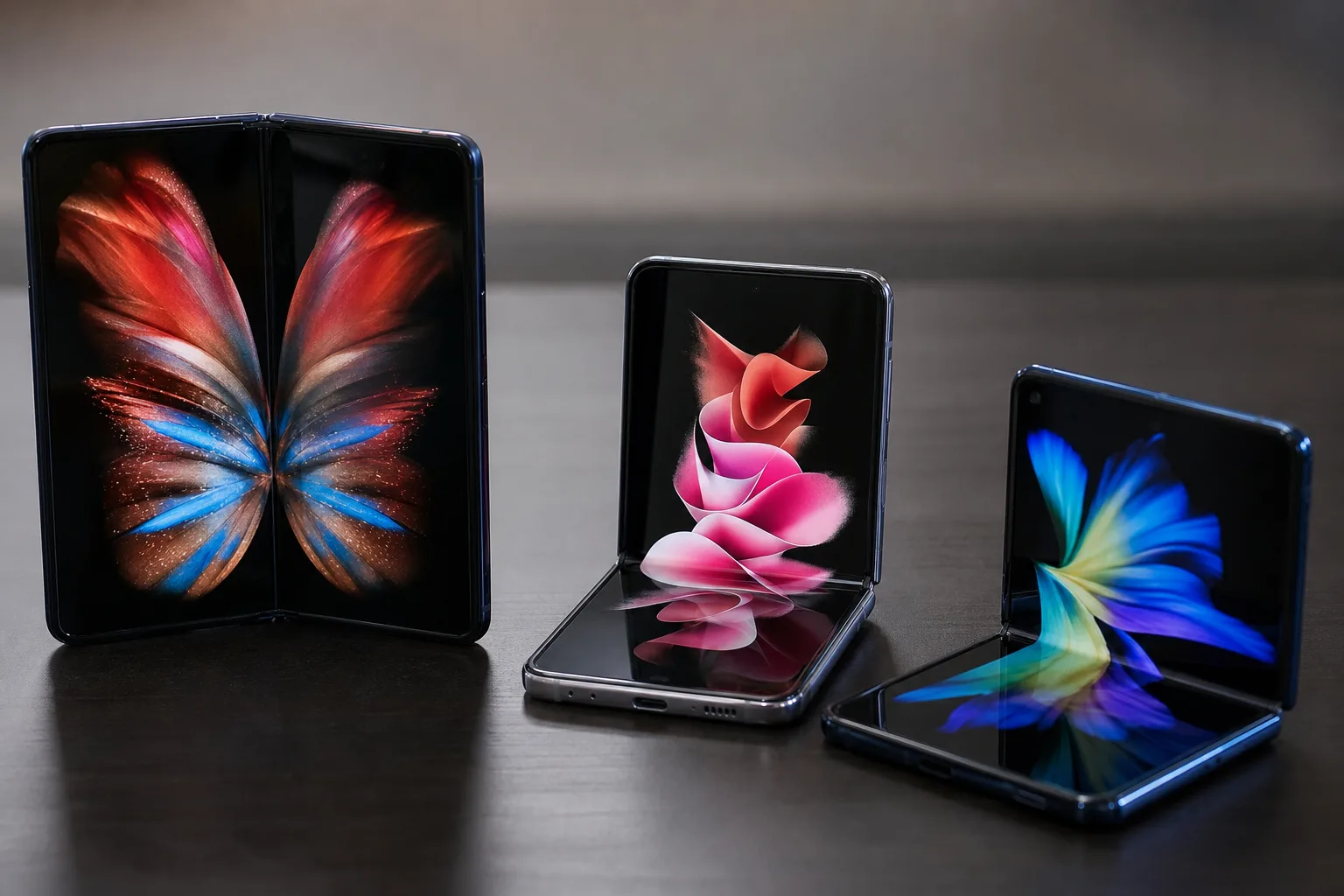
- The Samsung foldable roadmap reportedly includes five projects spanning familiar phones, a second TriFold, and a rollable tablet concept.
- A Samsung foldable roadmap leak suggests Galaxy Z Fold 9, Fold 9 Ultra, and Flip 9 could arrive in summer 2027.
- The alleged Z9 project may use a rollable display to offer tablet-sized space without a conventional folding crease.
- Samsung’s biggest challenge is turning experimental screens into products buyers can afford, repair, and confidently use every day.
Table of Contents
Samsung foldable roadmap moves beyond the annual refresh
Samsung has spent years selling foldables as the future of premium phones. The latest Samsung foldable roadmap leak suggests the company is finally preparing to test what that future looks like when there is more than one answer. Rather than simply producing another Galaxy Z Fold and Galaxy Z Flip, Samsung is reportedly developing five distinct devices for the 2027 and early-2028 window, including a second tri-fold and a rollable tablet.
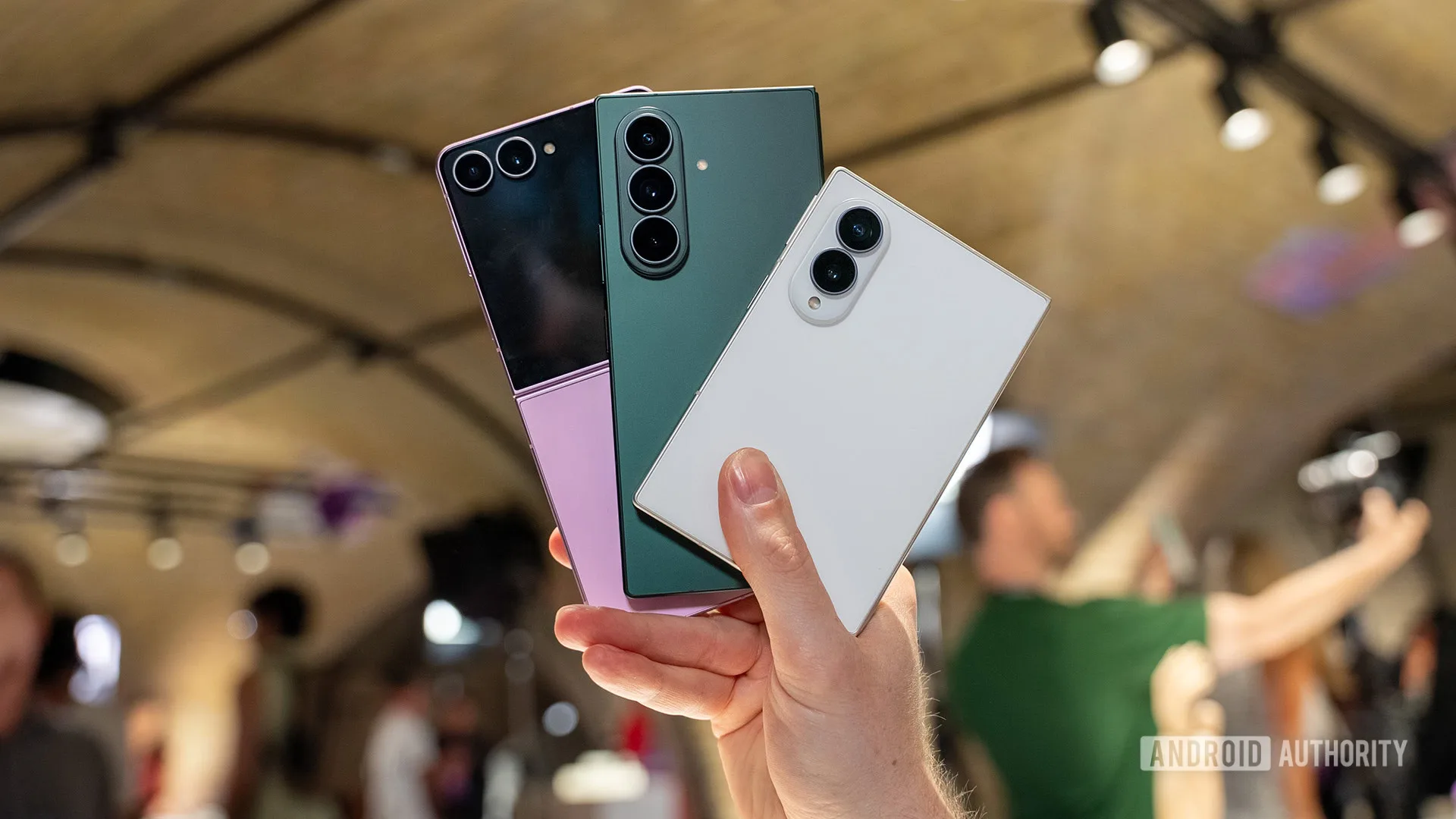
The report, published by GalaxyClub, identifies internal project labels B9, H9, Q9A, Q9B and Z9. Codenames are not product announcements, and plans this far ahead have a habit of changing. Still, the names fit Samsung’s existing product logic closely enough to be credible: B9 is said to be the Galaxy Z Flip 9, H9 the Galaxy Z Fold 9, Q9A a Galaxy Z Fold 9 Ultra, Q9B a second-generation Galaxy Z TriFold, and Z9 a rollable display device with a tablet-like footprint.
That would be an unusually broad hardware bet, even for Samsung. Most phone makers are still trying to decide whether a clamshell foldable or a book-style foldable deserves their full attention. Samsung appears to be asking a different question: what if the premium market can support several screen shapes at once?
The annual Fold and Flip models are reportedly aimed at the familiar summer launch period in 2027. The rollable slate may follow in early 2028. That timing matters for the Samsung foldable roadmap. It gives Samsung room to use its mainstream phones to fund the riskier experiments, rather than forcing a weird new form factor into the same launch event as its mass-market devices.
Five codes, five very different jobs
There is not much to decode in the basic entries on this Samsung foldable roadmap. A Galaxy Z Flip 9 would keep the compact clamshell line alive, which is notable because persistent rumors have questioned how long Samsung will maintain the Flip alongside increasingly capable slab phones. The Flip has a clear purpose, though: it gives buyers a phone that takes up less pocket space without requiring them to carry a narrow, thick book-shaped device.
The H9 project, reportedly the Galaxy Z Fold 9, represents the safer half of Samsung’s strategy. The Fold formula is now well established: a conventional outer display for quick tasks and a larger internal screen for reading, work and video. It remains expensive, but it is no longer a novelty in the way the original Galaxy Fold was. Samsung’s task is less about explaining the category and more about making the hardware thinner, tougher and less compromised.
Q9A, the rumored Galaxy Z Fold 9 Ultra, is where the lineup could get awkward. An Ultra Fold makes sense if Samsung can offer genuinely different hardware: better cameras, a larger battery, perhaps stylus features that do not feel bolted on. If it merely means a higher price and a titanium frame, frankly, it risks becoming the foldable equivalent of paying extra for the same airline seat with a slightly nicer boarding group.
Q9B is potentially more interesting. It is thought to be the Galaxy Z TriFold 2, following Samsung’s first tri-fold effort. A tri-fold can deliver a much larger display than a conventional Fold without demanding a separate tablet in your bag. But it also adds another hinge, another set of display stresses and another reason for repair bills to make buyers wince. The first generation will tell Samsung a lot about whether people actually want this much screen in their pockets.
The rollable tablet is the real test
Z9 is the wildcard in the Samsung foldable roadmap. According to the report, it may be a tablet-oriented device built around a rollable Flex display. Instead of unfolding around a hinge, the screen would expand horizontally from within the body. In theory, that removes the center crease that still marks nearly every foldable phone, even the good ones.
Turning a demo into a retail product is another matter entirely. A rollable needs a mechanism that can extend smoothly thousands of times, keep dust out, protect the display edges and survive being shoved into bags. Foldables have already taught the industry that a beautiful prototype and a durable consumer product are separated by a very expensive gap.
There is also the question of why someone would buy it. A rollable tablet could be compelling if it begins compact enough to travel easily, then expands for documents, split-screen work or movies. But Samsung cannot sell the mechanism alone. It needs software that responds intelligently as the display changes size, and Android’s large-screen progress has been uneven. Google has improved the situation, including through its large-screen development guidance, but app support still varies wildly. Anyone who has opened an expensive tablet only to find a phone app floating in the middle of the screen knows the problem.
Samsung needs differentiation, not a catalog of curiosities
The broader Samsung foldable roadmap signals confidence, but it also shows how much pressure Samsung is under. Huawei has pushed hard in tri-fold hardware, particularly in China, while Motorola has made the clamshell segment more competitive. Apple remains absent from the category, yet its eventual arrival hangs over every premium phone decision. Remember when Samsung could simply point to a folding screen and own the conversation? Those days are gone.
My read is that Samsung is trying to build a ladder: Flip for style and compactness, Fold for productivity, Ultra for buyers who want fewer compromises, TriFold for maximum screen area, and rollable for customers willing to pay for something genuinely unfamiliar. That is sensible segmentation on paper. In a store, however, five premium screen formats could become confusing fast unless each product has a painfully obvious reason to exist.
The Samsung foldable roadmap will also be judged on the unglamorous details. Can Samsung lower repair costs? Can it provide batteries that hold up under demanding displays? Can it make crease visibility and hinge durability feel like solved problems rather than accepted trade-offs? Those are the issues that determine whether foldables move beyond enthusiasts.
These are reported development tracks, not guarantees. Projects can be renamed, delayed or quietly killed before a launch event. Even so, the Samsung foldable roadmap points in a clear direction: it is not retreating to the conventional phone. It is betting that one of these flexible-screen shapes will still make sense after the novelty wears off—and that buyers will know which one is for them.