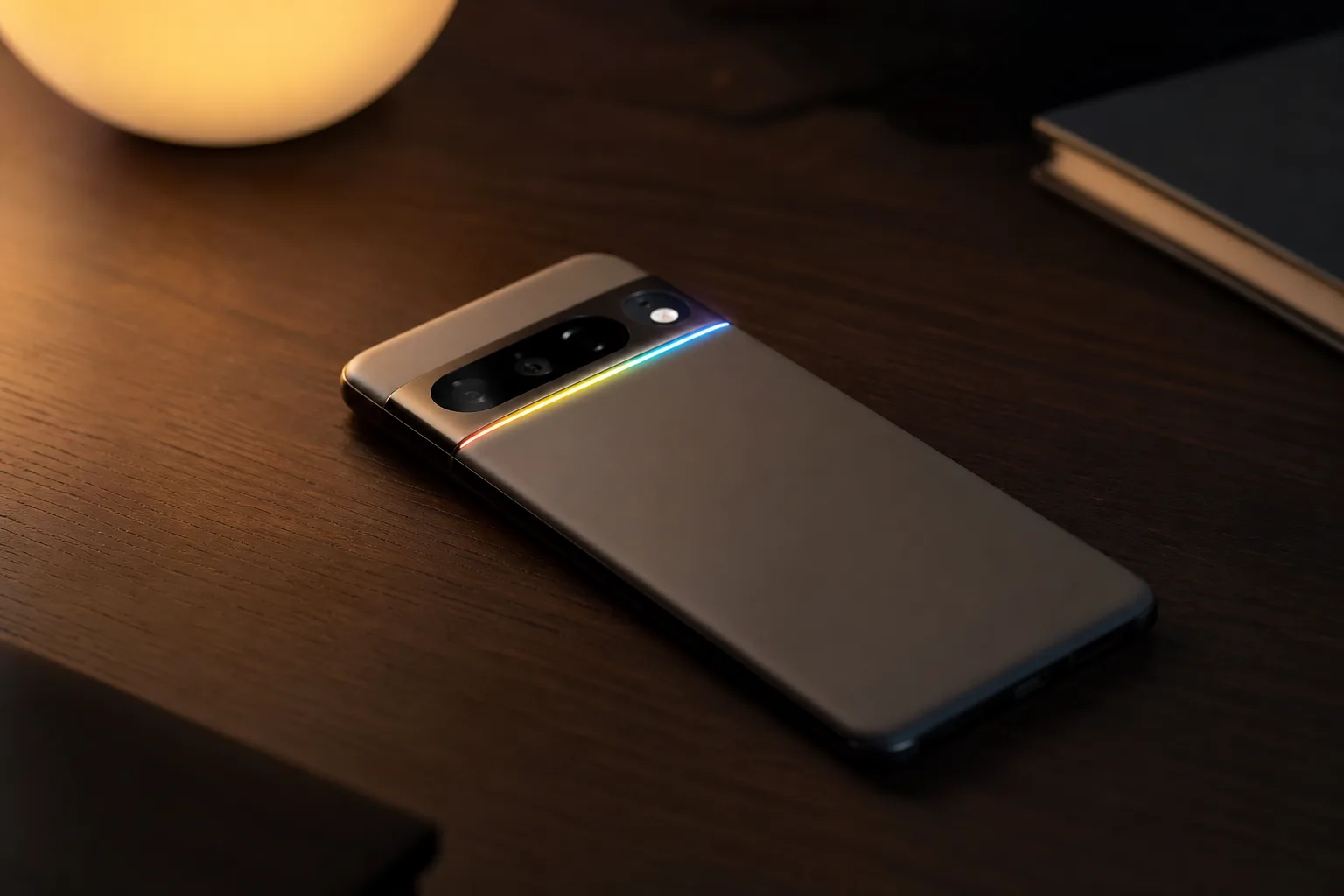
- Pixel 11 HiLight is reportedly Google’s final branding for the colored rear lighting system previously called Pixel Glow.
- Pixel 11 HiLight may signal calls from favorite contacts and show visual feedback during hands-free Gemini conversations.
- Google’s teasers suggest a full-color light integrated beside the flashlight in the Pixel 11 Pro camera bar.
- Third-party app access remains the key unanswered question, and could determine whether the feature feels useful or merely decorative.
Table of Contents
Pixel 11 HiLight may be the real name
Google appears ready to put a little personality back into phone notifications. Pixel 11 HiLight, according to a report from leaker Dylan Roussel, is the likely consumer-facing name for the rear lighting feature that early Android 17 beta builds called Pixel Glow. The shift is small, but it tells us a fair bit about how Google plans to sell it: not as ambient decoration, but as a physical signal you can spot across a room.
The name is classic Google wordplay. Read the unusual capitalization aloud and it becomes ‘Hi Light’ — a greeting, a light, and perhaps a hint that the system is meant to draw attention to people who matter. That’s slightly corny, frankly, but more memorable than Pixel Glow. Google has never been shy about branding features as though they are friendly little assistants.
So far, the evidence comes from Android 17 beta software and Google’s own Pixel 11 teaser material, not a finished retail device. That distinction matters. Features found in pre-release settings can change, vanish, or arrive with tighter limitations than early strings imply. Still, Google has now shown the hardware in promotional material, making this look considerably more real than the usual code-diving rumor.
What Pixel 11 HiLight is supposed to do
Early settings text described subtle lighting and color on the phone’s back when it is placed face down. Two use cases were named directly: alerts for calls from favorite contacts, and visual feedback while speaking with Gemini hands-free. The latter is probably the more interesting of the pair. Rather than making you stare at a screen or listen for an audio cue, the phone could show that Gemini is listening or responding with a glanceable pulse of color.
Pixel 11 HiLight seems to live beside the flashlight in the Pixel 11 Pro’s camera bar. The teasers reportedly show a rotating, full-spectrum color effect, with a familiar spinning look that recalls the old macOS wait cursor. It’s a curious visual choice. A pinwheel animation traditionally means a computer is having a bad day, but in this context Google may be using it to communicate that an AI interaction is active.
For actual phone owners, the appeal is simpler than all the AI language suggests. Put your phone screen-down on a desk during dinner, and you could tell whether a partner, parent, or close colleague is calling without flipping the device over. That’s the same basic promise notification LEDs made more than a decade ago, only with modern hardware and a much more theatrical color palette.
A light on the back fits the goal of reducing unnecessary screen attention better than yet another lock-screen animation. The best notification is often the one that provides enough information to make a decision without pulling you into the feed.
A familiar idea, with a few Pixel-specific twists
Phones have been experimenting with this idea for years. Older Android handsets commonly included a tiny status LED near the earpiece. Then came Motorola’s Moto Display, which lit selected pixels for incoming alerts, and OnePlus built a whole visual identity around the LED ring on its Nothing Phone devices. Nothing’s Glyph Interface is the closest current comparison: a system of rear lights used for timers, calls, charging, and selected app alerts.
The difference is that Pixel 11 HiLight looks less like a customizable light show and more like a tightly controlled notification channel for Google’s services. That can be smart product design. A small set of predictable signals is more useful than a settings page full of colors, patterns, and exceptions nobody remembers after a week. But it also risks making the feature feel like another Gemini billboard attached to the phone.
Google has form here. Pixels often ship with clever hardware-software connections — Now Playing, At a Glance, call screening — that are genuinely handy when they work quietly in the background. They can also be unevenly available by region, language, or model. My read is that HiLight’s success will have little to do with how pretty the animation looks and everything to do with whether people trust it to flag the right moments.
The third-party question will decide its value
The major unknown is app access. Android 17’s preliminary text points to favorite contacts and Gemini, but there is no clear indication that developers will be able to trigger Pixel 11 HiLight for messages, delivery updates, alarms, or accessibility tools. If Google keeps it exclusive to its own apps, the feature could be polished but narrow.
Opening it up has obvious upside, yet it brings the usual notification problem. Every app believes its alert deserves a blinking light. Give developers too much control and a useful visual shorthand turns into a tiny Times Square on the back of your phone. Android has wrestled with that tension for years; notification channels were supposed to restore order, but most people understandably never configure them.
A middle path would make sense: allow a handful of approved system categories, let users assign HiLight to chosen contacts and apps, and keep the default behavior restrained. Google could even tie it to Android’s existing notification priority controls rather than inventing another hierarchy. Nobody needs a purple swirl because a shopping app thinks socks are urgent.
For now, Pixel 11 HiLight is a reported feature with an apparent name, visible hardware, and a clear early purpose — but not yet a complete promise. If Google treats the light as a calm, glanceable utility rather than another excuse to make your phone demand attention, it could be one of the Pixel 11 Pro’s most human features. If it becomes Gemini’s permanent status lamp, well, we have all seen clever phone ideas turn into settings nobody touches.