
Anthropic has introduced a Claude reflection dashboard, a new feature that lets users take stock of how they’ve been interacting with the AI — topics they raise, tasks they hand off, and even the times of day they’re most reliant on it. It’s been dubbed ‘Claude Wrapped’ by observers online, and the Spotify comparison is hard to avoid. But Anthropic is framing this as something more introspective than a highlight reel.
- Anthropic’s Claude reflection dashboard lets users review up to a year of their AI usage patterns and key topics.
- The Claude reflection dashboard surfaces questions like what tasks users still want to handle themselves, without AI help.
- Users can set quiet hours and break reminders through the dashboard, currently in beta for free, Pro, and Max subscribers.
- The feature works only when memory is enabled and excludes incognito chats and health integration conversations.
Table of Contents
What the Claude Reflection Dashboard Actually Does
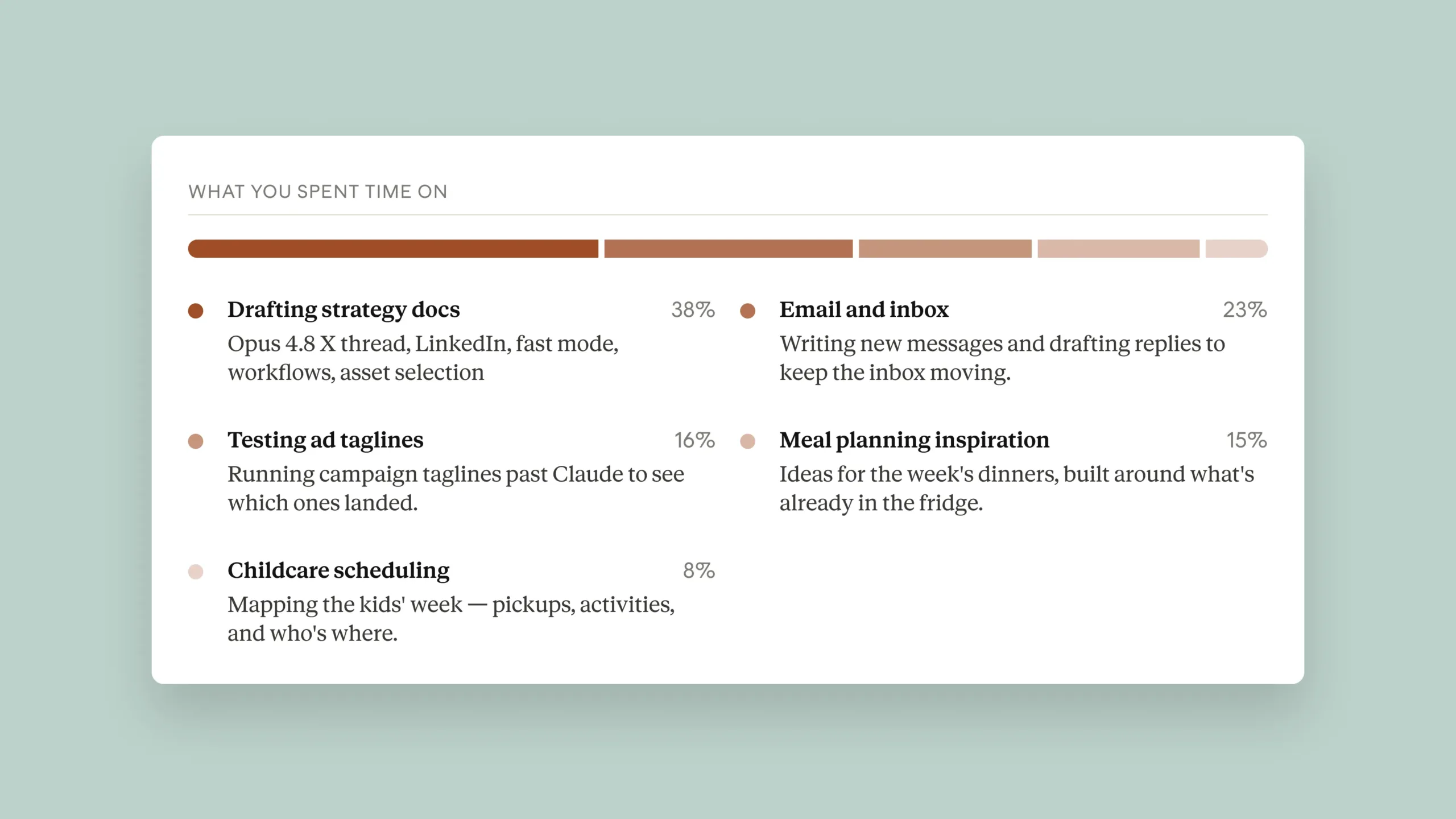
At its core, the Claude reflection dashboard is a personalised usage summary. Users can look back over the past month, three months, six months, or a full year — depending on how long they’ve been using the service with memory enabled. The dashboard opens with a breakdown of the key topics a user has discussed with Claude, the types of tasks they typically delegate, and their usage patterns, including when they tend to reach for the AI most frequently.
That last point is more revealing than it might sound. Knowing that you habitually open Claude at 11pm, or that your most common request type is ‘rewrite this email,’ tells you something about how the tool has quietly embedded itself in your workflow. Anthropic is betting that users will find this kind of mirror useful rather than uncomfortable.
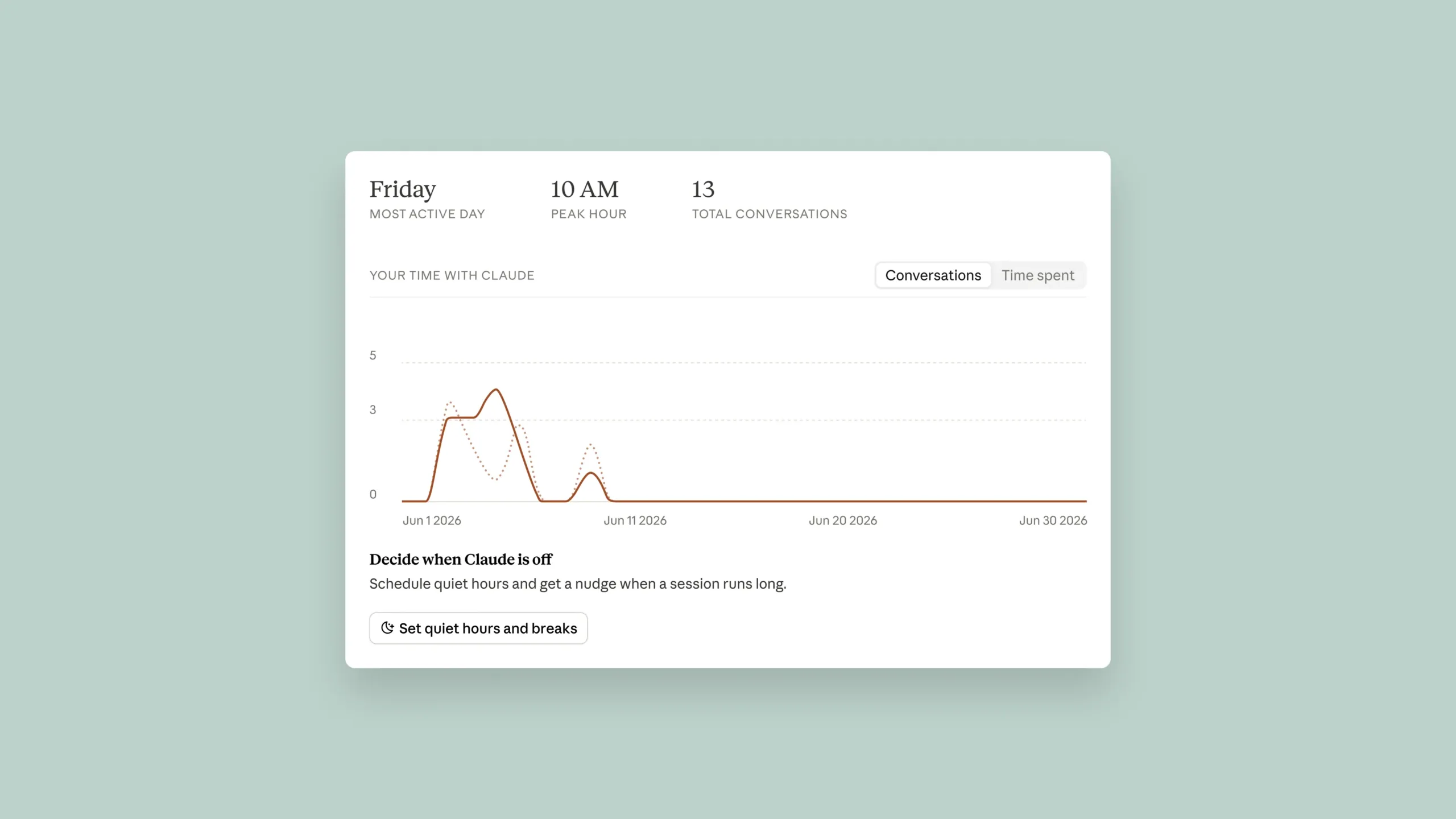
There’s also a practical productivity layer. Users can configure ‘quiet hours’ — periods when they won’t be prompted or nudged by the app — and set break reminders after a defined amount of usage. Anthropic says a metric tracking total time spent with Claude is on its way soon, which would make the Claude reflection dashboard feel even closer to the screen-time features Apple and Google have built into their mobile operating systems.
The Self-Reflection Angle Is the Interesting Part
What makes the Claude reflection dashboard stand out from a standard analytics screen is a layer of deliberate friction Anthropic has designed into it. Periodically, the dashboard surfaces questions meant to make users pause — things like: ‘What’s one thing you want to keep doing yourself, even if Claude could do it faster?’
That’s a genuinely unusual prompt for a tech company to build into its own product. Most apps are optimised to maximise engagement, not interrogate it. Anthropic, at least publicly, is taking a different stance — positioning Claude not as something you should use as much as possible, but as a collaborator you should use wisely.
The Claude reflection dashboard will show concrete examples of your interaction style too, according to Anthropic’s announcement post. It might note that you frequently rework email drafts back into your own voice after Claude generates them, or that you only delegate a task after you’ve already decided the strategy yourself. These are the kinds of habits that suggest a healthy, boundaried relationship with AI — and Anthropic seems to want to reward and reinforce them.

There’s a touch of irony in the execution, though. Once you answer one of those reflective prompts — say, the question about what you’d rather not offload to AI — the dashboard then invites you to ‘talk it through with Claude.’ So the soul-searching has a chatbot waiting at the end of it. Whether that feels circular or genuinely helpful probably depends on how you already feel about AI-assisted self-reflection.
Anthropic’s Broader Positioning Play
This isn’t happening in a vacuum. Anthropic has been on a sustained marketing push to separate Claude from the pack — not on raw benchmarks or model specs, but on a softer, more human-centred identity. The company has run ad campaigns framing Claude as an ‘AI collaborator’ that helps people think more deeply. There have been billboards. There were literal branded ‘thinking caps’ at some point. The messaging has been consistent: Claude is for people who want to stay sharp, not outsource their brain.
The Claude reflection dashboard is a product-level expression of that same idea. Anthropic explicitly instructs users to use the feature to ‘build AI skills that support your original thinking.’ That’s a carefully chosen phrase. It acknowledges that using AI is a skill in itself — one that can either atrophy your independent thinking or enhance it, depending on how you approach it.
Privacy Guardrails and What’s Off Limits
Anthropic has drawn some clear lines around what the reflection feature can and can’t see. If you’ve connected Claude to external tools — say, your email account or a calendar — the dashboard won’t reach into those platforms and pull the actual content. It might note that you used Claude to summarise your inbox, but it won’t surface what was in those emails.
Chats conducted in incognito mode are completely excluded, as are any conversations tied to a health integration tool — a sensible carve-out given how sensitive medical data can be. On ‘sensitive topics’ more broadly, Anthropic is deliberately vague, saying only that such conversations ‘can still appear as part of your reflection, but only at a high level.’ What counts as sensitive isn’t defined, which leaves some ambiguity.
The feature requires Claude’s memory function to be switched on. That’s a non-trivial dependency — users who’ve deliberately kept memory off for privacy reasons won’t get access to the Claude reflection dashboard. Given that the feature is built on analysing past conversations, that’s logically consistent, but it does mean there’s a tradeoff for the privacy-conscious.
Who Gets It and What’s Coming Next
The Claude reflection dashboard is currently in beta, available to free users as well as Claude Pro and Max subscribers — which covers the majority of the active user base. It lives in the Settings menu on both the web version and the desktop app. Anthropic says the feature originated from direct interviews with Claude users, which suggests the demand was real rather than invented by a product team looking for a launch moment.
A rollout to Claude Cowork is reportedly described as coming soon. That’s where things get particularly interesting. Right now, the dashboard is a personal productivity tool. In a professional context, aggregate usage data could tell employers a great deal about how their teams are actually using AI day-to-day — not just whether they’ve adopted it, but how deeply, and for what. That’s a different kind of insight entirely, and one that will raise its own set of questions about workplace monitoring and AI governance.
For now, though, the individual-facing version of the Claude reflection dashboard is a thoughtful if slightly self-conscious attempt by Anthropic to give users genuine visibility into their AI habits. In an industry that tends to optimise relentlessly for more usage, nudging people to ask whether they’re using a product too much is, at minimum, a different kind of message to send.