

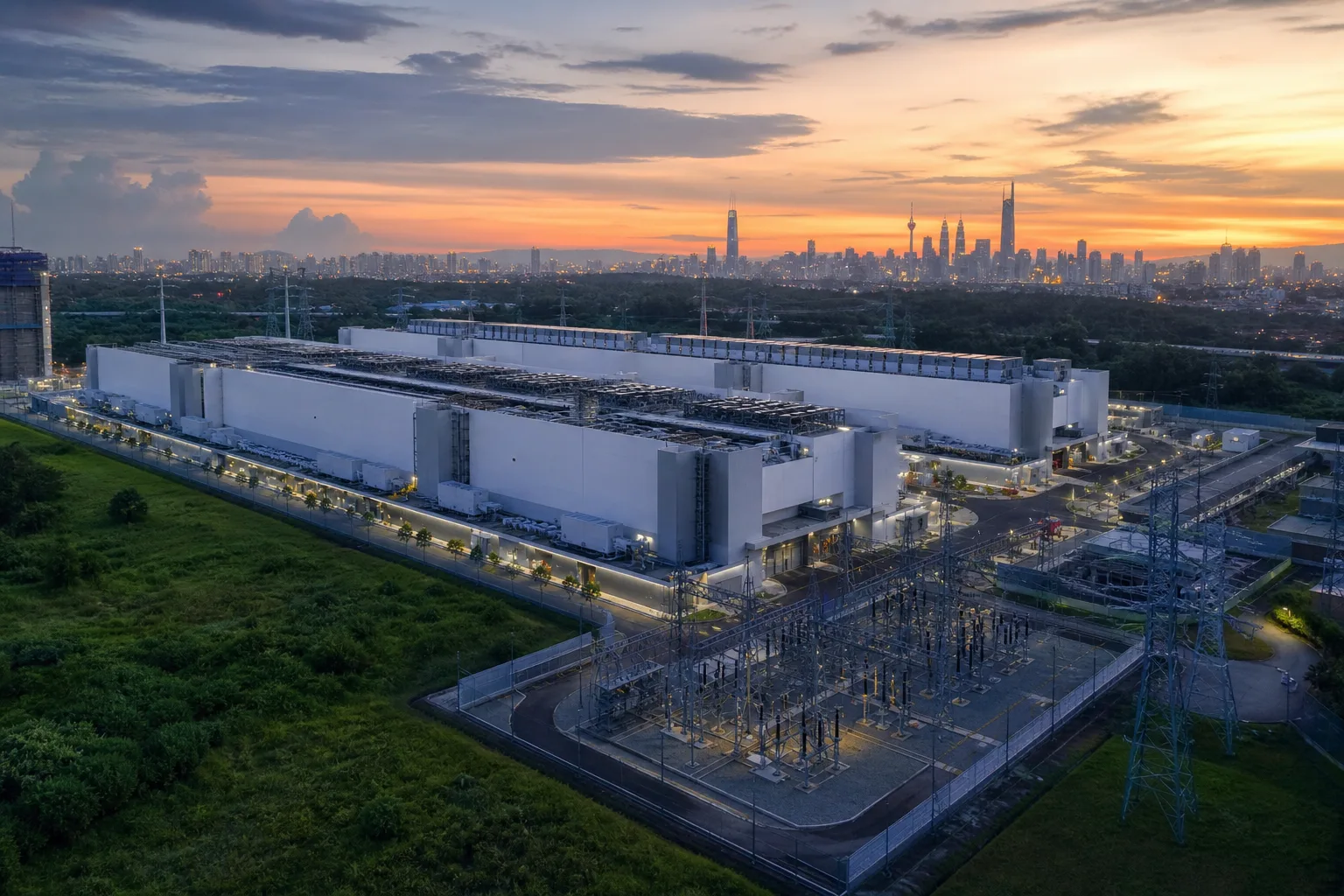
Alphabet’s reported $15 billion plan for Malaysia data centers is the kind of number that makes an otherwise abstract AI boom suddenly feel very physical. This isn’t another chatbot launch or a glossy demo. It means land, substations, fiber routes, racks of servers, cooling systems and a very large electricity bill. Whatever investors make of the next few quarters of AI revenue, Google’s parent company appears to be placing its chips on a much longer timetable.
My read is that this is the more revealing side of the AI race. Wall Street has become impatient with companies spending fortunes before they can show equally spectacular returns. Alphabet, Microsoft, Meta and Amazon have all faced versions of that question. But infrastructure decisions aren’t made for a single earnings season. A hyperscale campus can take years to plan, permit, build and fill. By the time the market agrees on exactly which AI products are winners, the companies with capacity already online may have a formidable advantage.
- Alphabet’s reported $15 billion commitment to Malaysia data centers is a bet that AI infrastructure will remain a boardroom priority long after the current product cycle fades.
- Malaysia data centers have geography on their side, with improving connectivity and a credible shot at making the country a Southeast Asian cloud hub.
- The investment makes the industry’s awkward math harder to ignore: AI product revenue is still finding its footing while spending on the machinery behind it keeps climbing.
- Power availability, water use and grid reliability—not the size of the announcement—will determine whether regional data-center ambitions can match the industry’s enormous capital plans.
Table of Contents
Malaysia data centers are becoming an AI battleground
At $15 billion, the reported figure would be a major commitment in Malaysia.
That earlier announcement mattered because it gave Malaysia a seat at the table in the regional cloud race. A much larger commitment would suggest Alphabet sees the country as more than a useful outpost. It would be a statement that Malaysia data centers can become core infrastructure for serving Southeast Asian users and enterprises.
Why Malaysia? Geography is part of the answer. The country sits beside Singapore, the region’s established digital and financial hub, but typically offers more land and potentially more room to expand. Singapore has spent years managing data-center growth through strict capacity and sustainability rules after a temporary pause on new projects. That hasn’t ended its importance, not remotely, but it has encouraged cloud operators and data-center developers to look north.
Johor, in particular, has become a natural spillover market because of its proximity to Singapore and cross-border connectivity. The growth of Malaysia data centers there reflects the appeal of serving regional demand without relying entirely on capacity across the border. Selangor, near Kuala Lumpur, offers a different appeal: access to Malaysia’s largest economic center, a deepening technology workforce and domestic demand for cloud services. For Alphabet, putting major capacity in Malaysia could reduce latency for local customers while adding redundancy to a regional network that cannot depend on one city-state forever.
There’s also a policy dimension. Malaysia has openly courted digital investment through programs aimed at cloud adoption, advanced manufacturing and a broader digital economy. Governments across Southeast Asia want the jobs and spillover effects associated with data centers, from construction and electrical engineering to cloud skills and startup activity. They also want some measure of technological sovereignty. No government loves the idea that its companies and agencies must send critical workloads abroad because nearby capacity is scarce.
The awkward mismatch between AI revenue and AI spending
AI has a timing problem. The spending is happening right now; many of the biggest returns are still forming. That gap is why every quarterly result from a hyperscaler has become an exercise in reading tea leaves. Investors want proof that generative AI can sell enough cloud capacity, subscriptions and advertising improvements to justify a spending surge measured in tens of billions of dollars.
Still, the case for Malaysia data centers doesn’t rest entirely on a single consumer AI product becoming the next iPhone. Data centers support far more mundane but durable work: search, video, storage, enterprise software, cybersecurity, analytics and cloud computing. AI training and inference add an immense new layer of demand, but Google is not building an isolated warehouse for one model.
That distinction matters. If consumer enthusiasm for AI assistants cools, cloud customers may still need GPU capacity to build internal tools, automate customer support, analyze documents or run models closer to their users. And if demand exceeds expectations, a company without enough power and physical capacity can’t simply download another data center. This is closer to building an airport than releasing an app.
Data-center electricity consumption is rising as AI deployment expands, even as companies pursue carbon-free energy and efficiency targets. Its sustainability reporting makes clear that the company’s climate commitments and its computing appetite are now moving in opposite directions unless clean generation grows just as quickly.
Frankly, this is where the feel-good version of the AI infrastructure story gets thin. Every country wants cloud investment; fewer want to confront the new grid capacity, transmission lines, water planning and local scrutiny that arrive with it. The most successful Malaysia data centers won’t be the ones with the flashiest announcement. They’ll be the ones that can secure reliable power without putting unacceptable pressure on communities or undermining national decarbonization goals.
Google is not building alone
Alphabet’s ambitions land in a crowded field. Microsoft has expanded Azure availability and cloud infrastructure across Southeast Asia. Oracle has also built out cloud regions in the region, while large data-center specialists such as Equinix, Digital Realty and local operators are racing to add capacity.
The competition is not merely about who can host a company’s database. It is about where the next generation of AI workloads will live. A bank that wants to run an AI service under local data rules, or a retailer that needs fast responses for customers in Jakarta or Kuala Lumpur, may care deeply about where the compute physically sits. Latency still matters. Data residency still matters. Network resilience really matters when the system in question handles payments, logistics or healthcare records.
For customers, more Malaysia data centers should mean more choice and potentially lower latency. It may also make cloud pricing more competitive, although nobody should expect hyperscalers to turn into charities. The real value is optionality: businesses can distribute workloads across regions, meet regulatory requirements and avoid putting every critical system in one jurisdiction.
The real constraint is electricity
The biggest unknown isn’t whether Alphabet can afford this. It can. The harder question is whether Malaysia’s power system can accommodate a wave of energy-hungry facilities at the pace operators want. That question will shape how quickly Malaysia data centers can move from announced projects to operating capacity.
AI changes the math because modern accelerators draw far more power than conventional server workloads. That is pushing the industry toward liquid cooling, custom chip designs, on-site energy arrangements and long-term clean-power procurement. It is also pushing governments into uncomfortable trade-offs. Approve every project and risk grid strain; move too slowly and watch investment go elsewhere.
Alphabet’s reported commitment to Malaysia data centers should therefore be read as a confidence vote in the country, but not as a finished story. The headline number is easy. Delivering the campuses, connecting them to dependable lower-carbon electricity and proving that local companies receive more than construction jobs will be the real test.
The AI boom may look overheated from a quarterly earnings chart. From the ground, though, it looks like a long construction project that has barely reached its noisy middle phase. If Alphabet follows through, Malaysia will not simply be hosting more servers. It will be competing for a more consequential role in where Asia’s AI economy actually runs.