

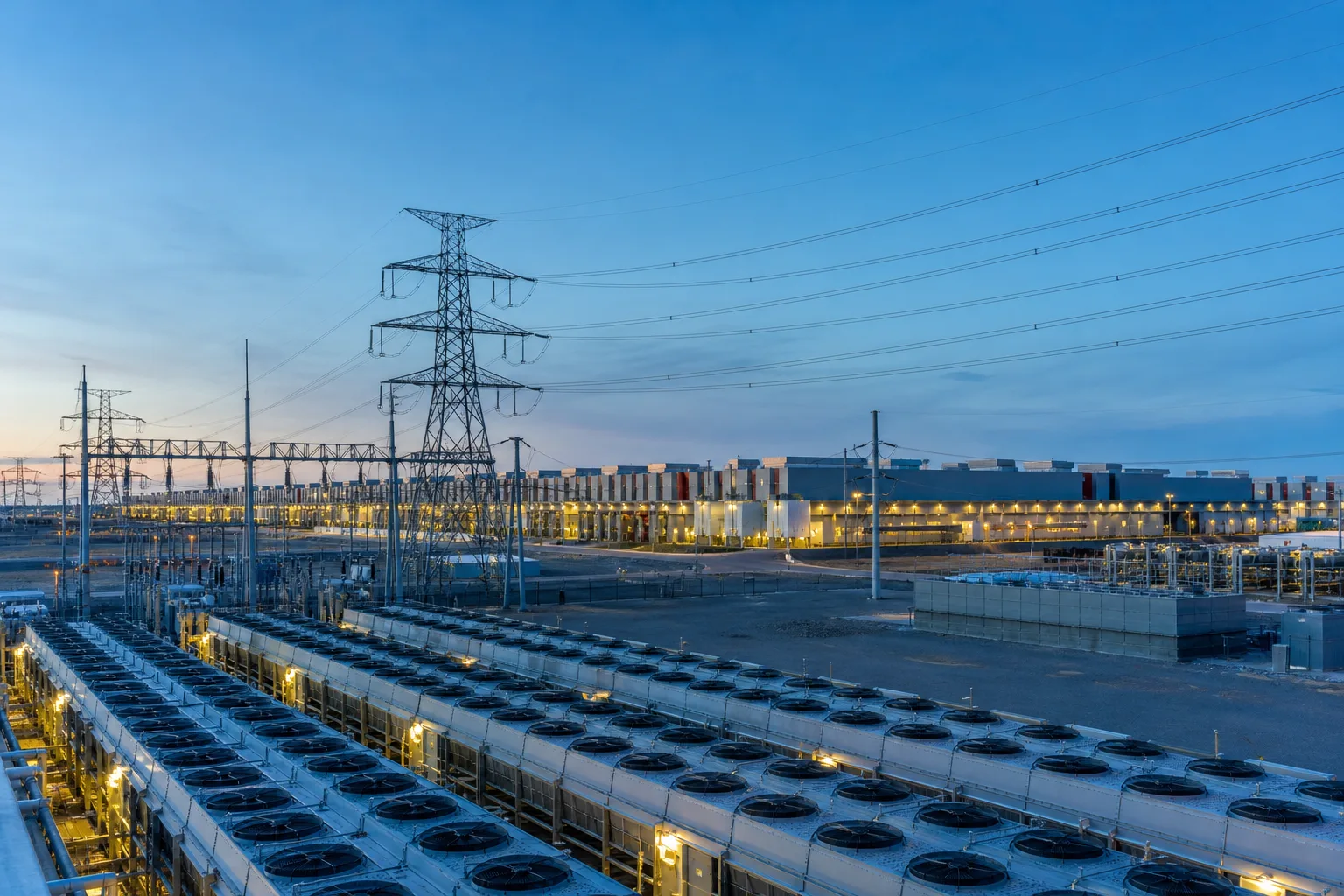
Artificial intelligence has a very physical problem: it needs buildings, chips, water and vast amounts of electricity. Reports that OpenAI data centers will continue expanding despite a midterm political sweep suggest the company is betting that demand for AI compute will outlast Washington’s latest electoral mood.
That is probably the right bet. It is also a spectacularly expensive one.
The Indian Express, citing reporting on OpenAI’s plans, says the company intends to press ahead with its data-center expansion even as the political environment changes. The report does not establish a full public timetable, list individual sites or put a fresh price tag on every project. Still, the direction is clear: OpenAI is treating infrastructure as a strategic necessity, not a side project it can cut when conditions get rough.
- OpenAI data centers reportedly remain on track despite a political shift that could complicate permits, energy policy and public incentives.
- The OpenAI data centers push reflects a costly race to secure computing capacity before AI demand outstrips available infrastructure.
- Power generation, grid connections and local support may prove tougher constraints than construction funding or access to land.
- OpenAI’s infrastructure plans put the company’s future increasingly in the hands of utilities, governments and major chip suppliers.
Table of Contents
Why OpenAI data centers have become the real AI race
For most people, OpenAI is ChatGPT: a browser tab, an app icon, maybe a slightly unnervingly competent writing assistant. Behind that interface sits an industrial-scale compute operation. Training frontier models and serving answers to hundreds of millions of users requires vast clusters of advanced GPUs, network equipment and storage. Those machines need purpose-built facilities that can run around the clock.
For years, cloud providers absorbed much of that pain. Microsoft’s partnership with OpenAI gave the AI lab a route into Azure’s global infrastructure, while Microsoft got a powerful reason to sell more cloud capacity. But the equation has changed. Generative AI demand is rising quickly, the most capable models are becoming more expensive to train, and every serious competitor wants access to the same scarce ingredients: Nvidia accelerators, reliable power and data-center space.
OpenAI data centers are about more than keeping ChatGPT responsive at busy times. They are an attempt to control a choke point. If OpenAI can secure long-term computing capacity, it has more room to train successor models, introduce enterprise products and avoid being entirely boxed in by another company’s cloud roadmap.
That logic is visible in the Stargate initiative. OpenAI’s own Stargate announcement framed the effort as a way to support US leadership in AI and create new domestic capacity.
The scale of such plans can sound like a press-release flourish until you consider what frontier AI is becoming. This is not a normal software business where growth mostly means renting more server instances. It looks increasingly like a utility business with an unusually clever product layer on top.
Politics can slow projects, even when money is available
The reported decision to maintain the buildout after a midterm sweep matters because data centers sit at the intersection of federal policy and stubborn local reality. An administration can talk enthusiastically about AI leadership, but an actual facility still needs land, permits, transmission lines, substations, water arrangements and a willing utility. Any one of those can hold up a project for years.
Political change can affect tax incentives, environmental review, trade policy and the pace of new energy development. It can also reshape the public rhetoric around large technology projects. Local residents often welcome construction jobs and tax revenue, right up until they worry about a facility competing for water or pushing up electricity costs. Neither concern is theoretical.
This is where OpenAI data centers will face their hardest test. Writing a check is one thing. Finding enough dependable electricity in the right location is another. Grid operators across the United States are already confronting a surge in demand from data centers, factories and electrification. A massive AI campus may require hundreds of megawatts, sometimes more. That is closer to planning for a small city than opening another office.
For OpenAI data centers, power generation, grid connections and local support may be more difficult to secure than construction funding or land. Companies are responding by shopping for every plausible energy source: natural gas, renewables paired with batteries, nuclear power and long-term power-purchase agreements. Amazon has pursued nuclear-linked capacity. Google is pursuing advanced nuclear arrangements. Everyone suddenly wants to be an energy planner, a role Silicon Valley has not historically handled with much humility.
The Microsoft relationship is changing shape
The expansion also says something about OpenAI’s evolving relationship with Microsoft. The two companies remain deeply connected, but their interests are no longer perfectly aligned. Microsoft is building its own AI models and products while continuing to supply infrastructure for OpenAI. OpenAI, meanwhile, has signaled it needs more computing capacity than one partner can easily provide.
Oracle’s place in Stargate is particularly revealing. Bringing another major cloud and infrastructure operator into the picture gives OpenAI additional options, and it gives Oracle a prized position in the AI boom. This is less a clean breakup from Microsoft than an attempt to avoid depending on one landlord when the rent is measured in gigawatts.
That diversification carries risks. Running frontier workloads across multiple partners and facilities creates operational complexity, and AI hardware supply remains concentrated. Nvidia still dominates the market for the accelerators powering much of today’s AI boom, although AMD, custom chips and hyperscaler-designed silicon are steadily becoming more relevant. OpenAI can diversify cloud relationships, but it cannot diversify away the physics of chips, power and cooling.
OpenAI data centers are a bet on demand staying enormous
Frankly, the larger question is not whether OpenAI can find a way to build. It is whether the revenue from AI products will justify infrastructure on this scale. Training and serving advanced models costs real money, and the industry has not yet settled on a clean, durable economic model for every AI workload. Consumer subscriptions help. Enterprise deals help more. But the spending curve is steep enough to make even well-funded companies nervous.
Still, OpenAI has little choice but to invest if it wants to remain at the frontier. A pause in OpenAI data centers would not freeze the broader race; it would hand more room to Google, Anthropic, Meta, Amazon and the growing constellation of state-backed AI efforts around the world.
My read is that the political headline is secondary to the infrastructure story. Governments may change, incentives may be rewritten and local opposition may become louder. Yet the companies shaping AI are now committed to a building spree that resembles the railroad, telecom and cloud eras more than the lightweight app economy. The question is whether OpenAI data centers can turn all that concrete, copper and silicon into a business sturdy enough to pay for it.