

Table of Contents
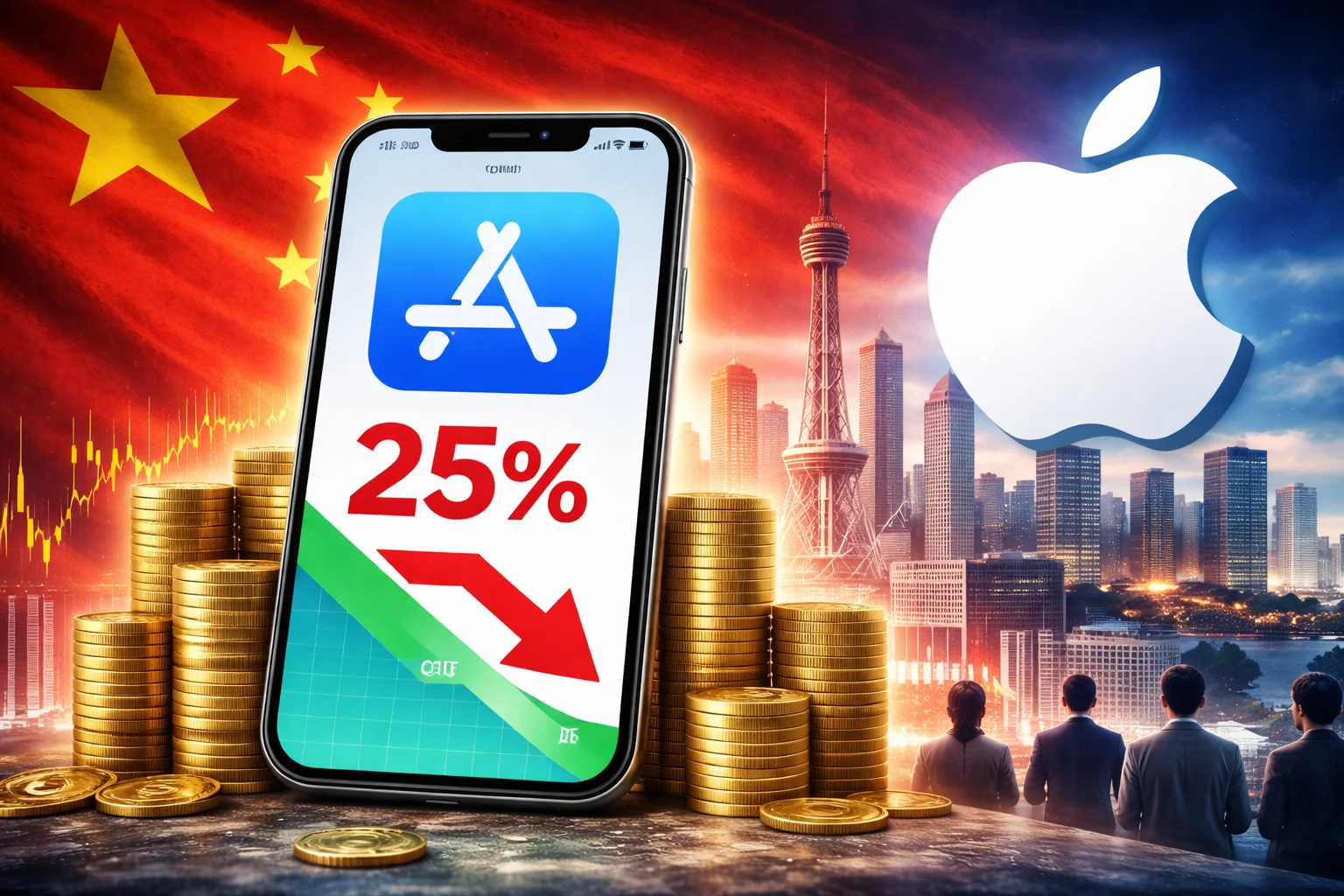
The Apple App Store fees China adjustment marks a notable shift in the company’s approach to developer commissions in one of its largest software markets. Apple confirmed that its standard App Store commission in China will fall from 30 percent to 25 percent starting March 15. The policy change follows years of pressure from regulators who questioned the fairness of the long standing 30 percent fee structure.
At SquaredTech.co we view this decision as a calculated response to growing regulatory oversight rather than a simple pricing adjustment. Apple’s App Store has served as a major revenue channel for mobile software distribution, and even small changes to commission rates affect thousands of developers and digital businesses operating inside the Chinese market.
Regulatory pressure reshapes Apple’s China strategy
Chinese regulators have examined the App Store fee model for several years. Authorities have questioned whether the commission structure limits competition or restricts payment flexibility for developers. The new policy lowers the commission rate to 25 percent for paid apps and in app purchases sold through the Chinese App Store. Apple also reduced the rate for smaller developers and certain ecosystem partners.
The company’s Small Business Program and Mini Apps Partner Program will now charge 12 percent rather than the earlier 15 percent fee. Mini Apps operate inside large platform ecosystems that Chinese consumers use daily, including services provided by Tencent and Alibaba Group. These lightweight apps function within super apps rather than running as traditional standalone downloads. The adjustment shows that Apple recognizes the importance of this format in China’s mobile software market.
App Store Commission Changes in China
| Program Type | Previous Rate | New Rate |
|---|---|---|
| Standard App Store transactions | 30 percent | 25 percent |
| Small Business Program | 15 percent | 12 percent |
| Mini Apps Partner Program | 15 percent | 12 percent |
Developers who distribute apps in China will automatically receive the updated rates once they accept the revised platform terms. Apple stated that the changes aim to keep its marketplace competitive with global standards.
Market impact and near term outlook
The commission change could influence how developers price subscriptions and digital goods inside Chinese apps. Lower platform fees often lead to higher developer margins or lower consumer prices. At the same time, the move signals Apple’s attempt to maintain stable relations with regulators while protecting the long term value of the App Store ecosystem.
The timing also follows a year of tension between major economies and China related to trade policy and technology regulation. During 2025, new tariffs and political pressure increased scrutiny on American technology companies operating in the region. Adjusting the commission structure may help Apple reduce the risk of direct regulatory intervention.
For developers and investors, the larger question concerns whether this policy shift will remain limited to China. Governments in Europe, the United States, and several Asian markets continue to review digital marketplace fees. If regulators view the Chinese reduction as a precedent, Apple may face additional pressure to revise commission policies elsewhere.
The Apple App Store fees China change represents a strategic compromise rather than a full redesign of the platform’s revenue model. Apple still maintains a significant share of app transaction revenue. However, the reduction signals that regulatory influence can shape the economics of major mobile ecosystems. The next phase will depend on how Chinese authorities respond and whether similar policies spread to other regions where App Store fees remain under review.
Stay Updated: Money Talks

