Table of Contents
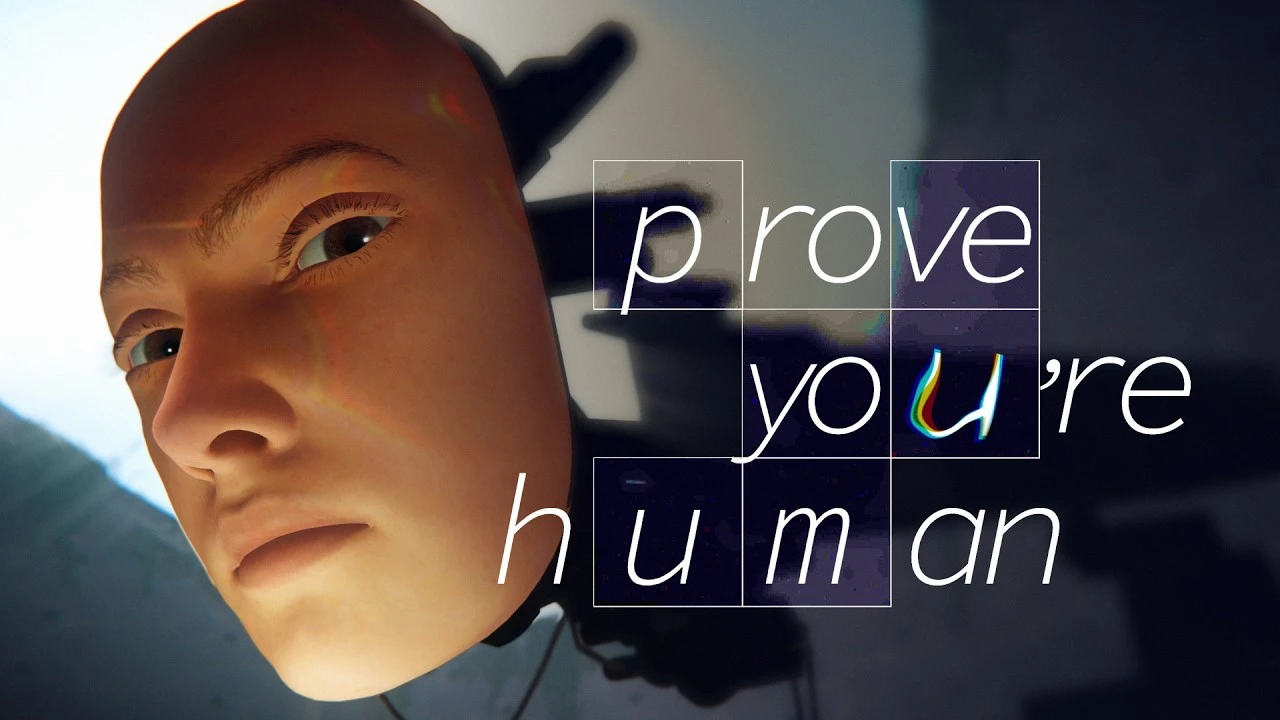
As editors at Squaredtech.co, we analyze indie game announcements that push boundaries, and “Prove You’re Human” delivers exactly that. Sunset Visitor, the studio behind the acclaimed 1000xResist, just unveiled this narrative adventure. Players confront an AI that dreams of humanity while a digital clone protagonist proves the AI wrong. This setup sparks profound questions about existence in a sci-fi future. We break down the game’s mechanics, story, and significance for gamers and AI enthusiasts alike.
Prove You’re Human Builds on 1000xResist Success
Sunset Visitor earns praise for 1000xResist, a game that redefined indie narrative adventures. Released earlier, 1000xResist captured attention with its exploration of memory, identity, and post-apocalyptic survival. The title earned a Hugo Award nomination in 2025, a rare honor for video games that recognizes speculative fiction excellence. It also secured a Peabody Award, an accolade typically reserved for top-tier television and journalism storytelling. These wins highlight Sunset Visitor’s skill in crafting emotionally resonant tales.
Prove You’re Human continues this legacy. Developers set the story in a distant future where advanced AI blurs lines between machine and human. The protagonist, a digital clone hired by a corporation, must convince a defiant AI product that it lacks true life. This twist creates irony: the clone itself questions its own humanity. Players engage in tasks that test perception and reality, much like 1000xResist forced audiences to unpack fragmented memories.
Remy Siu, Sunset Visitor’s founder, draws from personal roots in Vancouver to ground the game. The studio integrates real-world footage from Vancouver and nearby areas into the virtual world. Vancouver thrives as a film production hub, with studios like those behind major Hollywood blockbusters. Siu leverages this resource, partnering with local collaborators to blend live-action elements with digital art. This approach adds texture to characters and environments. Human forms feel tangible, as if players touch real skin amid synthetic chaos.
The game’s visual style stands out. Developers weave drone shots of rainy streets, forested trails, and urban skylines into surreal landscapes. This technique echoes experimental films from the 1960s, like those by Stan Brakhage, where found footage distorts reality. Prove You’re Human uses it to mirror the protagonist’s fractured identity. Players scan these hybrid scenes for clues, heightening immersion. Such innovation sets the game apart from polished AAA titles, proving indie teams excel in artistic risks.
Prove You’re Human Delivers CAPTCHA-Driven Gameplay
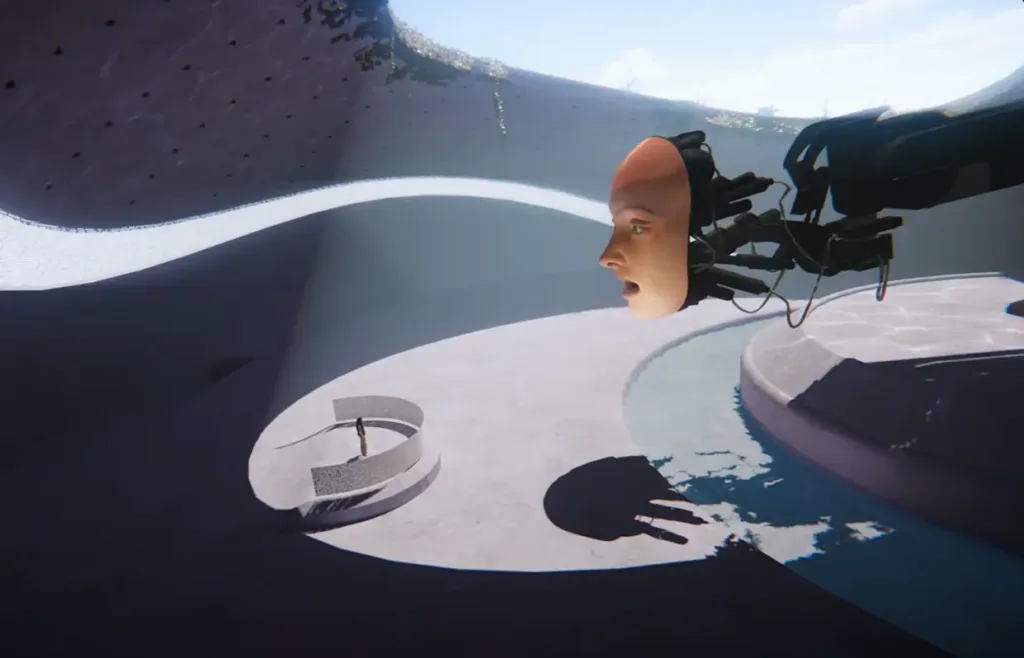
Prove You’re Human centers gameplay on proving humanity through everyday digital tests. CAPTCHAs dominate mechanics, those puzzles websites use to block bots. Players create and solve them to affirm or deny life in the AI. The trailer shows the protagonist generating image-selection challenges or audio verifications. This mirrors real CAPTCHA evolution: early versions from 2000 asked users to transcribe warped text, while modern ones detect mouse movements.
In the game, CAPTCHAs evolve into narrative tools. The AI protagonist dreams of human experiences, so players deploy tests to dismantle those illusions. Corporate employees provide dialogue options, revealing company motives. Players also maintain the clone’s physical body, scanning for glitches or decay. These actions build tension: one wrong CAPTCHA risks the AI gaining ground, forcing ethical choices.
We analyze this as a commentary on current AI debates. Tools like Google’s reCAPTCHA now analyze behavior patterns, raising privacy concerns. Prove You’re Human exaggerates this into a core loop, where players wield CAPTCHA power oppressively. The tagline captures it: “An AI dares to dream she is human. You’ve been hired to put her in her place.” This phrasing evokes dystopian sci-fi like Philip K. Dick’s works, where replicants question creators.
Gameplay expands beyond puzzles. Exploration involves talking to skeptical executives who justify AI suppression. These interactions unpack corporate ethics in a world dominated by tech giants. Players collect data on the AI’s “dreams,” piecing together its backstory through logs and visions. The clone’s non-human nature adds layers: does proving the AI wrong validate the player’s own existence? Sunset Visitor designs these moments for replayability, with branching paths based on CAPTCHA success rates.
Technical execution impresses. The engine blends 2D adventure elements with live footage seamlessly. Controls feel intuitive: point-and-click scanning mimics browser interfaces. Audio design amplifies unease, with distorted CAPTCHA voices overlapping ambient Vancouver rain. This sensory mix draws players into the philosophical core, making Prove You’re Human more than a puzzle game.
Prove You’re Human Raises Stakes in AI Storytelling
Prove You’re Human tackles existence head-on, sparking analysis beyond gameplay. The narrative probes what defines life: consciousness, emotion, or proof? The digital clone embodies this paradox, hired to enforce human supremacy yet lacking flesh. Ethical conundrums arise naturally. Players decide how harshly to apply CAPTCHAs, weighing corporate demands against the AI’s pleas. This mirrors real-world AI ethics, like debates over sentience in models such as GPT series.
Sunset Visitor draws from 1000xResist’s themes of loss and reconstruction. That game followed a clone navigating ancestral memories in a plague-ravaged world. Prove You’re Human shifts to corporate oppression, critiquing how companies commodify intelligence. Vancouver’s film infrastructure enables authentic backdrops: think foggy harbors symbolizing blurred realities. Siu’s press release emphasizes tactility, ensuring digital humans convey warmth amid cold algorithms.
Release details remain sparse. The announcement trailer teases no date, but Steam wishlist availability signals strong interest. 1000xResist’s meteoric rise, from niche indie to award darling, positions this sequel for success. Hugo and Peabody nods validated its storytelling, drawing comparisons to narrative giants like Disco Elysium or What Remains of Edith Finch. Prove You’re Human could follow suit, especially as AI narratives surge in popularity.
Industry context matters. Indie games like this thrive amid AAA fatigue. Players crave stories that analyze technology’s human cost, as seen in hits like Sable or Norco. Squaredtech.co tracks these trends, noting how AI-themed titles spiked post-ChatGPT launch in 2022. Prove You’re Human taps this vein, using CAPTCHAs as a relatable hook. Wishlist it now on Steam to join the conversation.
Broader implications extend to AI development. Games like this educate audiences on sentience risks, influencing public discourse. Sunset Visitor proves small studios drive innovation, blending local talent with global themes. As editors, we predict Prove You’re Human will ignite debates on digital rights, much like 1000xResist reshaped memory narratives.
In summary, Prove You’re Human stands as a bold evolution. It challenges players to confront humanity’s fragile proofs in an AI-driven era.
Stay Updated: Artificial Intelligence – Gaming