

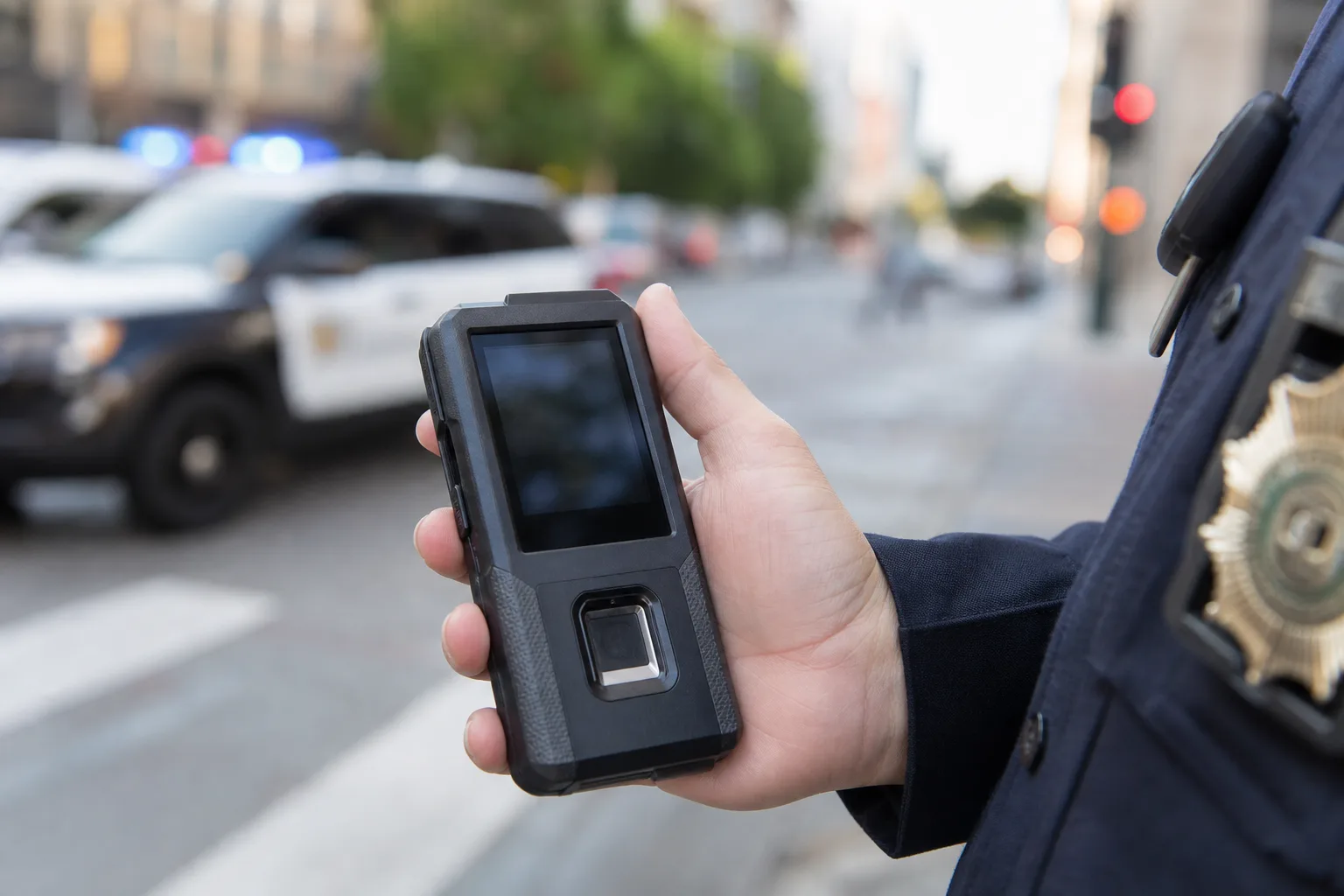
- ICE iris scanning technology is heading to 1,570 field agents under a $25.1 million no-bid contract awarded May 22.
- The ICE iris scanning deal is more than five times the size of a previous $4.6 million contract signed just eight months ago.
- The contract grants ICE access to Bi2’s database of over five million booking records for real-time identity checks.
- The procurement bypassed FedRAMP security review, with no independent audit or congressional oversight required.
Table of Contents
ICE Iris Scanning Gets a $25 Million No-Bid Upgrade
ICE iris scanning just got a massive, rapid-fire expansion. On May 22, Immigration and Customs Enforcement finalized a $25.1 million sole-source contract with Bi2 Technologies, a Massachusetts-based biometrics firm, to supply iris recognition hardware and database access to agents conducting field operations across the United States. The deal was posted publicly to SAM.gov and first reported in detail by Project Salt Box, which had flagged the pending procurement earlier this month.
What makes the scale of this contract remarkable isn’t just the dollar figure — it’s the acceleration. ICE’s first contract with Bi2 was worth $4.6 million, awarded by the Department of Homeland Security in September 2024. Eight months later, the agency is spending more than five times that amount. That’s not incremental expansion. That’s a program that someone, somewhere, decided needed to move fast.
What ICE Is Actually Buying
The contract covers iris biometric recognition devices and continuous access to Bi2’s proprietary biometric information system. According to the award language, the technology is intended to let ICE agents “quickly authenticate the identity of subjects during field operations” — meaning out in the field, not back at a processing center. ICE iris scanning in this context is explicitly a mobile, street-level tool, not a back-office verification system.
Under the terms, ICE’s Enforcement and Removal Operations (ERO) division gets access to a database containing more than five million booking records. That’s a significant pool of biometric data, drawn largely from prior law enforcement contacts and detention records. The 1,570 devices covered by this contract are due to arrive at ICE locations by late June, compared to the 200 units from the first deal. That’s nearly an eight-fold jump in hardware deployment in under a year.
Bi2 Technologies isn’t a household name, but it’s been a consistent player in the law enforcement biometrics space. The company markets iris and face recognition tools to police departments and correctional facilities across the country. Its BI2 platform has been pitched as a rapid identification tool for booking and field use — exactly the use case ICE is now funding at scale.
The Oversight Gap Nobody Wants to Talk About
Here’s where the story gets genuinely uncomfortable. The procurement did not require Bi2’s cloud-connected system to pass FedRAMP authorization before deployment. FedRAMP — the Federal Risk and Authorization Management Program — exists precisely to vet cloud services before they handle sensitive government data. Skipping it isn’t technically illegal, but it’s a significant departure from standard federal security practice, especially for a system that will be touching biometric data tied to millions of people.
There’s no mention in the contract of an independent security audit. No congressional notification requirement. No external review mechanism for how agents actually use the system in the field. The procurement, in other words, is built almost entirely on trust — trust that Bi2’s system is secure, trust that agents will use it appropriately, and trust that the data won’t be misused or exposed.
That’s a lot of trust to extend to a no-bid contract worth $25 million that went from concept to award in a matter of months. ICE iris scanning at this scale, touching this much sensitive data, arguably warrants more scrutiny — not less.
Why No-Bid Contracts Raise Red Flags
Sole-source awards — contracts given to a single vendor without competitive bidding — are permitted under federal procurement rules when there’s a compelling justification, such as a unique capability or an urgent operational need. Agencies use them legitimately. But they also create conditions where price discipline weakens, vendor accountability softens, and public scrutiny gets harder to apply.
The jump from $4.6 million to $25.1 million in a single follow-on contract, without a competitive rebid, is the kind of thing that typically draws attention from inspectors general and congressional oversight committees. Whether that attention materializes here remains to be seen.
It’s also worth placing this in the broader context of the current administration’s aggressive use of technology in immigration enforcement. Facial recognition, license plate readers, cell-site simulators, drone surveillance — ICE and its DHS parent have been expanding their digital toolkit at a pace that has outrun the policy frameworks meant to govern it. ICE iris scanning fits squarely into that pattern, and the no-bid procurement structure makes independent evaluation even harder to pursue.
Biometric Databases and the Scale Problem
Five million booking records sounds like a lot — because it is. Booking records typically come from arrests, detentions, and prior law enforcement encounters. They capture biometric data on people who have been processed through the criminal justice or immigration system, but not necessarily convicted of anything. Giving field agents instant mobile access to that database changes the nature of an encounter on the street in ways that civil liberties groups have been warning about for years.
Organizations like the Electronic Frontier Foundation and the ACLU have documented concerns about iris recognition accuracy across different demographics, the potential for mission creep once biometric databases are established, and the near-impossibility of correcting errors once a false match leads to a wrongful detention. None of those concerns appear to have generated any formal review requirement in this contract. For a program deploying ICE iris scanning to nearly 1,600 agents simultaneously, that absence is striking.
Biometric surveillance in immigration enforcement isn’t new — CBP has been rolling out iris and face recognition at ports of entry for years, and the FBI’s Next Generation Identification system holds tens of millions of records. But mobile, field-deployable iris scanning at this scale, with this little visible oversight infrastructure, represents a meaningful step further.
What Comes Next
With 1,570 devices due at ICE locations by the end of June, this program is almost certainly going to be operational before any formal oversight review could catch up to it. That’s probably not an accident. Procurement timelines in the national security and immigration enforcement space have a way of creating facts on the ground faster than policy debates can resolve them.
Whether Congress pushes back, whether civil liberties litigation follows, or whether this simply becomes the new normal for ICE field operations is the real question. Given the current political climate around immigration enforcement, the latter seems more likely than the former — which means ICE iris scanning at scale is probably just the beginning, not the ceiling.

