

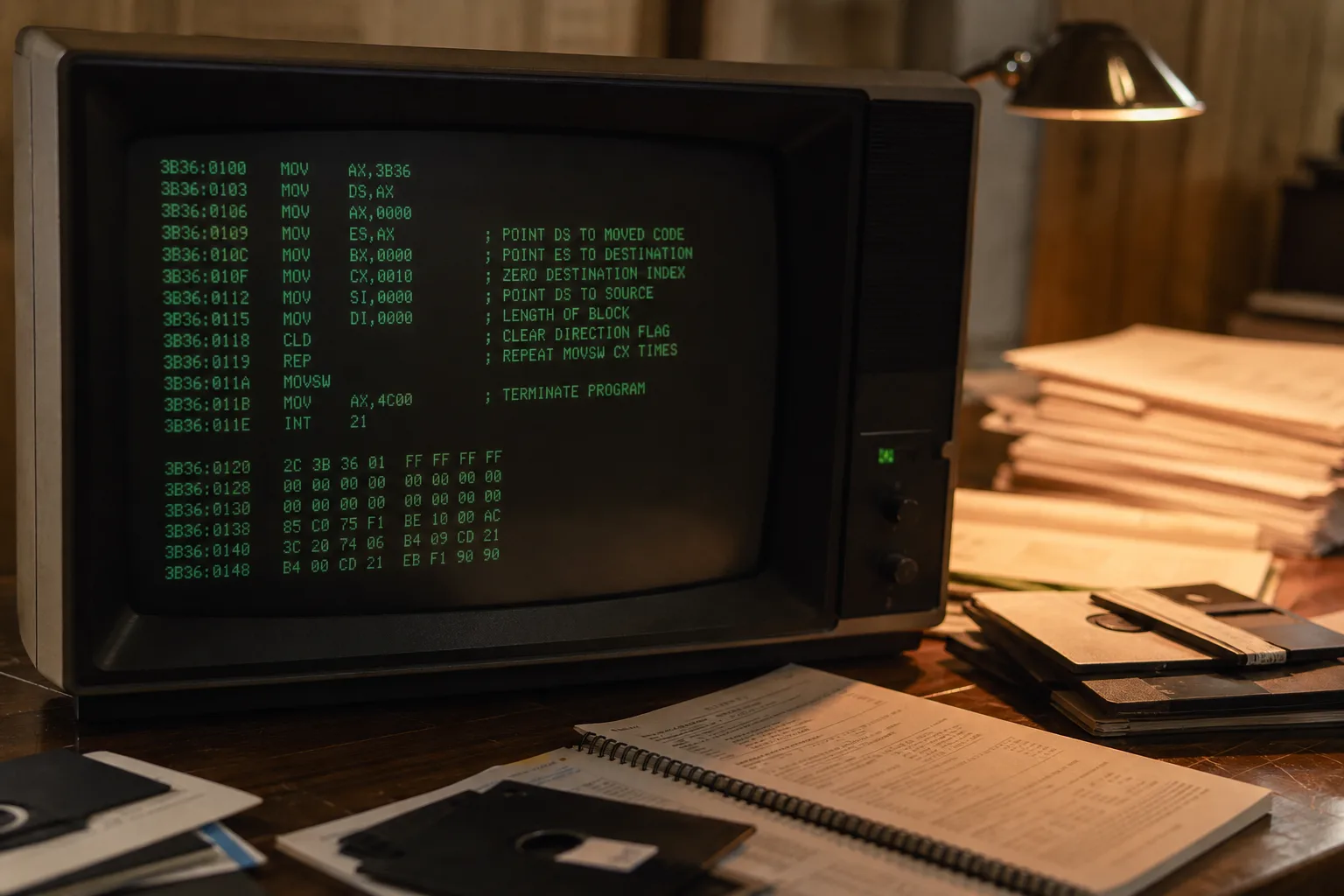
- Microsoft has released the earliest MS-DOS source code ever found, predating even the MS-DOS brand name itself.
- The newly open-sourced MS-DOS source code includes the 86-DOS 1.00 kernel and early PC-DOS development snapshots.
- The release traces back to programmer Tim Paterson, who originally built 86-DOS for Seattle Computer Products.
- Microsoft licensed 86-DOS to IBM as PC-DOS, then sold it to the world as MS-DOS, shaping PC computing for decades.
Table of Contents
The Oldest MS-DOS Source Code Ever Released
Microsoft has a habit of cracking open its historical archives every few years, but this week’s release is something different. The company has published what it’s calling the earliest MS-DOS source code discovered to date — and it goes back so far that the MS-DOS name didn’t even exist yet. Writing on the official Microsoft developer blog, Stacey Haffner and Scott Hanselman announced the release of source code that includes “sources to the 86-DOS 1.00 kernel, several development snapshots of the PC-DOS 1.00 kernel, and some well-known utilities such as CHKDSK.”
That’s not just a footnote in software history. That’s the raw DNA of an operating system that ran on hundreds of millions of machines and shaped the entire personal computing industry for the better part of two decades.
From QDOS to MS-DOS: A Very Quick History
To appreciate why this release matters, you need to understand where 86-DOS came from — and the story is messier and more interesting than Microsoft’s polished legacy might suggest.
In the late 1970s, programmer Tim Paterson was working at Seattle Computer Products, a small hardware company building an Intel 8086-based computer kit. The company needed an operating system. Paterson built one, originally calling it QDOS — short for “Quick and Dirty Operating System.” It wasn’t a glamorous name, and it wasn’t meant to be a world-beater. It was a practical tool for a specific piece of hardware, written fast and shipped fast.
It was later renamed 86-DOS, and that’s where Microsoft enters the picture. IBM was working on what would become the IBM PC 5150, and the company needed an operating system. Microsoft, which at that point was primarily a programming languages company, had committed to delivering one. The problem? They didn’t have one ready.
Microsoft licensed 86-DOS from Seattle Computer Products, hired Paterson to keep developing it, and eventually bought the rights outright. They then licensed the OS to IBM under the name PC-DOS — but crucially, Microsoft retained the right to sell the same operating system to other manufacturers. That version became MS-DOS, and it’s the one that spread everywhere.
Why the IBM Deal Changed Everything
It’s hard to overstate how consequential Microsoft’s arrangement with IBM turned out to be. IBM designed the PC 5150 around an open architecture, which meant third-party manufacturers could legally clone it. And they did — in massive numbers. Companies like Compaq, Tandy, and dozens of others flooded the market with IBM-compatible PCs throughout the 1980s and into the 1990s.
Every single one of those machines needed an operating system. And because Microsoft had kept the licensing rights, every one of those machines could run MS-DOS. IBM got a product; Microsoft got the world. It’s one of the most consequential business decisions in tech history, and it all flows back to the scrappy little kernel that Tim Paterson wrote for a computer kit that most people have never heard of. You can explore the full release yourself on the official Microsoft MS-DOS GitHub repository.

