

Table of Contents
PlayStation 6 discussion entering a critical phase. Sony has not formally announced the PlayStation 6, yet consistent leaks and analyst reports now shape expectations around release timing, pricing, and hardware direction. Sony has historically followed a seven year console cycle. The PlayStation 3 launched in 2006, the PlayStation 4 in 2013, and the PlayStation 5 in 2020. That pattern suggested a 2027 debut. However, recent reports indicate that Sony may push the PlayStation 6 to 2028 or even 2029 due to ongoing memory shortages and rising RAM costs.
If accurate, this would create the longest gap between PlayStation generations and give Microsoft more room to position its next Xbox console. Pricing remains uncertain. Estimates range from $500 to $600, with some analysts warning that memory pressures could push the price as high as $700 or beyond.
Hardware Direction and AMD Partnership
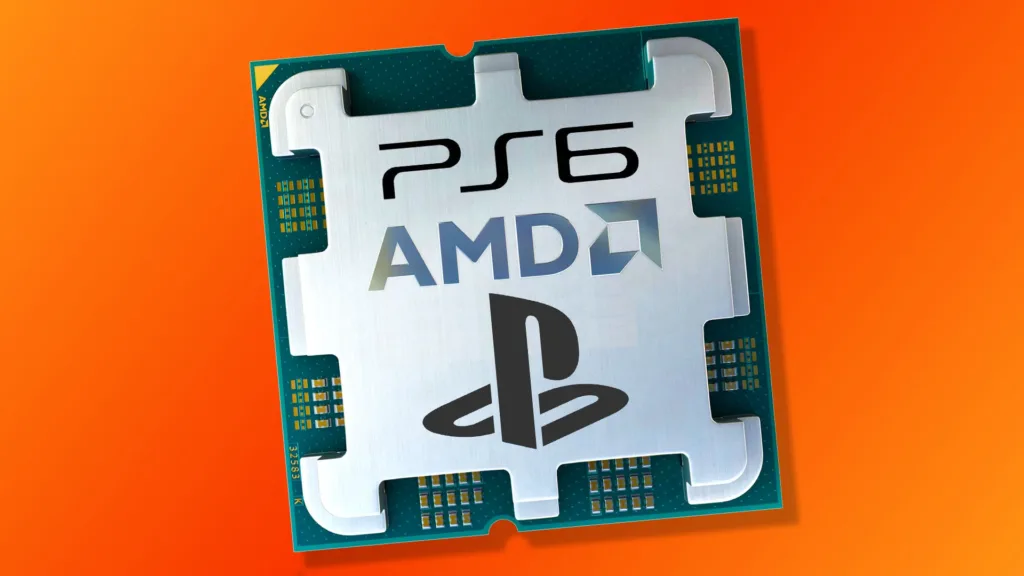
PlayStation 6 hardware leaks suggest that Sony will continue its partnership with AMD. Reports indicate that AMD secured the chipset contract over Intel in 2022. Leaked specifications point to a custom APU built on TSMC 2nm manufacturing, with a Zen 6 CPU and RDNA 5 GPU architecture. Rasterization performance could reach three times that of the base PS5, with ray tracing performance potentially increasing six to twelve times. These gains would target more realistic lighting and higher frame rates.
Several technologies reportedly stem from Project Amethyst, a joint Sony and AMD initiative. Neural Arrays aim to improve AI based upscaling and image reconstruction. Radiance Cores would dedicate hardware to ray traversal, freeing shader resources for graphics tasks. Universal Compression seeks to increase effective memory bandwidth through software level data compression. Together, these features indicate that Sony wants the PlayStation 6 to focus on advanced lighting, AI assisted rendering, and efficiency gains rather than raw teraflop marketing alone. Connectivity upgrades such as HDMI 2.2 and USB4 Version 2.0 also appear likely if the release shifts closer to 2029.
Project Canis and the Cross Generation Strategy
PlayStation 6 rumors also point to a handheld system codenamed Project Canis. Reports suggest a monolithic 3nm APU with Zen 6 cores and RDNA 5 graphics. Performance estimates place it at roughly half the raster power of a base PS5, yet potentially stronger in ray tracing due to architectural improvements. Developer documentation indicates Sony has encouraged low power optimization in PS5 toolkits, which many interpret as groundwork for handheld compatibility. This signals a dual device strategy where home console and portable hardware share architecture.
On the software side, no PlayStation 6 titles are confirmed. However, long development cycles suggest that major projects such as The Elder Scrolls VI and The Witcher IV could receive cross generation versions. Cross generation releases defined the PS4 to PS5 transition, and that model may expand further if the PlayStation 6 launches late in the decade.
From our editorial view at SquaredTech.co, the PlayStation 6 represents a balancing act between technological ambition and supply chain limits. If Sony manages memory costs and aligns hardware innovation with developer needs, the next console could deliver a meaningful leap. If delays extend further, expectations will rise along with competitive pressure.

