Table of Contents
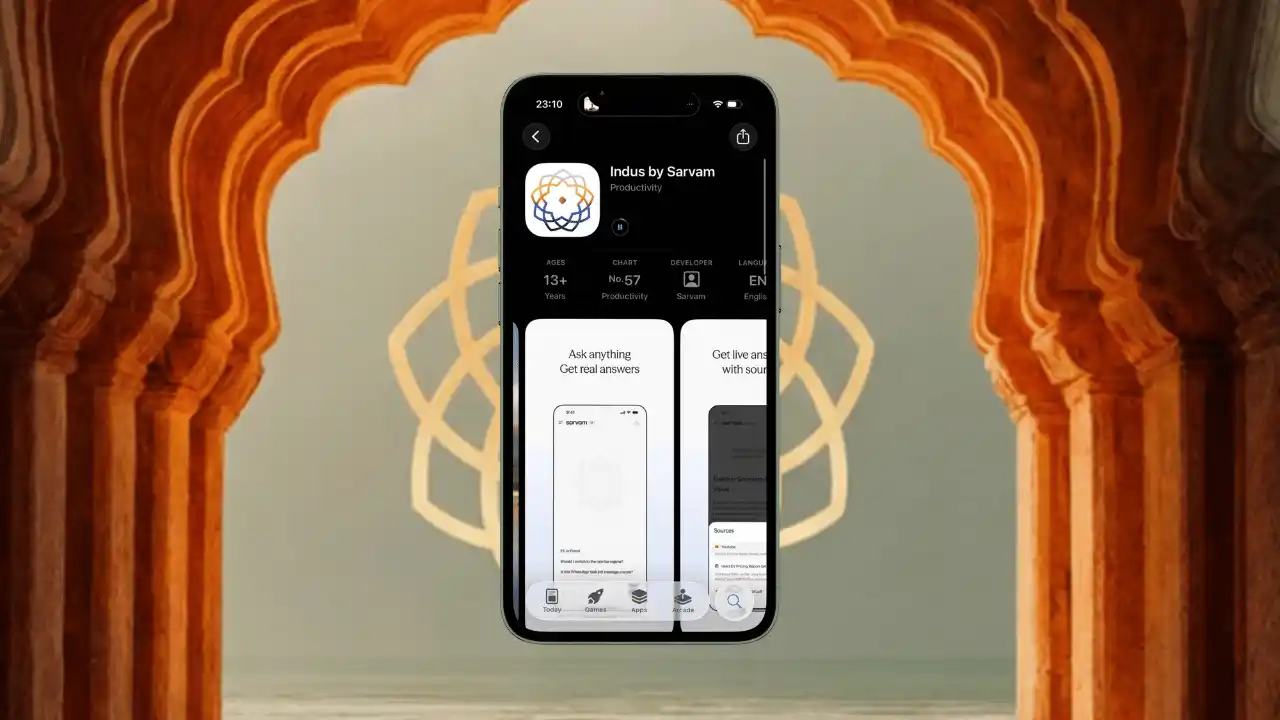
Sarvam Indus AI chat app as a strategic move in India’s fast growing generative AI market. The Sarvam Indus AI chat app launches at a time when global platforms such as OpenAI, Anthropic, and Google dominate user attention. India has become a priority geography for these firms. OpenAI CEO Sam Altman recently stated that ChatGPT has crossed 100 million weekly active users in India. Anthropic reports that India accounts for 5.8 percent of total Claude usage, second only to the United States. These figures show clear demand. Sarvam now positions Indus as a domestic alternative that focuses on Indian languages, speech inputs, and regional use cases. This move reflects a wider policy goal within India to build local AI infrastructure and reduce reliance on foreign platforms.
Technology Foundation and Platform Design
The Sarvam Indus AI chat app runs on the newly announced Sarvam 105B model, a 105 billion parameter large language model. The company also introduced a 30B model at the India AI Impact Summit in New Delhi. A parameter count of this scale indicates that the system can process large volumes of text data and generate detailed responses. Indus allows users to type or speak queries and receive answers in text or audio. The app is available in beta on iOS, Android, and the web. Users can log in with a phone number or through accounts from Google, Microsoft, or Apple. For now, access appears limited to India.
Sarvam also outlined enterprise initiatives and hardware plans. It announced partnerships with HMD Global to integrate AI into Nokia feature phones and with Bosch for automotive AI applications. These partnerships show that Sarvam does not aim to compete only in chat interfaces. It aims to embed its models across devices and vehicles. That approach could expand revenue sources beyond consumer subscriptions and into industrial contracts.
Constraints, Capital, and Competitive Outlook
The Sarvam Indus AI chat app currently operates with limits. Users cannot delete chat history without deleting their account. The reasoning feature cannot be turned off, which may slow responses. The company has warned that users may face a waitlist as it gradually expands compute capacity. This constraint signals a common challenge for AI startups. Large models require significant hardware resources. Compute supply directly affects user access and response speed.
Founded in 2023, Sarvam has raised $41 million from investors including Lightspeed Venture Partners, Peak XV Partners, and Khosla Ventures. This funding supports model training and infrastructure expansion. However, global rivals operate at much larger financial scale. OpenAI, Anthropic, and Google invest billions annually in model development and data centers.
From our perspective at SquaredTech.co, the near term outlook depends on three factors. First, Sarvam must expand compute capacity to reduce waitlists. Second, it must prove that Indian language optimization delivers measurable value over global models. Third, enterprise partnerships must convert into recurring revenue. If these conditions align, the Sarvam Indus AI chat app could become a cornerstone of India’s domestic AI strategy. If execution slows, global platforms will continue to consolidate user loyalty in one of the world’s largest digital markets.
Stay Updated: Artificial Intelligence