

Table of Contents
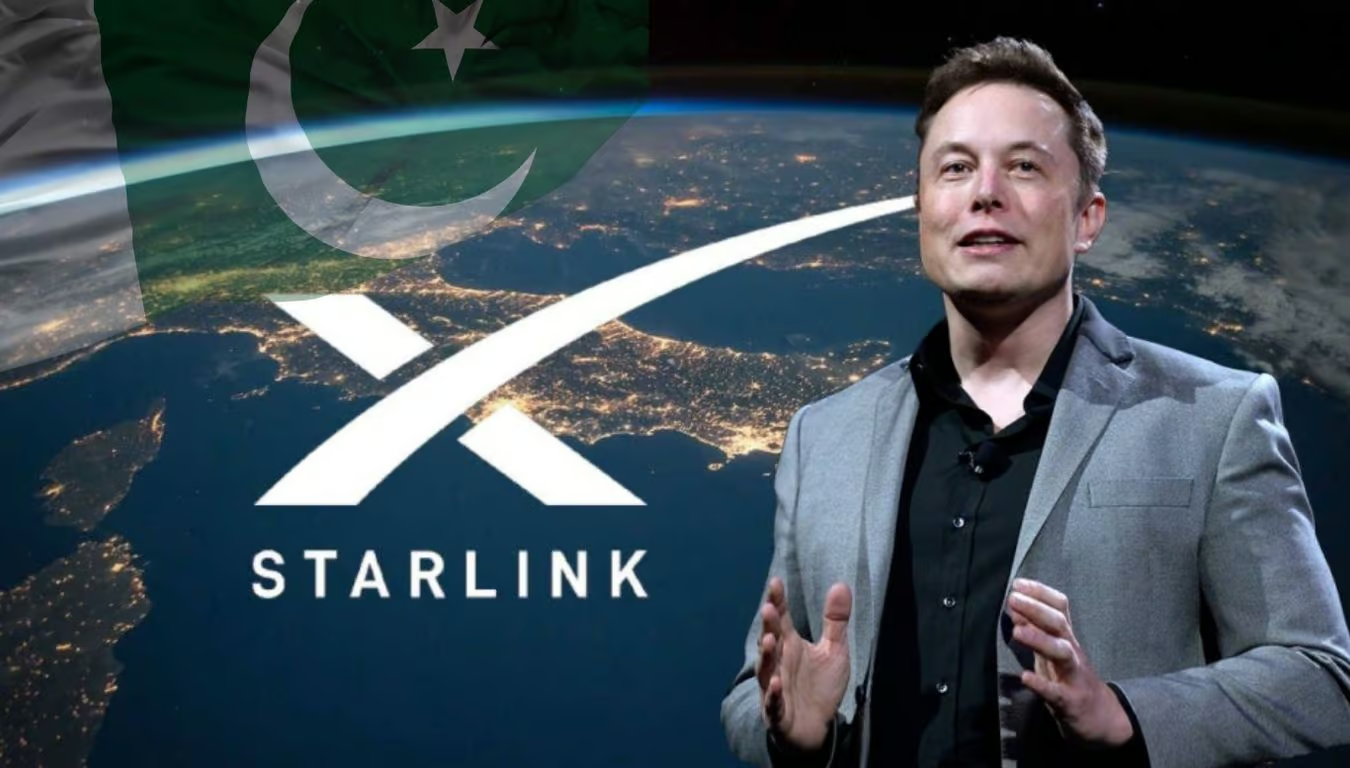
Two prime ministers visited Washington this week for the same global summit. The outcomes moved in opposite directions. Vietnam secured a formal operating license for Starlink. Pakistan returned home without progress on Pakistan Starlink approval. At SquaredTech.co, we see this contrast as more than a diplomatic detail. It reflects two different policy choices about internet access, state control, and digital growth.
Vietnam Moves Fast on Starlink Approval

Vietnam acted with clarity. During meetings in Washington, Prime Minister Pham Minh Chinh confirmed that the government had authorized Starlink Services Vietnam Co., Ltd. to deploy its low Earth orbit satellite network. Hanoi even eased foreign ownership restrictions to make the deal possible. This step signals that Vietnam views satellite internet as critical infrastructure, especially for rural and remote regions where fiber rollout is slow and expensive.
Starlink operates through a constellation of low Earth orbit satellites launched by SpaceX. These satellites transmit internet signals directly to user terminals on the ground. This system reduces dependence on undersea cables and domestic telecom backbones. For countries with mountainous terrain or scattered islands, satellite broadband offers faster nationwide coverage than traditional networks.
Vietnam’s decision sends a clear policy message. The government wants foreign technology investment. It accepts regulatory adjustments to secure it. By approving Starlink, Vietnam strengthens its digital economy goals, improves rural inclusion, and signals openness to global tech firms. The near term impact will likely include pilot deployments in underserved provinces and competitive pressure on local telecom operators.
Pakistan Starlink Approval Remains Frozen
Pakistan tells a different story. Pakistan Starlink registration dates back to 2021. In March 2025, authorities granted a temporary No Objection Certificate. Officials suggested that commercial operations would begin soon. That expectation has not materialized. Final clearance from the Pakistan Telecommunication Authority and the Space Activities Regulatory Board remains pending.
Pakistan Starlink approval faces three main barriers. First is regulatory control. Traditional internet traffic flows through fiber infrastructure controlled largely by state influenced operators. Satellite internet bypasses that structure. Data travels from user terminals to satellites and then to ground stations outside direct domestic control. Regulators worry that this model weakens their ability to monitor traffic or suspend services during national security events.
Second is political caution. Reports of tension between US President Donald Trump and Elon Musk have increased uncertainty. Policymakers in Islamabad may fear diplomatic friction if they approve a high profile American satellite provider during a sensitive period. Third is market competition. Chinese linked telecom interests, including companies such as Shanghai Spacecom Satellite Technology, have an incentive to delay or counter Starlink entry.
The result is regulatory paralysis. Millions of Pakistanis in remote districts still lack reliable broadband. Schools rely on weak mobile signals. Small businesses struggle to join online markets. Pakistan Starlink approval could ease these gaps quickly. Instead, the file remains in review.
Policy Choice Will Shape Digital Future
Pakistan Starlink approval now represents a broader policy question. Does the state prioritize centralized internet oversight, or does it prioritize rapid digital inclusion? Every country balances security with openness. The difference lies in speed and clarity of decision making.
Vietnam chose to adapt its rules to enable new infrastructure. Pakistan has chosen caution. In the short term, this delay protects existing regulatory frameworks. In the medium term, it may slow digital expansion, foreign investment, and rural connectivity. Global satellite internet providers continue to expand across Southeast Asia and other emerging markets. Each new license deepens their footprint and technical integration.
At SquaredTech.co, we believe the next few months will be decisive. If Pakistan Starlink approval moves forward, it could mark a shift in digital policy. If delays continue, investors will read that as a signal about the country’s regulatory climate. The silent sky over rural Pakistan remains a symbol. The question is whether policymakers will convert that silence into signal.
Stay Updated: Tech News – Emerging technologies

