
Table of Contents
The Meta scam crackdown has removed more than 150000 accounts linked to organized fraud groups operating across Southeast Asia. According to Meta Platforms, the enforcement effort followed cooperation with international law enforcement agencies that aim to disrupt large scale scam compounds operating in countries such as Cambodia, Myanmar, and Laos. At SquaredTech.co, we view the Meta scam crackdown as a sign that social platforms are increasing direct collaboration with investigators as online fraud grows into a major cross border crime industry.
Meta Scam Crackdown Targets Global Fraud Networks
The operation involved the Royal Thai Police, the Federal Bureau of Investigation, and the United States Department of Justice, along with several agencies across Europe and Asia. Authorities reported that Thai police arrested 21 suspects during the operation. Investigators shared intelligence with Meta in real time, allowing the company to disable large networks of accounts that coordinated scams through messaging services and social platforms.
Many of these operations run from large compounds that function like organized business centers for fraud. Workers at these locations often conduct romance scams or cryptocurrency investment schemes that target victims across several languages. These campaigns use scripted conversations and identity impersonation to build trust before convincing victims to transfer money or digital assets.
New Meta Scam Crackdown Tools for Facebook and WhatsApp
Alongside enforcement actions, the Meta scam crackdown includes new platform features meant to detect suspicious activity earlier. These tools appear across Facebook, WhatsApp, and Facebook Messenger.
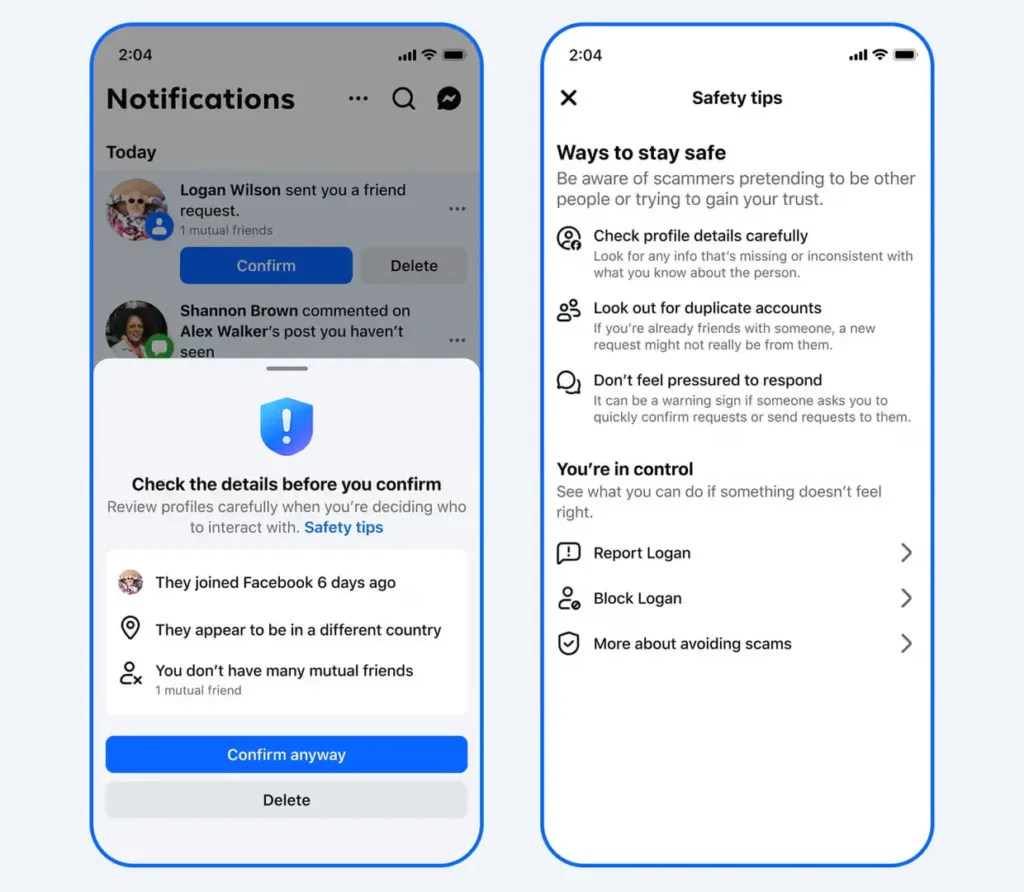
One of the main updates focuses on suspicious friend requests. The system analyzes signals that may indicate a fake account. For example, it may flag profiles that claim to live in one country but operate from another region. The warning also highlights signs such as a recently created profile or a lack of mutual connections.
Meta also introduced alerts in WhatsApp that detect attempts to link a user’s phone number to another device without permission. If the system identifies unusual linking behavior, the user receives a warning message explaining that the request could be part of a scam.
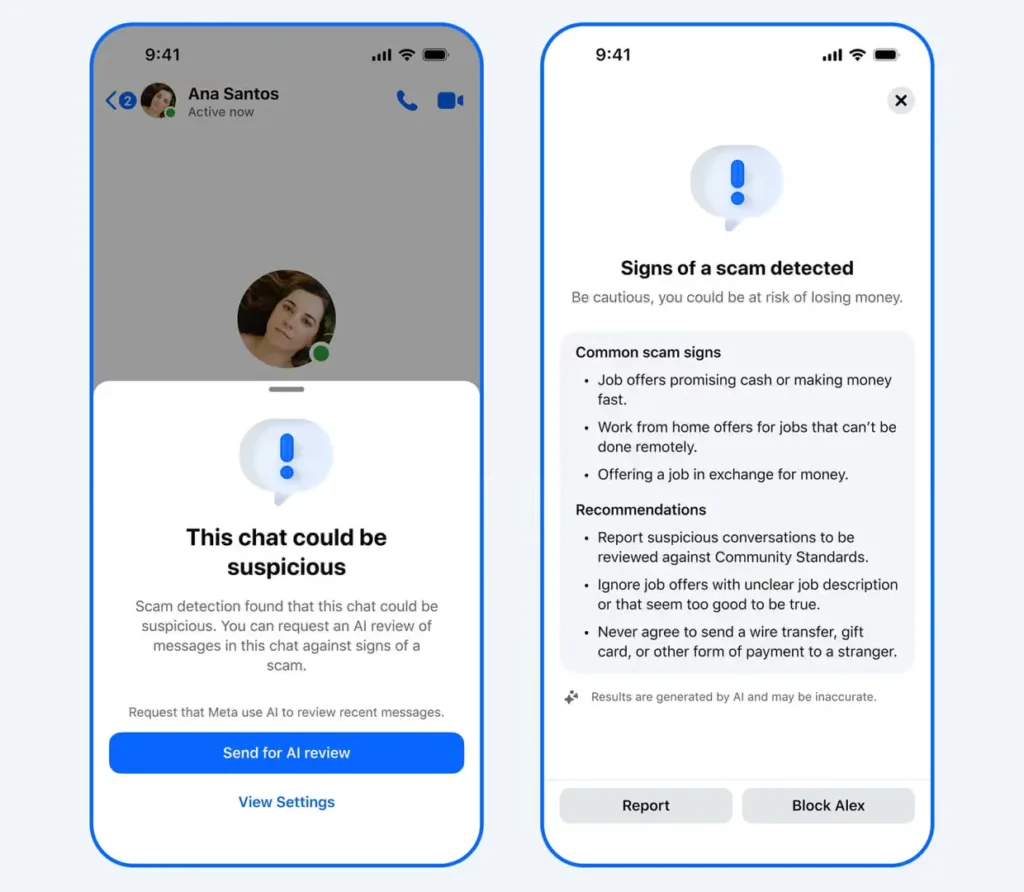
The company also expanded AI review features for messages. Users can submit suspicious conversations such as unexpected job offers or investment proposals. The system then checks the message pattern against known fraud tactics.
| Tool | Platform | Purpose |
|---|---|---|
| Suspicious friend request alert | Detect fake profiles and identity mismatch | |
| Device linking warning | Prevent unauthorized account access | |
| AI chat review | Messenger | Identify common scam messages |
These features aim to give users more control before scammers gain access to accounts or sensitive information.
Why the Meta Scam Crackdown Signals a Larger Security Push
The Meta scam crackdown follows an earlier pilot enforcement effort conducted in December. That earlier operation removed about 59000 accounts and led to six arrest warrants. The latest operation more than doubled that removal total. Authorities from the United Kingdom, Canada, Australia, New Zealand, South Korea, Japan, Singapore, the Philippines, and Indonesia also participated in the investigation.
We see this effort as part of a broader shift in how technology companies approach online crime. Social platforms once focused on removing individual fake accounts after user reports. The Meta scam crackdown shows a different model that targets entire criminal networks through intelligence sharing and coordinated enforcement.
The near term outlook suggests that similar actions will continue as fraud groups expand their tactics. Criminal operations increasingly combine romance scams, fake job offers, and cryptocurrency investment schemes to reach victims worldwide. These networks rely on scale and automation, which makes early detection tools essential.
If the Meta scam crackdown continues at this pace, it may force scam groups to shift methods or platforms. At the same time, social networks will face growing pressure from governments to prove that they can identify coordinated fraud before large numbers of victims lose money.
Stay Updated: Tech News