

Table of Contents
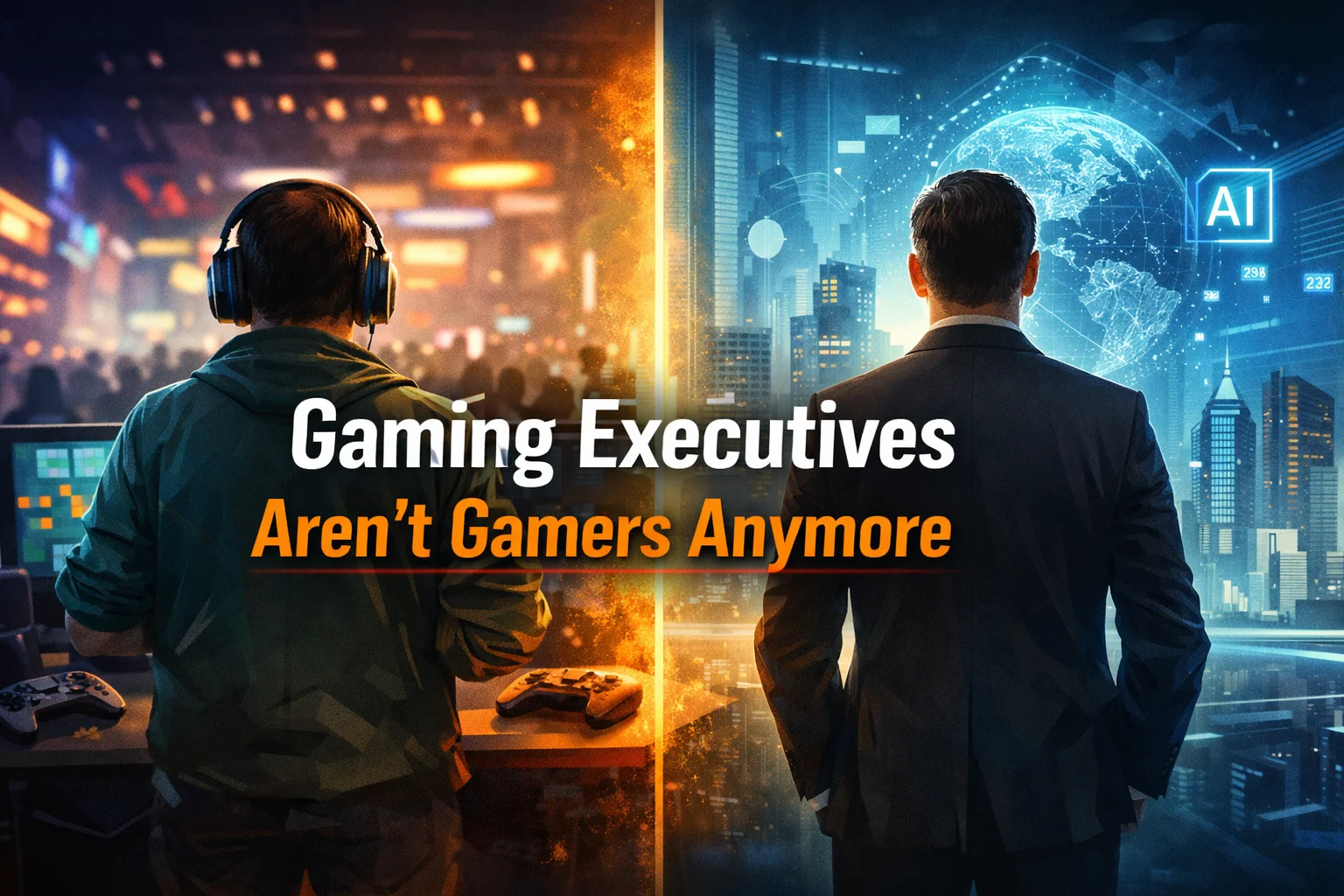
The debate that gaming executives aren’t gamers anymore highlights a shift in how major game companies select their leaders. Earlier generations of industry leadership often came from developers or lifelong players who built their careers inside the medium. One of the clearest examples was Satoru Iwata, former president of Nintendo. During a famous keynote at the Game Developers Conference, Iwata explained his identity in three parts. His business card said he was a corporate president. His mind said he was a developer. His heart said he was a gamer.

When Gaming Executives Were Gamers
Iwata’s background shaped that perspective. Before leading Nintendo, he worked as a programmer at HAL Laboratory and contributed to major franchises such as Kirby and Super Smash Bros. Even after becoming president, he remained closely involved in development discussions. For players and developers, this connection created a sense that the company leader understood the craft of making games. A similar path existed at Sony, where PlayStation creator Ken Kutaragi helped design the original console hardware before rising to executive leadership.
This earlier model placed creative and technical experience at the center of decision making. Industry leaders were visible figures who appeared at conferences, presented new products, and spoke directly to players. Their public identity became tied to the brands they represented. Fans often treated them as symbols of the companies they led.
The New Generation of Gaming Executives
Today the idea that gaming executives aren’t gamers anymore reflects a broader shift in corporate leadership across technology companies. Many modern executives come from management, consulting, or platform strategy rather than game development. The current leadership landscape includes figures such as Shuntaro Furukawa at Nintendo and Hideaki Nishino at Sony’s PlayStation division. These leaders manage global operations but rarely serve as public faces for the industry in the way earlier executives did.
The most visible change arrived at Microsoft after the retirement of Xbox chief Phil Spencer. Spencer was widely known as an active player who publicly shared his gaming habits and gamer tag. His replacement, Asha Sharma, comes from Microsoft’s artificial intelligence division and openly acknowledges that she is still learning about the gaming ecosystem.
The contrast between the two leadership styles highlights a structural change in how gaming companies operate.
| Era | Typical Leadership Background | Public Presence |
|---|---|---|
| Early console era | Developers and hardware engineers | Highly visible industry figures |
| Modern platform era | Corporate strategy and technology leadership | Limited public exposure |
The shift reflects the scale of the modern gaming industry. Global distribution, cloud services, and subscription platforms now shape business strategy as much as individual game releases.
What This Leadership Shift Means for the Industry
The argument that gaming executives aren’t gamers anymore raises an important question about the future direction of the industry. Some observers believe leaders without development experience may struggle to understand the creative culture that drives game design. Others argue that modern companies require executives who specialize in global operations, digital platforms, and artificial intelligence.
Former Xbox creator Seamus Blackley has suggested that leadership backgrounds can reveal a company’s priorities. In his view, Microsoft’s interest in artificial intelligence and large scale technology platforms explains why its new leadership team includes executives with AI experience rather than long careers in game development.
At SquaredTech.co, we see this transition as part of a broader evolution in entertainment technology. Gaming is no longer a niche hobby led by enthusiasts working in small studios. It has grown into one of the largest segments of the digital economy. That growth brings corporate leadership structures that resemble those of other global technology companies.
The near term outlook suggests that the industry will continue to balance two priorities. Creative teams still drive the design of new games, while executive leadership focuses on infrastructure, distribution, and emerging technologies. The question is whether companies can maintain strong creative direction when their leaders come from outside the culture that originally built the medium.
Stay Updated: Gaming

