Table of Contents
At Squaredtech, we track Tesla’s every move in the tech landscape. Tesla invests $2 billion in xAI. This step backs CEO Elon Musk’s vision. Tesla aims to transform from an electric vehicle leader into an AI powerhouse. Cybercab production starts this year. These announcements came on January 28, 2026. They shape investor views. Shares climbed 3.5% after hours. Gains settled at 1.8% post details. We analyze how this investment ties into Tesla’s Cybercab goals and broader challenges.
Tesla’s $2 Billion xAI Investment Powers Cybercab Ambitions
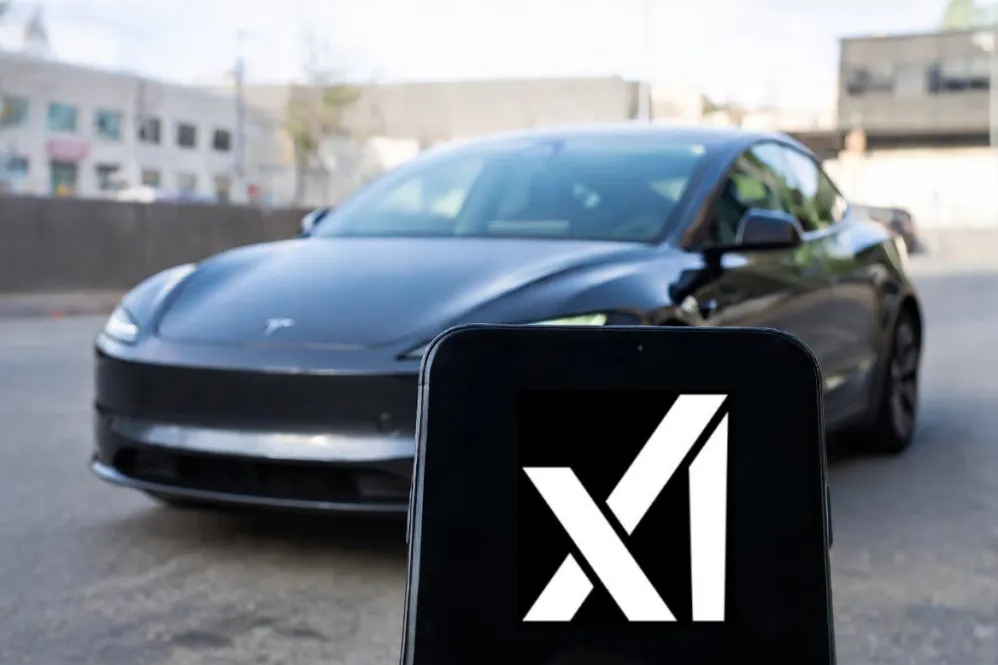
Tesla commits $2 billion to xAI. xAI belongs to Elon Musk. This cash infusion supports autonomous driving tech. Tesla needs advanced AI models. xAI delivers those models. The investment aligns with Musk’s pivot strategy. Tesla shifts focus from EVs to AI services. This change justifies Tesla’s $1.5 trillion market value. Investors bet on future robotaxi revenue. They overlook current car sales dips.
Cybercab production remains on track for 2026. Musk promises rollout in key U.S. areas. He targets a quarter to half of the United States by year-end. Past promises fell short. Tesla launched limited service in Austin, Texas. That happened in June 2025. Musk first aimed for half the U.S. population by end-2025. He later cut goals to eight to ten metro areas. Delays eroded trust. Now, Cybercab reassurance rebuilds confidence.
Chief Financial Officer Vaibhav Taneja revealed capex plans. Tesla spends over $20 billion this year. That doubles 2025’s $8.5 billion. Funds build factories for Cybercab. They also support humanoid robots, Semi trucks, and Roadster sports cars. Production ramps demand space. Tesla repurposes Model S and Model X lines. Those flagships once defined EV luxury. Sales now form a tiny revenue slice. Robots take priority.
Thomas Monteiro, senior analyst at Investing.com, calls this a transition phase. Investors fund self-driving software now. They wait for auto sales recovery. Rollout metrics matter most. Deliveries take a backseat. Monteiro stresses progress indicators. Tesla must prove autonomy works.
Musk’s track record shows misses. He predicts Full Self-Driving advances. Yet regulatory nods lag. Cybercab lacks steering wheel or pedals. Federal standards clash. Production faces hurdles. Musk expects initial Optimus output to start slow. Volume hits in late 2026. Cybercab joins robotaxi fleets. Model Y vehicles run early services with Full Self-Driving software. Consumers buy Cybercabs later.
This xAI tie-up was anticipated. xAI’s models boost Tesla. xAI’s valuation grows fast. Andrew Rocco at Zacks Investment Research notes the appeal. Tesla’s EV sales slow. Investors grab AI exposure. The “scorching hot AI boom” draws capital.
Supply chain risks loom. Musk flags memory chip shortages. AI infrastructure eats supplies. Tech giants prioritize data centers. Prices rise. Consumer devices suffer. Musk urges Tesla to build its chip plant. Geopolitical tensions worsen risks. Without action, supply limits Tesla.
Energy Storage Shines as Tesla’s Revenue Bright Spot
Tesla’s energy business thrives. Q4 revenue hit $3.84 billion. That marks a record. Growth reached 25.5%. Analysts forecast $3.46 billion. Tesla beat estimates. Grid-scale batteries drive demand. They back renewable power. They stabilize grids.
This segment offsets EV woes. Core auto margins improved. Gross margin hit 17.9%. It excludes credits. That beats last year’s 13.6%. Expectations sat at 14.3%. Discounts propped volumes. Lower-priced trims helped. Full-year revenue dropped 3% to $94.83 billion. First annual decline ever.
Q4 adjusted EPS reached 50 cents. Wall Street eyed 45 cents. Net income fell 61% to $840 million. Rivals launch cheaper models. U.S. EV tax credits ended in 2025. Musk’s politics alienate buyers. Tesla cuts Model S and X sales. Robots claim factory space.
Wall Street projects 1.77 million deliveries in 2026. That lifts 8.2% from 2025. Visible Alpha data supports this. Autonomy promises sustain shares. Stock rose 11% in 2025. Shareholders approved Musk’s $878 billion package. Milestones tie pay to performance. It locks Musk’s focus amid ventures.
Our team sees patterns here. Tesla balances legacy autos with AI bets. Energy storage proves reliable. It grows without hype. Cybercab success hinges on execution.
Cybercab Production Challenges Test Investor Patience
Cybercab defines Tesla’s future. Production starts 2026. No wheel or pedals challenge norms. Musk pushes unsupervised driving. Full Self-Driving nears decade mark. Firm timelines lack. Regulatory progress stays vague.
Musk narrows robotaxi goals. Top metros lead. Austin tests prove concepts. Expansion needs approvals. Optimus robots follow. Slow start expected. Cybercab fleets scale later.
Capex surge funds builds. $20 billion plus strains balance. Investors weigh risks. EV recovery lags. Discounts erode margins temporarily. Energy revenue cushions blows. Musk warns of chip crunches. U.S. firms hoard memory. Data centers win. Tesla eyes self-reliance. A chip factory secures supply.
Shares react mixed. Initial pop faded on costs. Autonomy metrics guide now. Rollouts beat delivery counts. At Squaredtech, we parse these shifts. Tesla invests in xAI to lead AI mobility. Cybercab production tests resolve. Energy strength endures. Investors demand proof. Musk’s vision demands patience. 2026 metrics will judge.
Tesla’s path blends caution and ambition. xAI cash accelerates AI. Cybercab timelines tighten. Energy records impress. EV headwinds persist. Capex doubles bets. Supply fixes loom essential.
Broader context matters. Rivals pressure prices. Tax breaks vanish. Politics sway buyers. Tesla pivots smartly. Autonomy justifies premium. Optimus adds layers. Humanoid bots enter factories. Volume builds late 2026. Multi-product push strains resources.
Squaredtech follows Tesla closely. We equip readers with analysis. Cybercab progress shapes tech futures.
Stay Updated: TechNews – Money Talks