Table of Contents
OpenAI’s decision to introduce ChatGPT ads marks a turning point in how consumer AI tools fund growth. ChatGPT ads are now being tested in the United States for users on the Free and Go tiers, while paid subscribers remain exempt. The Go plan, priced at eight dollars per month, launched globally in mid January and sits between free access and higher tier subscriptions. OpenAI frames this move as a way to support broader access without shifting costs to all users. Early reaction shows mixed sentiment, with some users accepting ads as a tradeoff and others raising concerns about trust and answer quality.
Key background points shaping the rollout include:
• Ads appear only on Free and Go plans
• Plus Pro Business Enterprise and Education users see no ads
• Users under eighteen are excluded from ads entirely
How OpenAI Says ChatGPT Ads Will Work
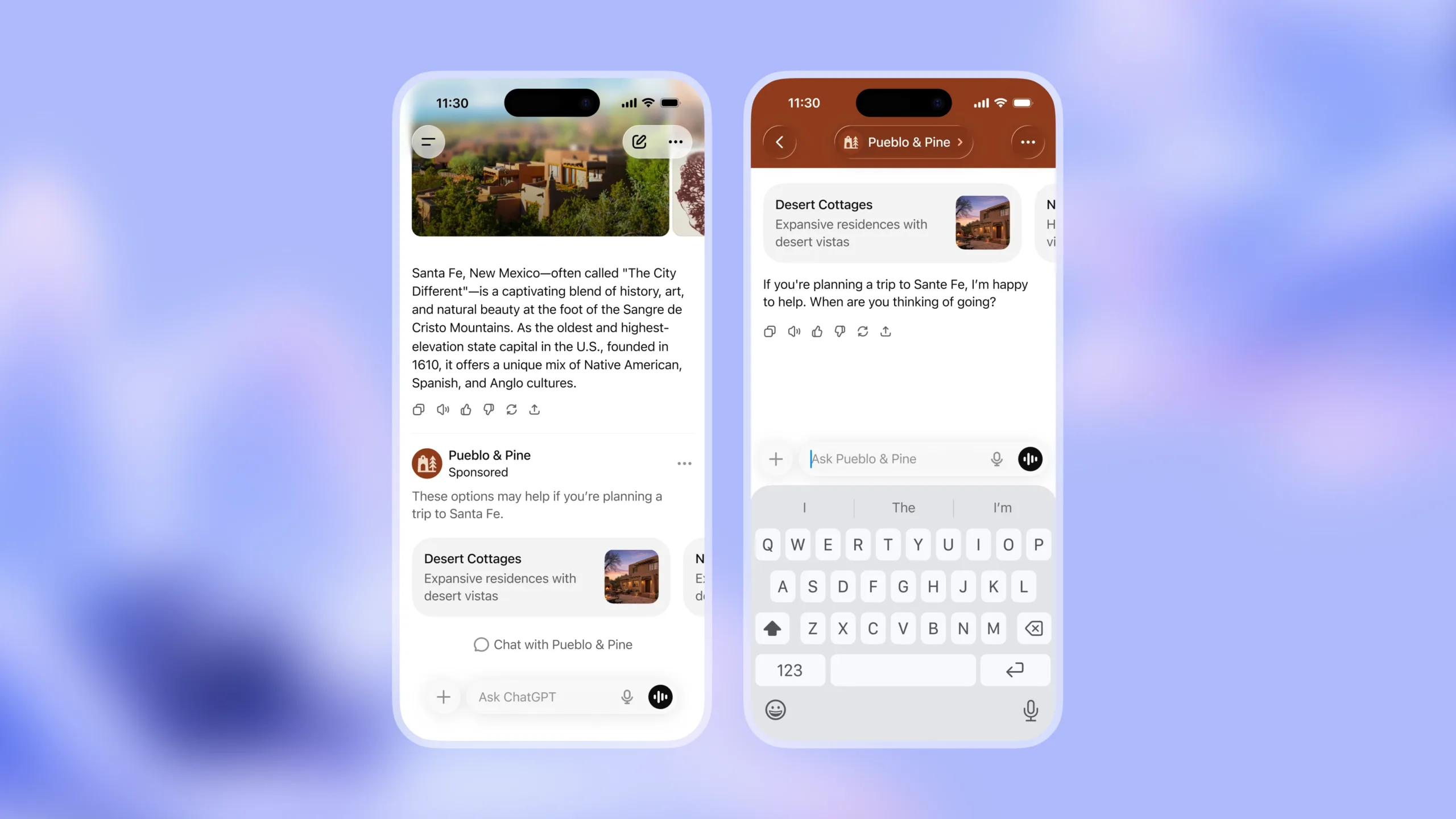
OpenAI has stressed that ChatGPT ads do not alter responses or expose personal conversations to advertisers. According to the company, ads remain clearly labeled and appear separate from AI generated replies. This distinction aims to address fears that commercial interests could shape output. At SquaredTech.co, we view this separation as central to OpenAI’s credibility as it balances scale with user confidence.
Operational details shared by OpenAI include:
• Ads align with conversation topics rather than personal identity
• Advertisers receive only aggregate performance data
• Sensitive areas such as health politics and mental wellbeing remain ad free
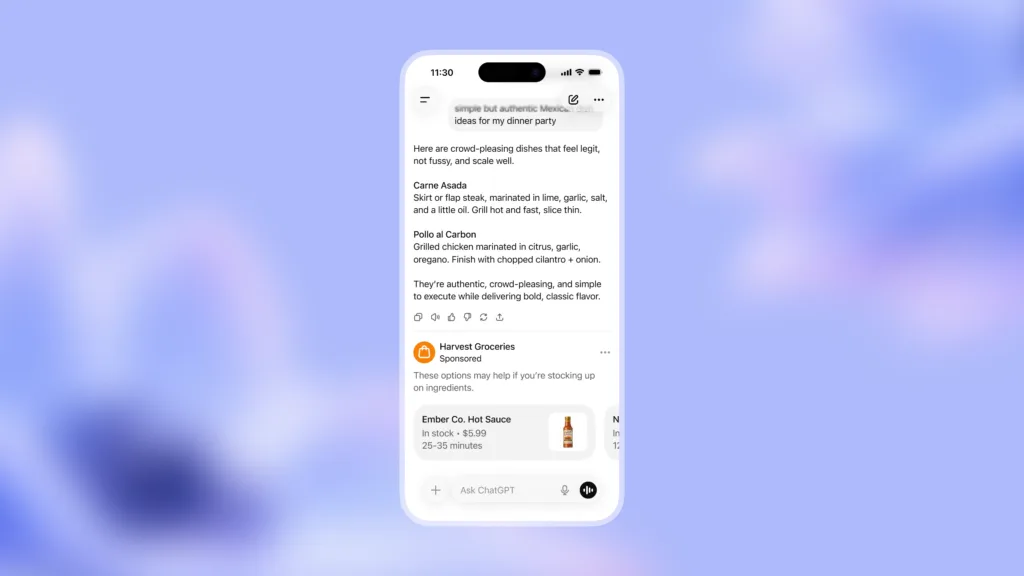
In testing, a user searching for recipes may see grocery or meal kit promotions. OpenAI states that this matching relies on broad context rather than direct data sharing. Users can dismiss ads, review why an ad appeared, clear ad history, and adjust personalization settings at any time.
Industry Reaction and Competitive Pressure
The announcement has already sparked visible pushback from rivals. Anthropic used recent television spots to mock ad supported AI by portraying awkward ad interruptions during chatbot responses. OpenAI chief executive Sam Altman responded sharply, calling the portrayal misleading and criticizing Anthropic’s positioning. This exchange reflects deeper tension as leading AI firms search for sustainable business models under rising infrastructure costs.
Current impact factors worth noting:
• Consumer skepticism remains high after earlier ad like experiments
• Operating costs for large language models continue to climb
• Subscription growth alone may not cover long term expenses
From an industry perspective, ChatGPT ads appear less about short term profit and more about diversifying revenue while keeping entry level access open.
What Comes Next for ChatGPT Ads
Looking ahead, the success of ChatGPT ads will depend on execution rather than intent. Clear labeling, strict topic limits, and strong user controls reduce risk, but trust will hinge on consistent behavior over time. OpenAI has promised transparency tools that let users see ad history and manage preferences, which may ease concerns if delivered reliably.
Near term outlook indicators include:
• Limited rollout scope focused on the US
• Gradual testing rather than full scale deployment
• Continued emphasis on paid tiers as the premium experience
At SquaredTech.co, our analysis suggests OpenAI is testing user tolerance as carefully as advertiser demand. If ChatGPT ads remain unobtrusive and predictable, they may become an accepted layer of free AI access. If not, resistance could push more users toward paid plans or rival platforms.
Stay Updated: Artificial Intelligence