

Table of Contents
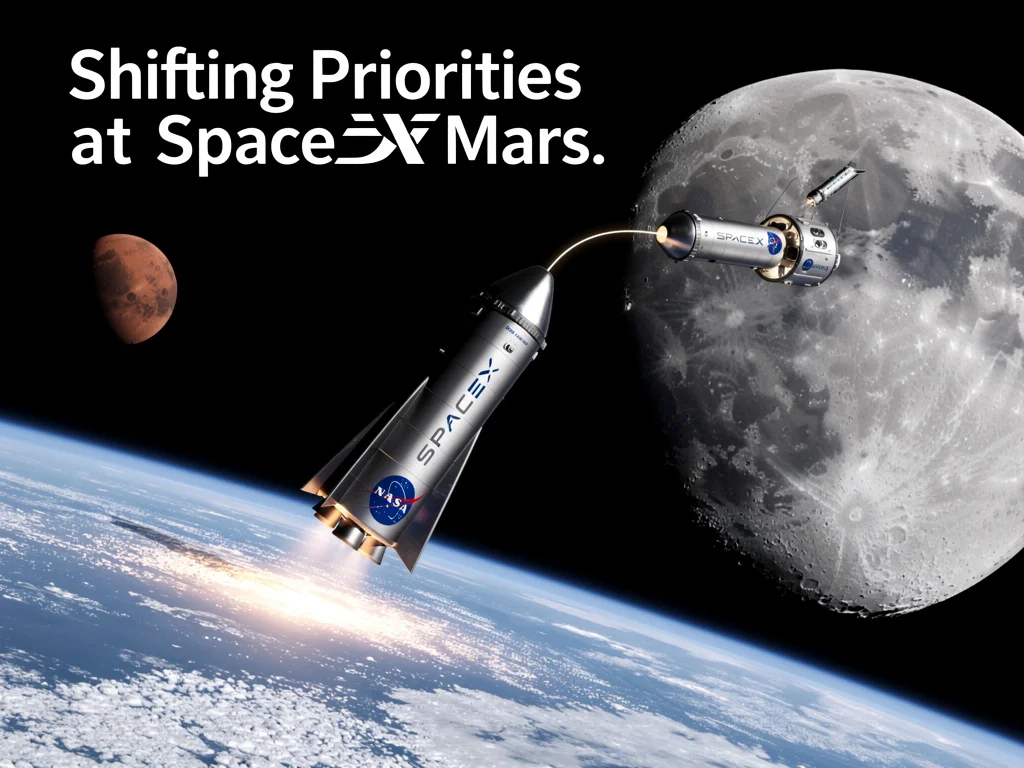
the SpaceX Moon settlement plan marks the clearest shift yet in Elon Musk’s long term space strategy. For years, Mars stood as the stated mission goal and the reason SpaceX built Starship. Now Musk says the Moon offers a faster and more practical path. In a recent public statement, he described a self growing city on the Moon within the next decade.
This timeline places lunar development ahead of Mars for the first time in company history. The reasoning centers on physics and logistics. Lunar missions can launch roughly every 10 days, and travel takes about two days. Mars missions open every 26 months, and each trip takes about six months. That gap changes everything about how engineers test and refine systems.
Why the Moon Makes Technical Sense
The SpaceX Moon settlement plan reflects a decision to prioritize iteration speed and risk control. Engineers need frequent launch windows to test hardware, life support systems, and landing procedures. The Moon allows rapid cycles of testing and correction. Mars forces long waits between attempts.
• Launch opportunities roughly every 10 days
• Travel time of about two days instead of six months
• Faster feedback loops for design improvements
• Easier emergency return to Earth
The Moon also provides a safety buffer. Earth remains visible and reachable within days. Mars offers no quick rescue option. This proximity reduces mission risk during early settlement phases. At SquaredTech.co, we see this as a shift from ambition driven timelines to engineering driven timelines.
NASA Artemis and Industry Alignment
The SpaceX Moon settlement plan also aligns with existing government programs. In April 2021, NASA selected Starship as the human landing system for the Artemis program. Artemis aims to establish a sustained human presence on and around the Moon around 2030. SpaceX has therefore prepared for lunar missions for several years, even while publicly emphasizing Mars.
This alignment creates several near term impacts:
• Starship development gains clearer operational targets
• NASA funding supports lunar infrastructure testing
• Private partners can build supply chains around a defined location
• Regulatory and political backing strengthens near Earth missions
A lunar base allows teams to test closed loop life support, resource extraction from lunar soil, and habitat construction. These systems must work reliably before any Mars attempt. The Moon becomes a proving ground where failures remain recoverable and supply missions stay feasible.
What This Means for Mars
The SpaceX Moon settlement plan does not cancel Mars ambitions. Instead, it reframes Mars as a second phase goal. By validating systems on the Moon, SpaceX can reduce uncertainty before committing to a multi year Mars campaign. This approach lowers technical and financial risk.
Near term outlook indicators include:
• Continued Starship test flights focused on lunar readiness
• Expanded collaboration under the Artemis framework
• Infrastructure planning for long duration lunar stays
From our perspective at SquaredTech.co, the pivot signals strategic maturity. Mars remains the long horizon objective. The Moon now serves as the classroom, the test site, and the first real step toward becoming a multi planetary species.
Stay Updated: Space

