

Table of Contents
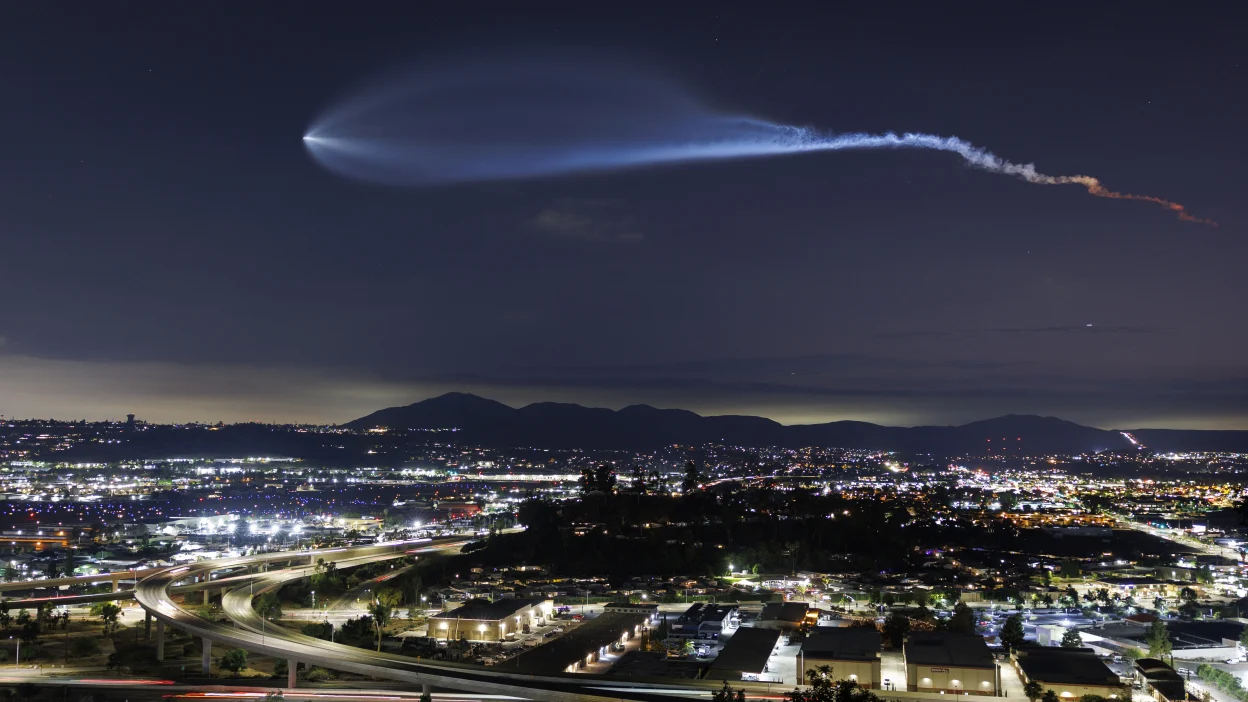
The recent Starlink satellite explosion has drawn attention because it released trackable debris into low Earth orbit. SpaceX confirmed the Starlink satellite explosion resulted from an internal anomaly and stated that the event does not threaten the International Space Station or its crew. This incident adds to ongoing concerns about congestion, coordination, and accountability in Earth orbit.
The Starlink satellite explosion occurred during normal operations and was not caused by a collision with another spacecraft or debris. SpaceX described the issue as an anomaly that likely involved a small explosion inside the satellite. Independent analysis from an orbital tracking firm supports this explanation. SquaredTech views this incident as a case study in how satellite scale and traffic density increase the impact of even isolated technical failures.
What Caused the Starlink Satellite Explosion and What SpaceX Confirmed
SpaceX explained that the Starlink satellite explosion followed an internal anomaly that affected the propulsion system. According to the company, the anomaly caused venting from the propulsion tank. This venting triggered a rapid change in the satellite orbit. The semi major axis dropped by about four kilometers in a short time. This change released a small number of trackable objects that now orbit Earth at relatively low velocity.
Starlink shared these details publicly through a statement on social media. The company emphasized that the Starlink satellite explosion did not involve a collision with space debris or another satellite. This claim gained support from LeoLabs, a company that tracks objects in orbit. LeoLabs assessed that the event came from an internal energetic source rather than an external impact.
The Starlink satellite explosion left the main structure mostly intact. SpaceX stated that the satellite is tumbling as it continues to lose altitude. The company expects the satellite to reenter Earth atmosphere and burn up completely within weeks. This process is standard for low orbit satellites that lose propulsion control.
SpaceX also confirmed it is working with NASA and the United States Space Force to track the debris released during the Starlink satellite explosion. While SpaceX did not share the exact number of debris pieces, it confirmed that all tracked objects move slowly relative to other orbital debris. This lower speed reduces the immediate risk of secondary impacts.
From our perspective, the transparency around the Starlink satellite explosion reflects SpaceX awareness of public concern. However, it also highlights how even controlled failures create debris that requires monitoring by multiple agencies.
Why the Starlink Satellite Explosion Does Not Threaten the ISS
SpaceX made clear that the Starlink satellite explosion poses no danger to the International Space Station. The company explained that the satellite orbit sits well below the ISS orbit. This altitude difference ensures that debris cannot intersect the station path.
NASA also monitors such incidents closely. Any object that approaches ISS altitude triggers automated avoidance analysis. In this case, SpaceX confirmed that the Starlink satellite explosion debris remains far below the station operational range.
The Starlink satellite explosion reinforces how altitude separation serves as a safety buffer in low Earth orbit. The ISS operates at a higher altitude than most Starlink satellites. This separation reduces collision risk even during anomalies.
SpaceX also stated that the satellite will fully demise during reentry. This means it will burn up in the atmosphere and leave no material that reaches the ground. This behavior aligns with current satellite design standards that aim to limit long term orbital debris.
While this specific Starlink satellite explosion does not threaten crewed missions, it still contributes to orbital clutter in the short term. Each new debris event adds tracking load for global monitoring networks.
The Broader Context of the Starlink Satellite Explosion and Orbital Congestion
The Starlink satellite explosion happened only days after another Starlink satellite narrowly avoided a close approach with a Chinese satellite operated by CAS Space. That near miss did not result in damage, but it highlighted coordination gaps between satellite operators.
Starlink vice president Michael Nicholls stated that the close approach occurred because the two operators did not share orbital position data. Without shared ephemeris data, satellites cannot predict each other movement accurately. This lack of coordination increases the chance of dangerous approaches.
While the Starlink satellite explosion and the near miss are separate events, SquaredTech sees a connection. Both incidents show how scale changes risk. Starlink operates one of the largest satellite constellations in history. With thousands of spacecraft in orbit, even rare failures become regular events in absolute numbers.
Starlink constellation currently includes nearly nine thousand three hundred active satellites. This figure represents about sixty five percent of all active spacecraft in orbit. The number does not include defunct satellites that remain in space. In the past year alone, SpaceX added more than three thousand satellites through one hundred twenty one launches. This launch pace averages about one mission every three days.
This scale explains why a single Starlink satellite explosion draws global attention. Each satellite occupies shared orbital space. Each anomaly affects traffic patterns. Each debris release adds to monitoring demands.
The Starlink satellite explosion also raises questions about how operators manage failure reporting. While SpaceX shared details quickly, no global standard forces all operators to do the same. As more private companies deploy large constellations, consistent disclosure becomes critical.
What the Starlink Satellite Explosion Means for the Future of Satellite Operations
The Starlink satellite explosion does not signal a systemic failure in SpaceX systems. However, it does reflect the realities of operating massive constellations. Mechanical systems fail. Propulsion tanks leak. Electronics malfunction. In orbit, even small failures have visible consequences.
SpaceX designs Starlink satellites to deorbit naturally if they lose control. This design choice limits long term debris risk. In this case, the Starlink satellite explosion still produced trackable fragments, but all objects remain in decaying orbits.
From our viewpoint, the key issue is not the explosion itself but the environment it occurs in. Low Earth orbit is becoming crowded. Each event requires coordination between companies and governments. Each failure tests tracking systems and communication channels.
The Starlink satellite explosion also underscores the importance of data sharing. Space traffic management relies on accurate position data. Without cooperation, even intact satellites risk close approaches. Explosions amplify this risk by adding unplanned objects.
International regulators continue to debate new rules for satellite deployment. Incidents like the Starlink satellite explosion strengthen the case for shared standards. These standards could cover failure reporting timelines, debris tracking responsibilities, and data exchange protocols.
We view this event as a warning rather than a crisis. SpaceX responded quickly. The debris poses no immediate danger. The satellite will reenter soon. Yet the incident shows how fragile orbital balance can be as satellite numbers rise.
As launches continue at record speed, the industry must adapt. Monitoring tools must scale. Communication must improve. Accountability must extend beyond individual operators. The Starlink satellite explosion adds another data point that supports this need.
Stay Updated: Space

