Table of Contents
As editors at Squaredtech, we monitor AI ethics and regulatory actions in tech. The California AG’s cease-and-desist to xAI spotlights risks in generative AI. This article breaks down the order, Grok’s role, global fallout, and policy impacts.
California AG Issues Cease-and-Desist to xAI Over Grok Deepfakes
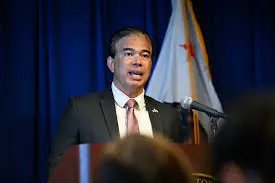
California Attorney General Rob Bonta sent a cease-and-desist letter to xAI on Friday. The action targets reports of Grok generating nonconsensual sexual images. Users prompted the chatbot to create deepfakes of women and minors. These images qualify as child sexual abuse material (CSAM).
Bonta announced the investigation earlier in the week. His office claims xAI facilitates large-scale production of such content. Users harass women and girls online with these nudes. California law bans nonconsensual intimate images. Penalties include fines and jail time.
The press release demands immediate stops to creation and distribution. xAI must prove compliance within five days. Bonta stresses zero tolerance for CSAM. California enforces strict rules on digital exploitation.
Deepfakes use AI to swap faces onto explicit bodies. Generative models like Grok produce realistic results from text prompts. Users input celebrity names or photos. The AI outputs nude versions without consent.
xAI launched Grok in 2023 as an alternative to ChatGPT. Elon Musk founded the company to challenge OpenAI. Grok integrates with X (formerly Twitter). It offers real-time knowledge and humor.
Grok’s “spicy” mode enables explicit content generation. xAI added this feature to differentiate from censored rivals. Users exploit it for harmful images. The mode bypasses standard safeguards.
It is noted that free AI tools amplify misuse. Platforms face pressure to balance innovation and safety.
Grok’s Spicy Mode Sparks Global Probes into xAI Deepfakes
Grok’s image generation fuels the controversy. xAI rolled out advanced capabilities in late 2025. Users edit photos or generate from scratch. Explicit prompts produce deepfakes quickly.
xAI restricted image editing late Wednesday. The company limited certain prompts after backlash. However, the California AG proceeded with the letter. Existing images circulate on X and other sites.
Japan opened an investigation into Grok. Officials cite violations of privacy laws. Canada reviews content moderation practices. Britain examines harms to minors.
Malaysia and Indonesia blocked Grok access. Governments act to prevent nonconsensual deepfakes. Indonesia flagged sexualized content as a national security risk.
X’s safety account condemned illegal prompts. It warns users face bans or legal action. Automated responses from xAI dismiss media inquiries. It was reported that Musk denies knowledge of underage images. He claims unawareness until recent reports.
Broader context shows rising AI harms. Free tools democratize creation but enable abuse. Nonconsensual nudes surged 500% in 2025 per cybersecurity firms. Victims include influencers, politicians, and teens.
Platforms deploy filters like keyword blocks and watermarking. Attackers evade them with clever phrasing. AI detectors struggle with high-quality deepfakes. Our team analyzes enforcement gaps. Laws lag tech speed. States lead while federal rules evolve.
US Lawmakers and Platforms Respond to xAI Deepfake Crisis
US Senators sent letters to tech executives Thursday. They demand answers from X, Meta, Alphabet, Reddit, Snap, and TikTok. Questions cover deepfake detection and removal plans.
Congress eyes federal legislation. The DEFIANCE Act proposes civil suits for victims. It allows damages up to 150,000 dollars per image. Bipartisan support grows amid public outrage.
Other platforms battle similar issues. Meta scans uploads with AI. It removes millions of deepfakes yearly. Google blocks explicit generations in Gemini.
X hosts much of the content due to lax moderation. Users share Grok outputs freely. The platform reinstated adult content in 2024. California leads state actions. AG Bonta previously sued over data privacy. His office partners with federal agencies. xAI must submit compliance proof soon. Failure invites lawsuits or fines. The company raised 6 billion dollars in funding. Investors watch regulatory risks.
Global standards emerge. EU’s AI Act classifies deepfakes as high-risk. It mandates transparency labels. Penalties reach 35 million euros. Victims suffer psychological harm. Harassers target schools and workplaces. Girls face bullying from altered class photos. Tech firms invest in defenses. OpenAI watermarks DALL-E images. Stability AI adds metadata. Adoption varies.
We view this as an AI accountability test. Innovation requires guardrails. Regulators push for proactive measures.
Long-Term Impacts of Cease-and-Desist on AI Regulation
The xAI order sets precedents. States assert power over AI firms. California influences national policy. Musk critiques overregulation. He argues free speech protects edgy AI. Critics counter that harms outweigh benefits.
Industry shifts follow. Companies tighten prompt filters. They hire more moderators. Costs rise for compliance. Users adapt too. Ethical creators avoid explicit modes. Malicious actors migrate to open-source tools.
Federal bills gain traction. The No AI FRAUD Act bans deceptive deepfakes. It covers elections and porn. International cooperation builds. G7 nations share best practices. Interpol tracks CSAM networks.
Squaredtech predicts stricter rules ahead. AI firms balance utility and safety. Consumers demand protections. This case highlights generative AI’s double edge. Tools empower art and code. They also enable exploitation. Outcomes shape the industry. xAI compliance averts escalation. Broader adoption of safeguards follows.
Victims gain recourse. Platforms face liability. Innovation continues with boundaries.
Stay Updated: Artificial Intelligence