

Table of Contents
Federal and security experts are issuing a clear warning: delete sensitive messages whenever possible and avoid storing long histories of private conversations on iPhone and Android devices. This guidance comes as Apple and Google move closer to universal encrypted texting across default messaging platforms. While encryption protects messages in transit, old conversation histories remain vulnerable, making deletion a critical step in mobile privacy.
Federal Push To Delete Sensitive Messages Signals A New Stage For Mobile Security
For years, many iPhone users assumed iMessage offered complete protection. In reality, Apple limited encryption to its own ecosystem, leaving messages sent between iPhone and Android devices exposed through carrier infrastructure. The truth is more layered. Apple kept encryption inside its own ecosystem and did not protect texts sent between iPhone and Android contacts. Conversations that traveled through carrier infrastructure could be intercepted or collected if devices were compromised.
Delete Sensitive Messages is now central to federal advice, as encryption alone does not protect conversations stored on devices. Apple is preparing an update expected to fix this weakness by adding full encryption across cross-platform messaging. Analysts refer to it as a catch-up moment that finally aligns iPhone and Android stock messaging with apps like WhatsApp and Signal that have delivered locked conversations for years. The planned update matters for privacy. It also resets expectations for consumers who assume their devices already protect everything.
Federal agencies raise alarms for a broader audience than privacy activists. They notice how quickly mobile habits change and how rarely users revisit settings that govern message retention. Delete Sensitive Messages may sound like simple housekeeping. Government experts argue it cuts risk dramatically. Storing large bodies of private conversation increases the exposure window if a phone is stolen, breached, or remotely accessed. Every word typed becomes a long-term record unless users clean it out.
Federal agencies and security experts have increasingly urged better encryption for default messaging services like iMessage and Android’s RCS, as unencrypted paths leave cross-platform texts vulnerable. Apple historically kept encryption within its ecosystem, meaning messages between iPhone users were protected end-to-end — but messages between iPhone and Android devices often fell back to plaintext SMS or RCS without true E2EE. Google accelerated support for RCS with encryption on supported devices, and Apple has signaled intent to adopt universal encrypted texting across platforms in future releases. Even as default encryption improves, authorities stress that deleting sensitive messages remains essential, because encryption protects messages in transit — but not old conversations stored indefinitely on devices or in backups.
Why Delete Sensitive Messages Applies Even With Apps Like WhatsApp And Signal
The Cybersecurity and Infrastructure Security Agency (CISA) says the guidance to delete sensitive messages extends beyond unencrypted SMS or iMessage. It also applies to users of encrypted apps like WhatsApp, Signal, and Facebook Messenger, because stored histories remain accessible if a phone is compromised.
CISA warns that attackers increasingly exploit message histories after gaining device access. Users should avoid scanning suspicious group invitations or QR links, as attackers use these tactics to implant malware or compromise accounts. Recent cases involving Iranian state-linked hackers demonstrate how such vectors are leveraged for surveillance and information harvesting. Deleting sensitive messages limits what attackers can access if a device is breached.
The agency also flags fake security alerts disguised as Apple or Google system messages. These aim to steal login codes or trick users into malicious actions. Removing old messages reduces the pool of codes and information attackers could exploit. CISA additionally urges users to review linked devices regularly, because unauthorized devices may silently collect messages. Combined with deletion, this creates a “double wall” of protection.
Federal guidance now explicitly recommends enabling message expiration and auto-delete controls where available. Apps like WhatsApp, Signal, and Facebook Messenger offer timers that remove conversations after a set period, limiting how long sensitive text history can be accessed. This turns Delete Sensitive Messages from a niche privacy habit into standard practice for mobile security.
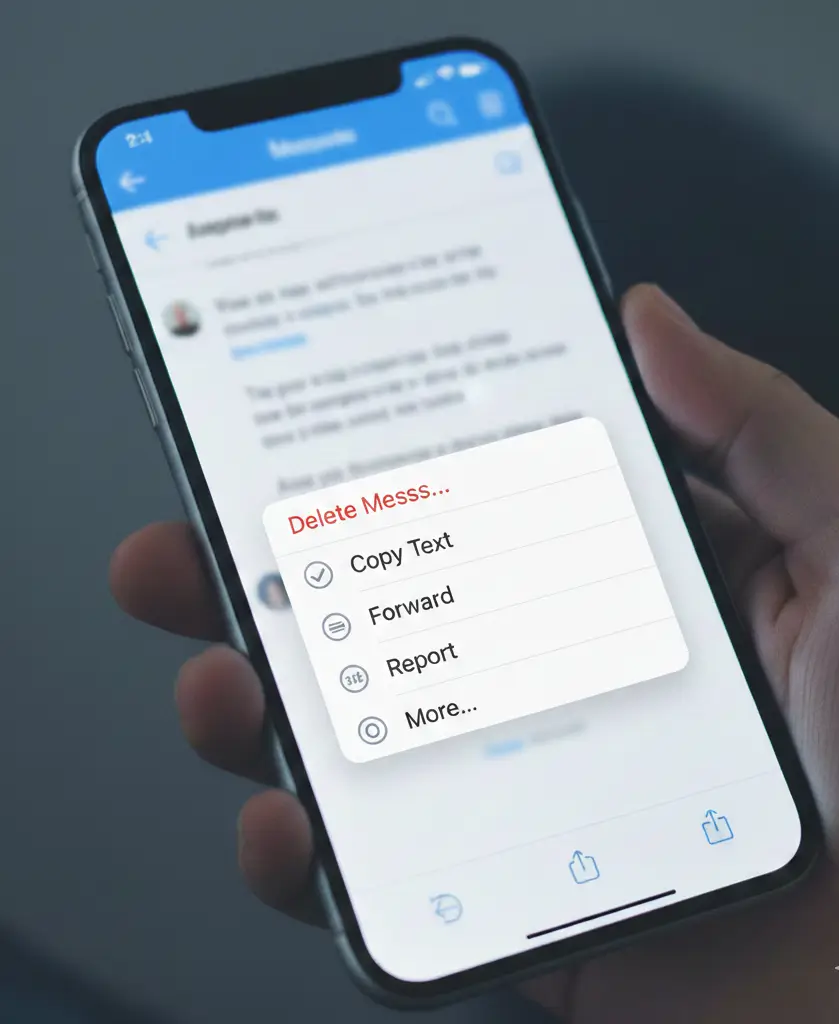
Unlike some messaging apps, Apple’s iMessage currently lacks automatic message expiration controls, requiring users to delete messages manually. Google’s Messages app offers built-in expiration on supported devices, but until Apple adds similar defaults, Delete Sensitive Messages remains an active, necessary habit for iPhone users.
Automatic deletion may conflict with workplace and legal retention requirements, particularly in regulated industries. However, for personal use, Delete Sensitive Messages is recommended as baseline cyber hygiene, reducing the risk of private conversations being exposed through breaches or lost devices.
How Delete Sensitive Messages Changes Everyday Phone Habits
Apple is reportedly preparing updates to bring end-to-end encryption across iPhone and Android texting, promising a landmark improvement in default communications security.
Phones often serve as digital diaries, holding jokes, private photos, financial reminders, and location details — all of which can be exposed if a device is compromised. Once a user learns that phones store all of that indefinitely, the question becomes whether they want that archive visible to anyone who gains access. Delete Sensitive Messages offers an answer. Users can protect themselves in a way that even automatic encryption cannot reach.
Carriers also influence the coming shift. Apple and Google need buy-in from telecom networks to activate universal encryption across millions of devices. The companies remain silent about internal test timelines, but experts believe rollout could arrive quickly once code stabilizes. Even then, federal guidance is clear: encryption protects data in transit, but stored conversation history remains a liability until deleted or auto-expired.
Squaredtech expects several ripple effects. First, ordinary users will talk more openly about security features and privacy decisions. Delete Sensitive Messages will enter conversations that used to focus on camera upgrades or processor performance. Second, app developers will likely introduce more granular message controls inside their products. Third carriers may face pressure if slow adoption leaves gaps in cross-platform protection.
Workplaces will make their own calls. Some companies will restrict disappearing conversations because deleted logs disrupt record-keeping. Others will encourage Delete Sensitive Messages for personal chats while setting separate rules for business channels. That dual-layer approach already exists in many organizations that support both Slack and encrypted messaging apps.
For parents, Delete Sensitive Messages adds responsibility. Families who supervise teenagers must strike a balance between privacy, education, and safety monitoring. Auto deletion can shield children from long-term data exposure, but also erase evidence if harassment or exploitation takes place. Federal agencies have not dismissed those issues. They argue that the general population faces more immediate harm from widespread phone attacks than from isolated misuse of disappearing messages. Delete Sensitive Messages remains a recommended baseline in most personal contexts.
International intelligence agencies share similar views. Global crime groups frequently target mobile devices. Criminals exploit message archives for extortion, identity theft, and social engineering. Deleting sensitive messages deprives them of material should they breach a device. Governments see this as a practical step that improves national digital hygiene without requiring complex software.
Apple understands the signals. The company has already stated that full cross-platform encryption is coming to iMessage. Delete Sensitive Messages may follow later in a feature expansion that matches WhatsApp and Signal. Until Apple brings that option to the platform, users must accept manual removal or partial coverage through third-party apps.
Conclusion
Squaredtech sees this federal guidance as a wake-up call rather than a minor advisory. Delete Sensitive Messages represents a pivotal shift in how everyday users handle personal digital communication. Encryption solves the transit problem; auto-deletion solves the storage problem. Together, they form a modern baseline for mobile privacy.
The arrival of encrypted cross-platform messaging inside iPhone and Android signals progress. Yet authorities remind users that privacy is a moving target. Delete Sensitive Messages is the strongest single action a user can take today to secure private conversations, reducing unnecessary risk and preventing long-term liabilities.
Squaredtech will continue analyzing Apple’s rollout and carrier adoption. Until automatic deletion becomes standard, Delete Sensitive Messages remains a critical habit for all mobile users.
Stay Updated: TechNews

