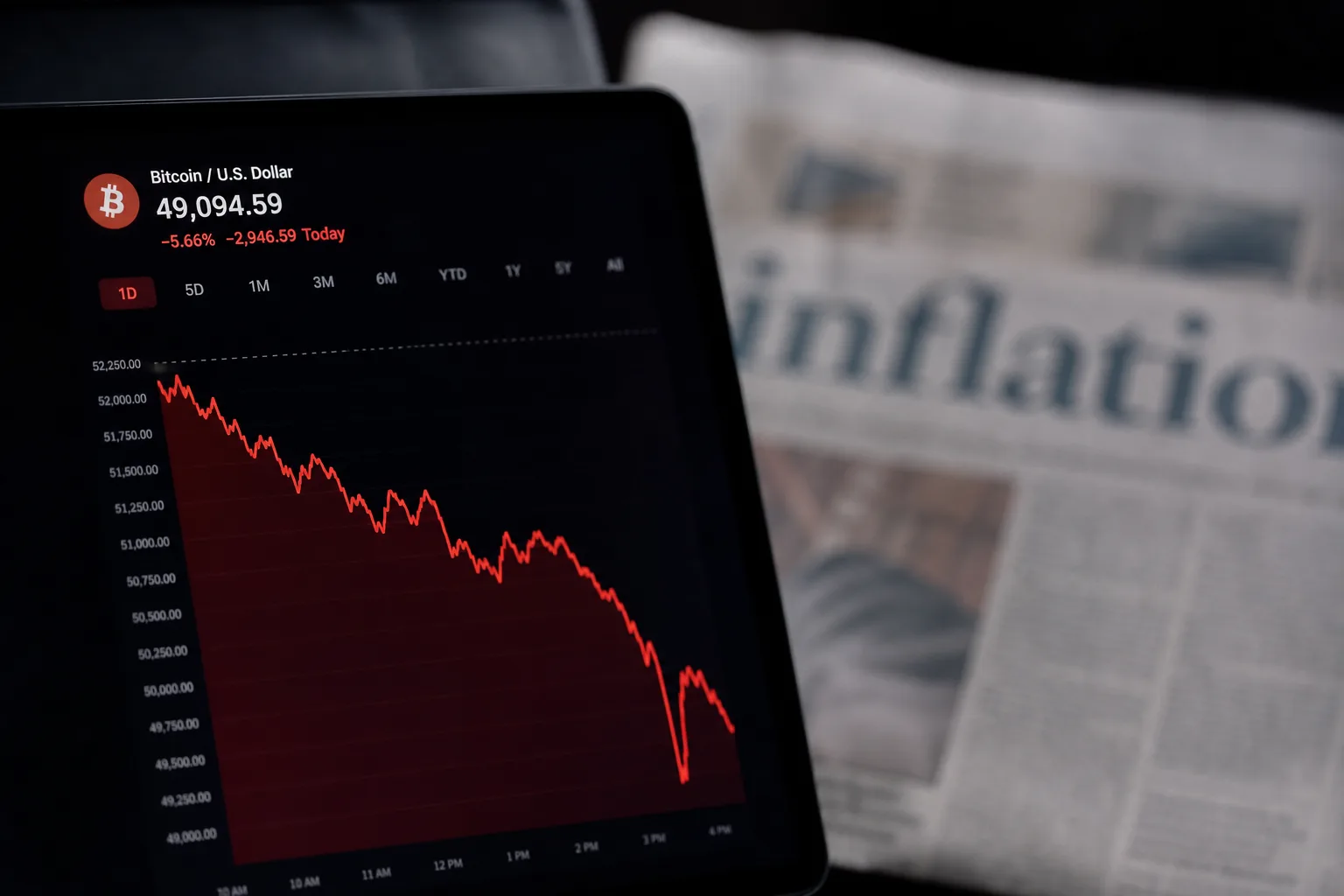
- Bitcoin inflation pressure is intensifying as CPI is forecast to rise 4.2% year-over-year, the highest reading since April 2023.
- Bitcoin inflation pressure pushed BTC down more than 1% in pre-market trading, alongside a broader sell-off in risk assets.
- The CME FedWatch Tool is now pricing in a 25-basis-point rate hike by December, reversing months of cut expectations.
- Gold slipped to $4,169 and the 10-year Treasury yield climbed back above 4.5%, signalling tighter financial conditions ahead.
Table of Contents
Bitcoin Inflation Pressure Builds Ahead of Critical CPI Report
Bitcoin inflation pressure is back at the centre of the macro conversation, and traders are not waiting for the data to arrive before repositioning. Markets pulled back sharply in pre-market trading on Tuesday as investors braced for what could be the hottest Consumer Price Index reading in more than three years. Bitcoin dropped more than 1% before the opening bell — not dramatic in isolation, but telling when you factor in what’s driving it.
The setup is straightforward and uncomfortable: headline CPI is forecast to print at 4.2% year-over-year, up from 3.8% in May. If that number lands as expected, it would mark the highest inflation reading since April 2023. Core CPI — which strips out food and energy — is projected to tick up to 2.9% annually from 2.8% the prior month. Neither figure is the stuff of monetary policy nightmares, but together they’re enough to close the door on any near-term Fed pivot. Bitcoin inflation pressure of this kind has historically preceded sharp repositioning across all risk assets, not just crypto.
The Fed Rate Hike Narrative Returns — and Markets Feel It
For most of 2025, the dominant market narrative was about when the Federal Reserve would cut rates, not whether it might raise them again. That story has now flipped. The CME FedWatch Tool is currently pricing in a 25-basis-point rate hike by December — a remarkable pivot in market expectations that reflects just how sticky inflation has proven to be.
Bitcoin inflation pressure tends to operate through a specific transmission mechanism. When rate hike odds rise, the U.S. dollar strengthens, real yields climb, and the appetite for speculative assets contracts. Bitcoin, for all its maturing narrative as ‘digital gold’ or an inflation hedge, still trades in practice like a high-beta risk asset during macro stress events. Tuesday’s pre-market move confirmed that dynamic is very much alive.
The Invesco QQQ, a proxy for large-cap tech and growth stocks, was down more than 1% alongside bitcoin — reinforcing that this isn’t a crypto-specific story. This is a broad risk-off move driven by the macro backdrop, with crypto simply showing its characteristic sensitivity to rate expectations more visibly than most.
What the Treasury Market Is Telling Us
Bond markets are often the clearest signal of where institutional money thinks rates are heading. The yield on the U.S. 10-year Treasury climbed back above 4.5% as investors repriced for a ‘higher for longer’ environment. That’s not a level that breaks anything immediately, but it’s a persistent headwind for growth assets and a reminder that the era of near-zero rates isn’t coming back anytime soon.
Gold’s reaction was equally instructive. The metal slid to $4,169, down over 2% in the past 23 hours — a move that confuses anyone who assumes gold is a straightforward inflation hedge. In reality, gold competes with yield-bearing assets. When Treasuries start paying 4.5% or more, some of the money that flowed into gold as a safe store of value rotates back into bonds. The relationship between inflation, rates, and gold is always messier than the textbook version suggests. Bitcoin inflation pressure compounds this dynamic, as capital flows out of both gold and crypto simultaneously when real yields spike.
Bitcoin’s Conflicted Identity in a High-Rate World
Bitcoin inflation pressure exposes one of the more persistent tensions in how the asset is marketed versus how it actually behaves. The ‘digital gold’ and ‘inflation hedge’ framing has been popular since at least 2020, and there’s a genuine long-term argument for it — fixed supply, censorship resistance, self-custody. But in the short to medium term, bitcoin’s price action correlates more closely with the Nasdaq than with gold.
That’s not necessarily a flaw. It reflects the current ownership structure of bitcoin — heavily weighted toward institutional and retail investors who also hold tech stocks, and who apply similar risk frameworks across their portfolios. When macro stress hits, everything in the ‘risk’ bucket gets reduced together. Bitcoin just happens to be more liquid and more volatile, so the moves show up faster and sharper.
The real test of the inflation hedge thesis comes over multi-year timeframes, not in pre-market moves on CPI day. But right now, traders care about the next six months, and in that window, a December rate hike would be a meaningful headwind for BTC specifically and crypto broadly. Bitcoin inflation pressure is therefore less a question of long-term fundamentals and more a measure of how much macro pain the market can absorb in the near term.
What to Watch as CPI Data Lands
There are a few scenarios worth tracking as the data prints. If headline CPI comes in above the 4.2% forecast, expect a sharper move down across risk assets — bitcoin could test key support levels, and the December rate hike becomes near-certain in market pricing. A number in line with expectations likely produces a brief relief bounce before the ‘higher for longer’ narrative reasserts itself. An upside surprise to the downside — say, CPI printing at 3.9% or below — would be genuinely significant and could reverse some of the recent damage, but few economists are expecting that outcome.
Beyond the immediate price reaction, the bigger story is structural. We’re in a world where inflation has proven far more persistent than the Fed — or anyone else — anticipated. The 2% target feels distant. The rate hike cycle many assumed was firmly in the rear-view mirror is apparently not done. For crypto investors who bought the narrative that cheap money was the permanent backdrop for digital assets, the current environment is delivering an uncomfortable reality check.
Bitcoin inflation pressure isn’t going away with a single data print. Until the Fed can credibly signal that it’s done tightening — and inflation data gives it permission to do so — risk assets are going to keep looking over their shoulder at every CPI release. For bitcoin specifically, the path to reclaiming highs runs directly through the macro environment getting materially better. Right now, it isn’t.
Source: CoinDesk