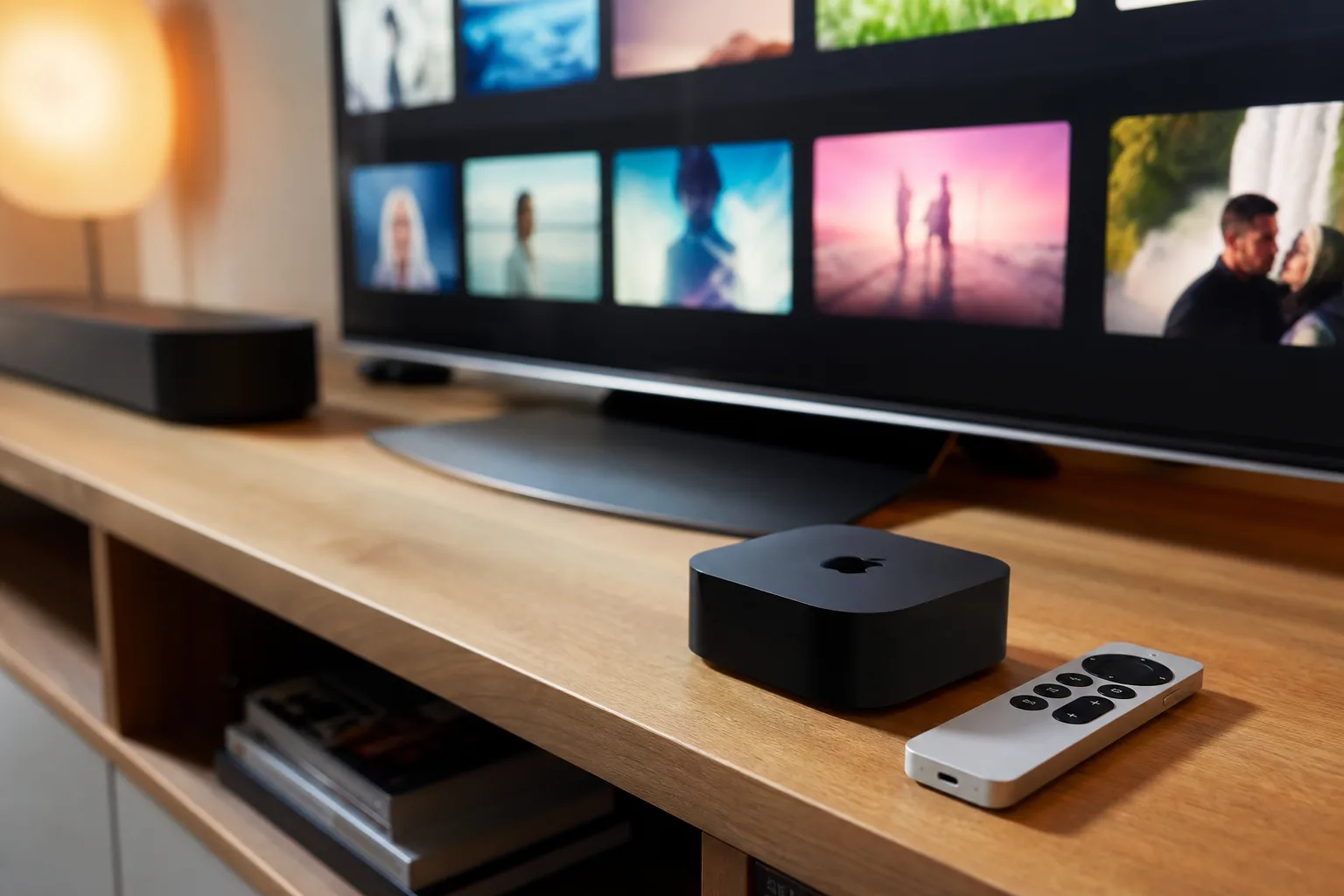
The Apple TV vs Google TV debate used to feel like a matter of personal preference — ecosystem loyalty, price sensitivity, a fondness for Android’s openness. Not anymore. After years of watching Google’s smart TV platform slowly transform from a genuinely excellent piece of software into what can only be described as a monetisation engine wearing a media player’s clothes, the case for sticking with Google TV has quietly collapsed. And for anyone who’s made the jump to an Apple TV 4K, the reaction tends to be the same: why did I wait this long?
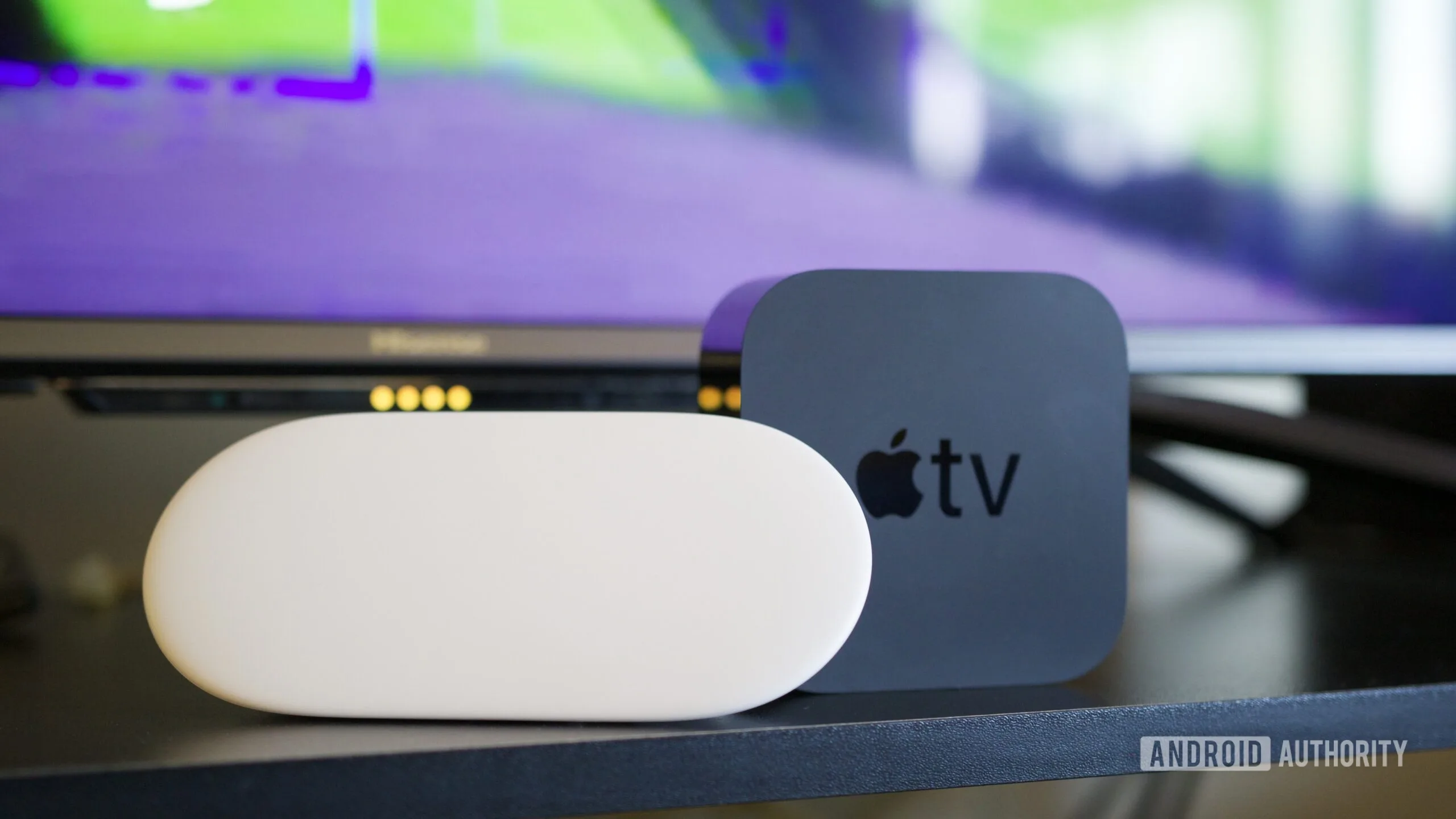
- The Apple TV vs Google TV debate is increasingly one-sided — Google’s platform has become an ad-riddled, sluggish mess that prioritises revenue over viewers.
- In the Apple TV vs Google TV comparison, Apple wins on raw performance thanks to mobile-grade silicon that smart TV chipsets simply can’t compete with.
- Google TV’s home screen now buries your actual apps under sponsored banners, auto-playing video ads, and algorithmically pushed content you never asked for.
- Even premium Sony and other high-end televisions running Google TV slow to a crawl within months, a direct result of underpowered hardware and bloated software.
Table of Contents
How Google TV Lost the Plot
Cast your mind back to 2013 and the original Chromecast. It was a dongle that let you fling YouTube videos and Netflix to your television from your phone — simple, fast, almost elegant in what it didn’t try to do. Google’s ambitions grew from there. The Nvidia Shield, running Android TV, became a favourite among enthusiasts for its raw power and flexibility. The Chromecast with Google TV took a proper swing at a full smart TV interface. For a while, it seemed like Google was genuinely building toward something great: an open, democratic, content-first platform that put users in control of their media.
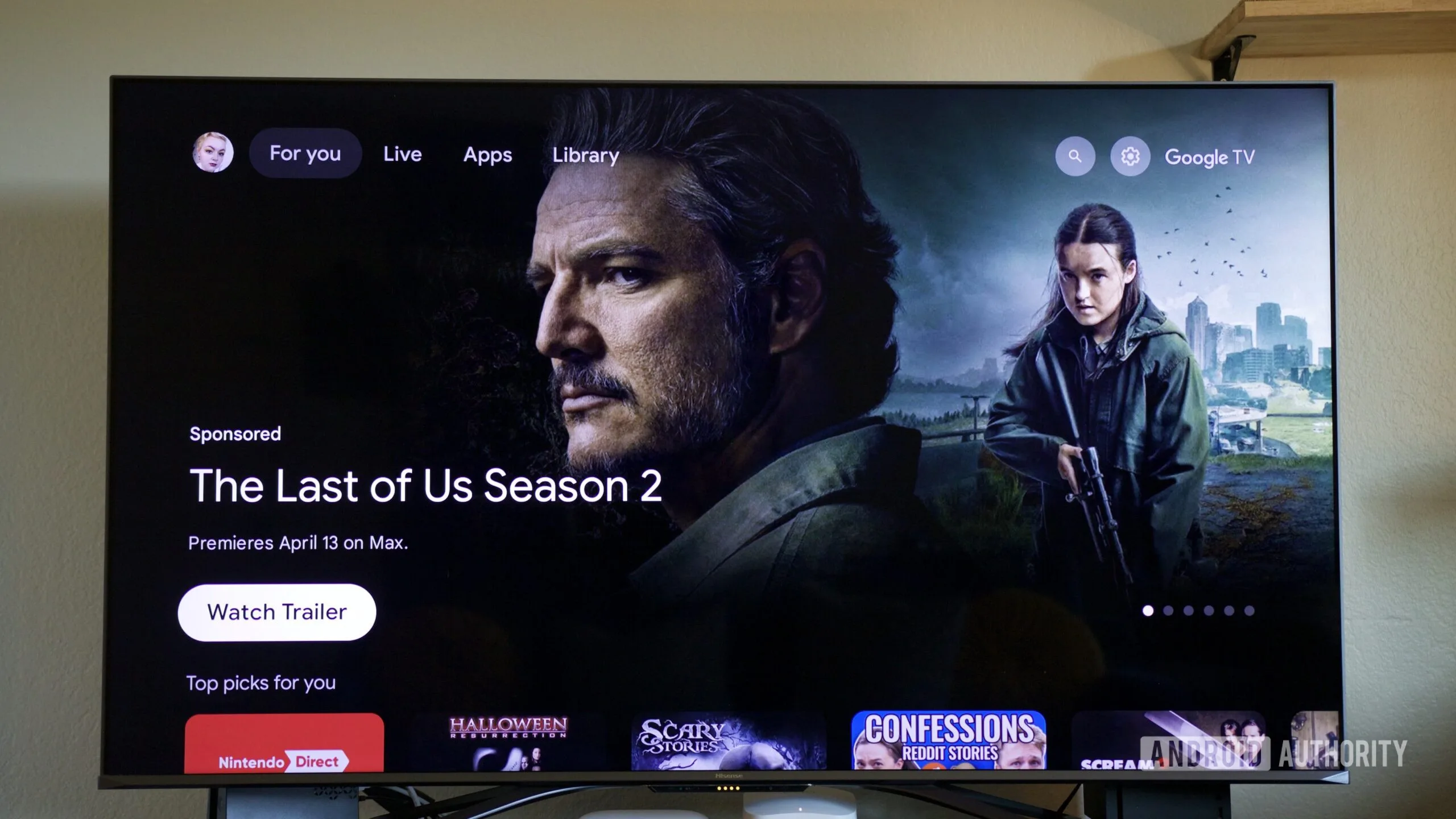
That vision is now largely unrecognisable. The home screen — once a clean launchpad showing your most-used apps and your in-progress viewing queue — has been progressively colonised by advertising. The top third of the interface is dominated by a rotating carousel of sponsored banners that autoplay video with audio the moment you so much as pause on the home screen. These aren’t personalised recommendations based on what you actually watch. They’re paid placements, pure and simple: services you don’t subscribe to, content you’ve never shown any interest in, shoved in front of you before you’ve even decided what you want to watch.
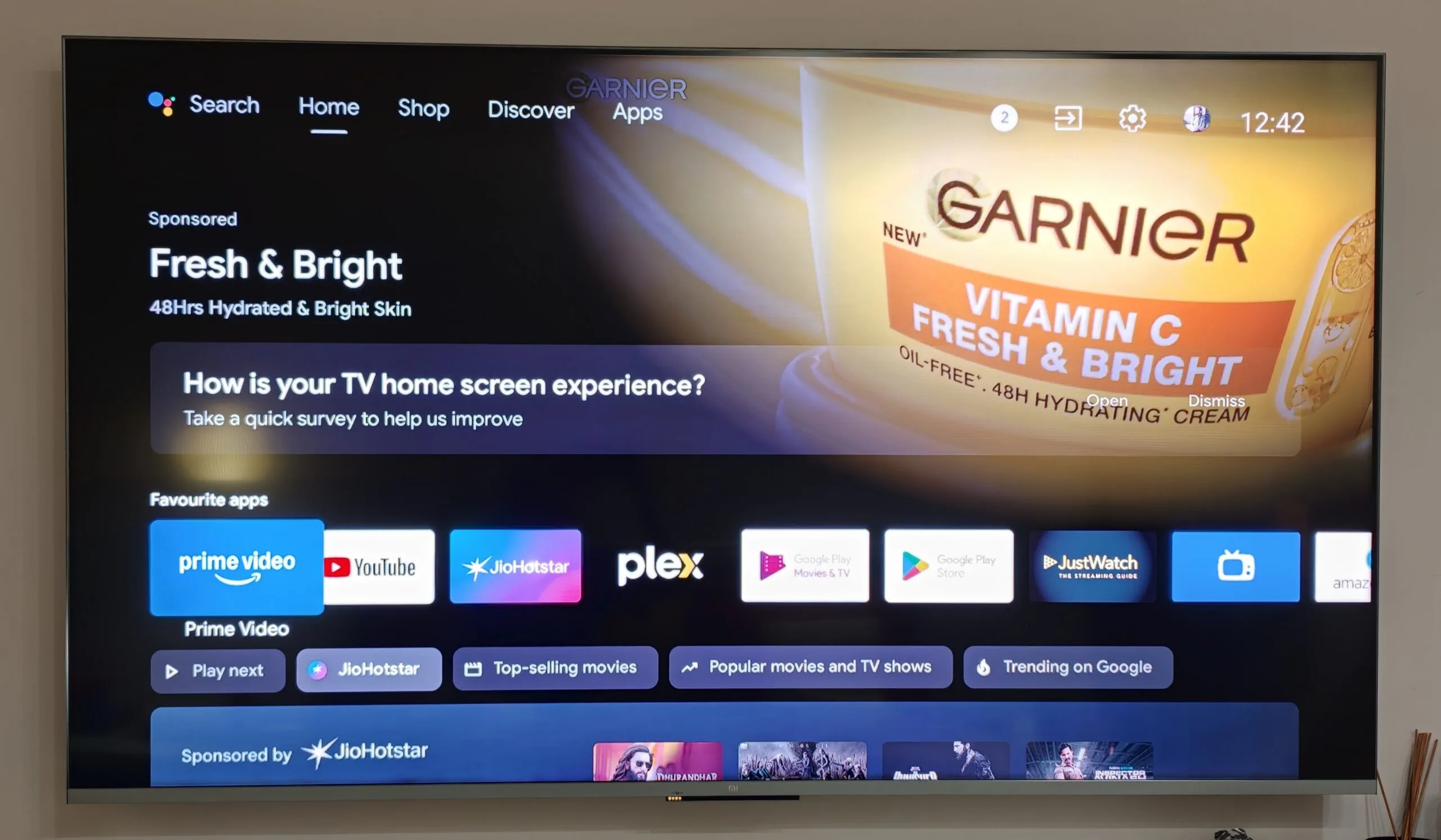
The mismatch between what the algorithm serves and what users actually want can be jarring. A viewer who watches mostly arthouse cinema and indie horror might find their home screen dominated by cricket broadcasts and Bollywood blockbusters — not because the algorithm is broken, but because those ad slots have been sold to the highest bidder regardless of relevance. That’s not a recommendation engine. That’s a billboard. Anyone making an honest Apple TV vs Google TV assessment has to reckon with this reality upfront.
Scroll past the sponsored banners and the experience doesn’t recover. The apps you actually pay for — Netflix, Plex, Max, whatever your personal stack looks like — are pushed further and further down the screen to accommodate algorithmically surfaced sponsored rows. Your app library, the thing you’re actually there to use, becomes a secondary citizen on your own television. Google has effectively turned the home screen into real estate and is renting it out, and you’re the one footing the bill in frustration and wasted time.
The Performance Problem Nobody Talks About Enough
Advertising clutter is annoying. Sluggish performance is something else entirely — it’s the kind of degradation that makes you genuinely resent a device. And in the Apple TV vs Google TV performance comparison, Google’s platform is losing badly, often on hardware that costs thousands of pounds or dollars.
Here’s the uncomfortable truth about smart TV hardware: manufacturers have always treated the processing components as a cost centre rather than a feature. Most televisions, including many flagship models from Sony, Samsung, and LG, ship with just 2–3 GB of RAM and chipsets that were already mid-range at the time of manufacture. Out of the box, Google TV can feel acceptably snappy on this hardware. Give it six months, and the cracks start showing. Give it a year, and you’re looking at multi-second delays when changing settings, stuttering animations, and remote control inputs that register long after you’ve pressed the button.
The root cause is a combination of factors that compound over time. Google TV’s launcher continuously pulls video advertisements from remote servers, accumulates cache files, and runs background telemetry processes — all of which compete for the same limited RAM and processing headroom that should be dedicated to, you know, playing television. Even Sony’s top-tier OLED sets, retailing well above £1,500, aren’t immune. The software load is simply too heavy for the hardware Google TV is routinely paired with. This is one of the starkest points of divergence in any serious Apple TV vs Google TV conversation.
Apple TV vs Google TV: The Performance Gap Is Enormous
Switching to an Apple TV 4K after extended use of a Google TV device is a disorienting experience — but in the best possible way. The interface responds instantly. App switching is seamless. Animations don’t stutter. The remote input registers the moment you press it. None of this sounds like a high bar, but after months of Google TV’s degradation, it feels like a different category of product entirely.
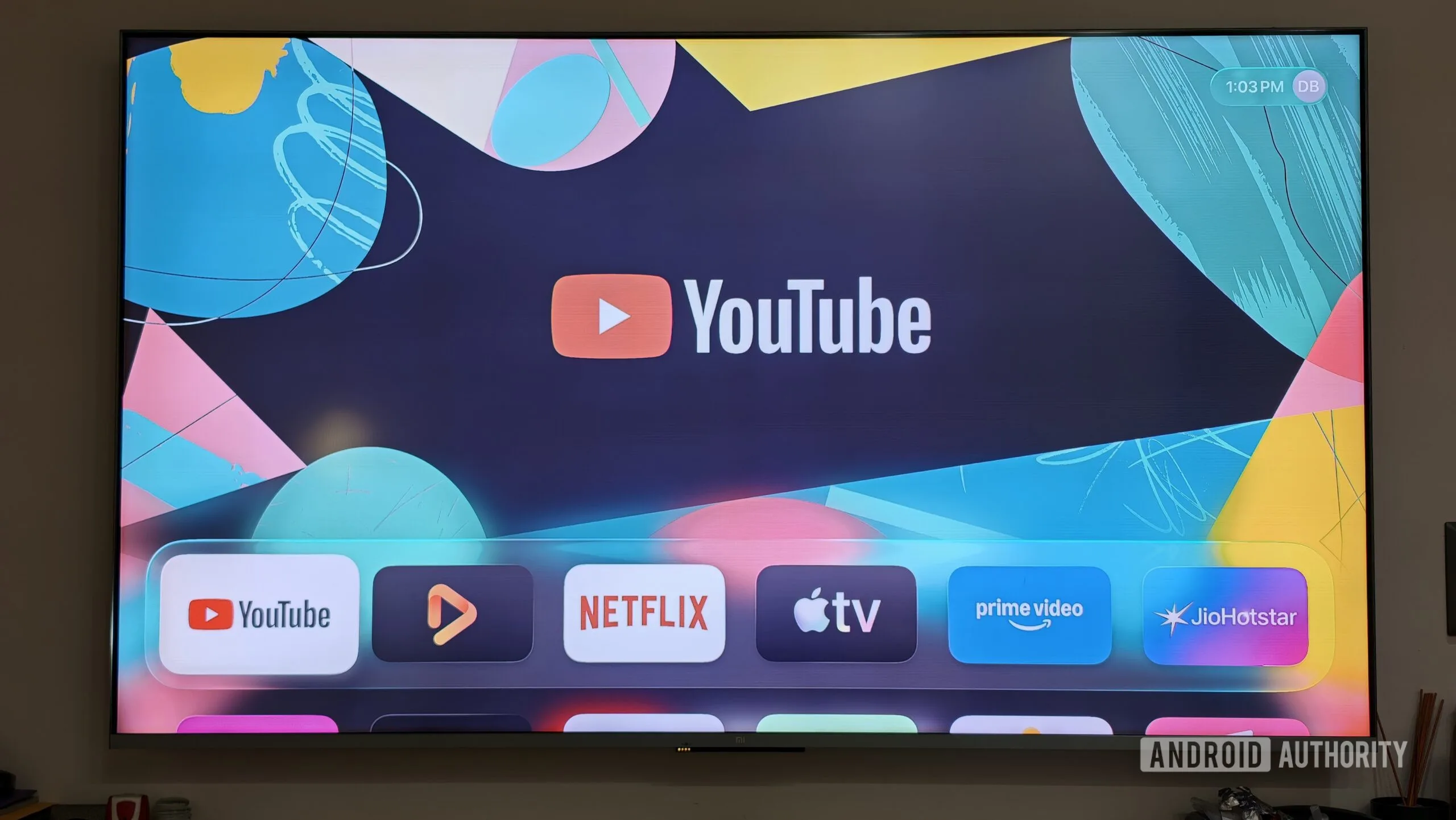
The reason Apple can deliver this is structural. The current Apple TV 4K runs on the A15 Bionic — the same chip that powered the iPhone 13 lineup. Apple designs its own silicon, optimises its software specifically for that silicon, and ships devices with enough performance headroom that the gap between what the hardware can do and what the software demands of it stays wide for years. When your chip was built to run a full smartphone operating system, gaming apps, and augmented reality experiences, serving a streaming interface is trivially easy. The device doesn’t even break a sweat.
This is the benefit of vertical integration done properly. Apple controls the chip, the operating system, and the user experience end-to-end. There’s no TV manufacturer cutting corners on RAM to protect margins, no Google updating the software to accommodate new advertising formats that the underlying hardware was never designed to handle. What you get is a box that performs consistently from day one to year four. Put simply, the Apple TV vs Google TV hardware gap isn’t a matter of preference — it’s a matter of engineering priority.
It’s worth stepping back to consider what Google TV’s trajectory says about the broader smart TV industry. The platform isn’t broken by accident — it’s been deliberately shaped by business incentives that have nothing to do with the person sitting on the sofa. Google’s advertising business generates the vast majority of Alphabet’s revenue. Extending that model into the living room was always the plan. The early years of Android TV and Google TV, when the experience was genuinely user-focused, were arguably just the land-grab phase: get users onto the platform, build the install base, then monetise it. That’s exactly what’s happened.
What This Means for the Streaming Box Market
The shift toward streaming devices as advertising platforms isn’t unique to Google. Roku has been aggressively selling home screen ad space for years. Amazon’s Fire TV interface has its own sponsored content problem. The difference is that Apple, almost uniquely among major tech companies, doesn’t need to sell your attention to third parties. Its hardware margins and subscription revenue from services like Apple TV+ and Apple Arcade mean the Apple TV can afford to be a product rather than a pipeline to ad dollars.
That’s a meaningful structural advantage, and it’s one that’s becoming increasingly visible to mainstream consumers — not just enthusiasts. As more people experience the frustration of a brand-new, expensive television slowing to a crawl within a year, or find their home screen taken over by ads for services they’ve never heard of, the appeal of a walled-garden device that simply works is only going to grow. When you frame the Apple TV vs Google TV choice around long-term ownership rather than upfront cost, the calculus shifts dramatically in Apple’s favour. The streaming box market is quietly sorting itself into two camps: devices that serve users, and devices that use users. In the Apple TV vs Google TV contest, that distinction has never been clearer.
Frequently Asked Questions
Is Apple TV vs Google TV worth the price difference?
For most people, yes. The Apple TV 4K costs more upfront than a budget Google TV dongle, but you get a genuinely responsive interface, no intrusive advertising on the home screen, and Apple silicon that keeps the device fast for years — something Google TV hardware rarely manages.
Why has Google TV become so slow on expensive TVs?
Two factors combine to cripple performance: Google TV’s launcher constantly pulls heavy video advertisements from remote servers and runs background telemetry, while most TV manufacturers pair it with just 2–3 GB of RAM and cheap chipsets that buckle under that load within months.
Does Apple TV have ads on its home screen?
The source does not describe Apple’s home screen interface in detail, but it contrasts Apple TV favorably against Google TV’s rotating sponsored video banners and auto-playing ad previews that dominate the home screen experience.
What chip does the Apple TV 4K use, and why does it matter?
The current Apple TV 4K runs Apple’s A15 Bionic chip. Designed to handle demanding apps and games, it has enormous performance headroom when running a streaming interface, which is why the device stays snappy for years.