

- ZA/UM layoffs may affect up to 32 workers across every department after the studio’s newest game underperformed commercially.
- The ZA/UM layoffs arrive roughly two months after Zero Parades: For Dead Spies launched and quickly lost Steam players.
- ZA/UM says it is consulting the ZA/UM Workers’ Alliance while issuing redundancy and at-risk notices.
- The cuts add another grim chapter to a studio already fractured by Disco Elysium’s long-running ownership and workplace disputes.
Table of Contents
ZA/UM layoffs land after a difficult new release
The ZA/UM layoffs are a brutal reminder that a famous name and critical goodwill don’t automatically pay a modern game studio’s bills. The Disco Elysium developer says it has issued redundancy or at-risk notices affecting up to 32 people across all departments, only months after releasing its latest title, Zero Parades: For Dead Spies.
In a social-media statement, the studio said the game’s commercial performance had not allowed it to “sustain a studio of our current size.” That wording is plain, but it carries a lot of weight. This is not a vague restructuring pitch about future efficiency; ZA/UM is saying its newest release did not bring in enough money to support its existing workforce.
The company says it has continued consulting and working with representatives of the ZA/UM Workers’ Alliance. The phrase “at-risk notices” matters: it suggests the final headcount may still shift through the consultation process. But for workers who have just shipped a game, that distinction probably offers little comfort. Game development has a nasty habit of treating launch day as both a finish line and a trapdoor.
The reported maximum of 32 people is meaningful at a studio of ZA/UM’s scale, even if it is modest beside the mass cuts seen at Microsoft, Electronic Arts, Sony and other giants. Small creative teams feel every departure differently. Losing a handful of writers, artists, producers or QA staff can alter what a studio is capable of making next.
Why the ZA/UM layoffs were not entirely unexpected
For anyone tracking the studio closely, the ZA/UM layoffs don’t arrive in a vacuum. ZA/UM became one of gaming’s most celebrated names after 2019’s Disco Elysium, a politically charged detective RPG whose dense writing and unusual skill system made it feel like a book you could argue with. It was a genuine cult hit, then a much bigger hit after awards, strong reviews and The Final Cut expanded its audience.
But the years after that success were extraordinarily messy. Several core figures associated with Disco Elysium were pushed out of the company, followed by lawsuits and public accusations involving intellectual property, company control and workplace culture. The details have been fiercely contested, and the legal and reputational fallout turned ZA/UM into something more complicated than a beloved indie success story.
That history makes these cuts harder to read as a simple bad launch. A studio can survive one disappointing release. It is harder to absorb that disappointment while rebuilding its identity, managing a divided fan base and trying to convince players that the people making its next game can recapture the spark of the last one. Remember when Google killed Stadia? The technology was only part of the problem; confidence disappeared well before the final shutdown. Creative studios run on a similar, more fragile currency.
Former ZA/UM developers have gone on to establish other teams, including Longdue, which is developing its own narrative-led project. That means the talent and appetite for this kind of literary RPG haven’t vanished. They have simply scattered, which may be the real long-term loss for ZA/UM.
Zero Parades did not find the audience ZA/UM needed
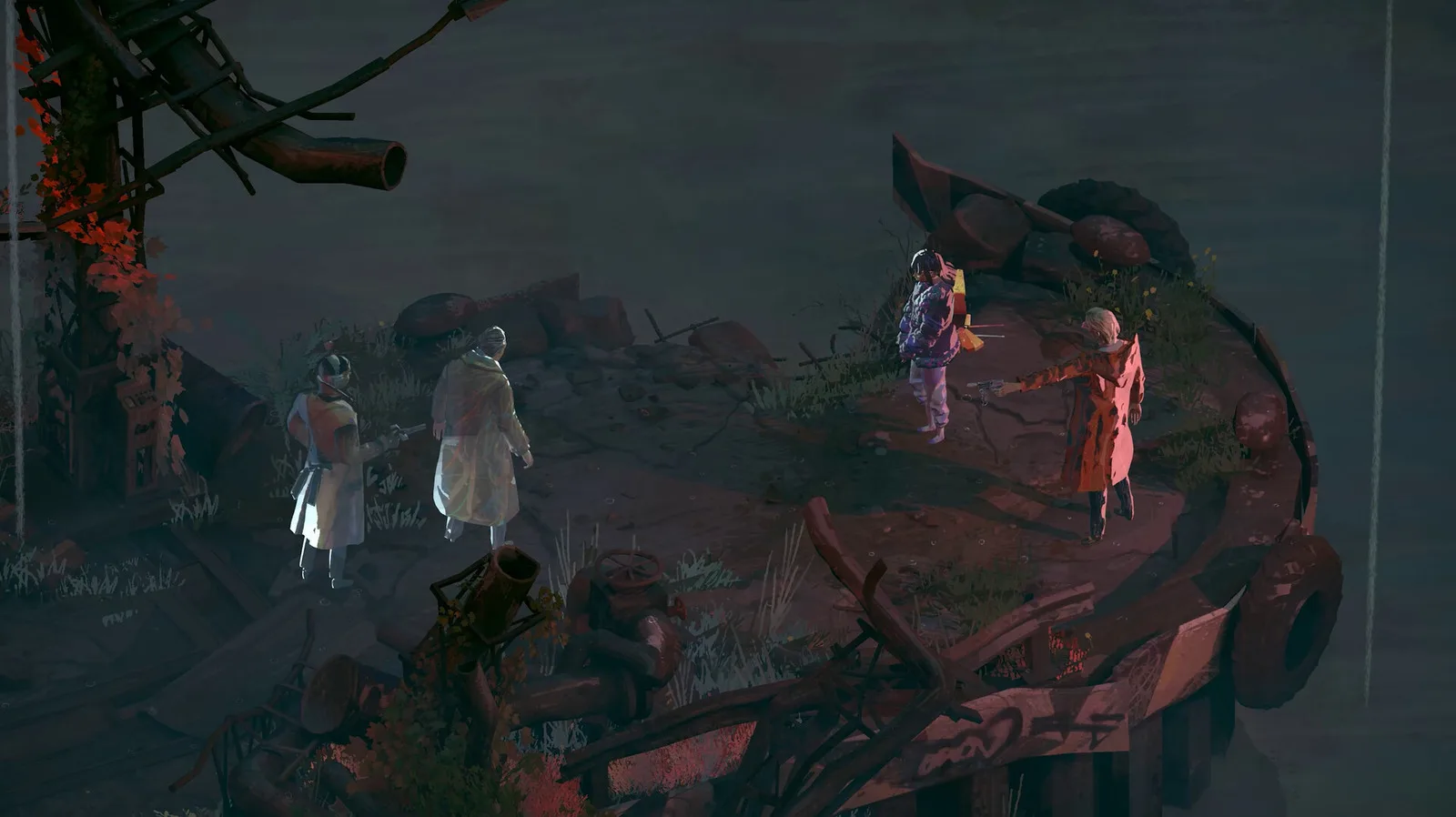
The immediate pressure behind the ZA/UM layoffs appears to be Zero Parades: For Dead Spies. According to SteamDB data cited in reports on the cuts, the espionage RPG reached a peak of 3,177 concurrent players around launch and then declined steadily. Concurrent Steam users are not the same as sales, and they leave out other storefronts and platforms, so they should never be treated as a complete revenue report. Still, they are a useful early signal of whether a PC release has broken through.
In this case, the signal looks weak. A peak in the low thousands can be workable for a tiny team with restrained costs, but it is a different equation for a studio carrying the legacy, overhead and expectations attached to a game as successful as Disco Elysium. Fans want a sequel to feel familiar, while the company needs it to reach beyond the original audience. That is a hard circle to square when the original’s defining creative voices are no longer in the building.
ZA/UM has not publicly shared sales figures, development costs or a platform-by-platform breakdown for Zero Parades. Those omissions make it impossible to calculate precisely how far the game missed internal expectations. My read is simpler: management had hoped the release would fund the next phase of the studio, and it plainly did not.
A familiar industry story, with unusually painful stakes
The ZA/UM layoffs also fit a wider industry pattern that has become exhausting to cover. Studios spent years expanding during the pandemic-era demand surge, then ran into rising development costs, delayed projects, higher interest rates and a consumer market that has become ruthlessly selective. Players are still buying games, but attention is finite. A clever mid-budget title can vanish between a blockbuster launch, a live-service update and the next viral indie hit.
What makes ZA/UM different is that it once represented an alternative to the blockbuster machine. Disco Elysium showed publishers and players that an RPG could succeed through ideas, prose and uncomfortable political questions rather than a giant open world full of map icons. Its influence is still visible in the wave of narrative-first projects now being announced by newer studios.
The company’s official site still presents ZA/UM as a studio built around ambitious original worlds. It may yet be one. But after the ZA/UM layoffs, the practical question is no longer whether the studio can make interesting work. It is whether it can make that work at a scale its finances can actually sustain.
That gap between artistic ambition and commercial endurance has wrecked plenty of teams before. ZA/UM’s next move will show whether it can become a smaller, steadier studio—or whether Disco Elysium ends up remembered as a brilliant, singular moment that its own creators and successors are still trying to outrun.

