
- Kaiser nurse surveillance reportedly tracks advice-line work so closely that nurses fear longer calls can trigger management scrutiny.
- The Kaiser nurse surveillance dispute puts AI voice analysis and productivity scoring at the center of California contract negotiations.
- Nurses say time metrics can conflict with compassionate triage, especially during mental-health crises and emotionally complex patient calls.
- Kaiser says its quality-assurance tools receive human oversight and that average call time does not determine employee performance.
Table of Contents
Kaiser nurse surveillance turns a care call into a performance metric
A nurse speaking with a frightened patient should not have to glance at a clock and wonder whether compassion will hurt her score. Yet that is the core accusation in the Kaiser nurse surveillance fight now headed toward contract bargaining in California: advice and triage nurses say software metrics and AI assessment tools are reshaping their work in ways that can punish the very judgment patients need.
The California Nurses Association is negotiating on behalf of roughly 25,000 Kaiser Permanente nurses, including about 1,000 who handle calls in advice centers. AI is expected to be a major issue after nurses staged a one-day strike in March and picketed over the technology last fall. The Kaiser nurse surveillance dispute reaches well beyond one employer. Kaiser is California’s largest private employer and cares for more than 9 million people in the state. What it normalizes in its call centers could quickly become the template for health systems elsewhere.
Seven current and former nurses told CalMatters that calls lasting beyond 15 minutes routinely draw criticism or performance-review conversations. They also described daily software predictions about whether workers are unproductive or too slow to answer, along with AI tools that assess empathy and vocal tone. The job is starting to resemble a customer-service dashboard at a bank or telecom company — except the person on the other end may be suicidal, newly diagnosed with cancer, or trying to decide whether chest pain warrants an emergency room visit.
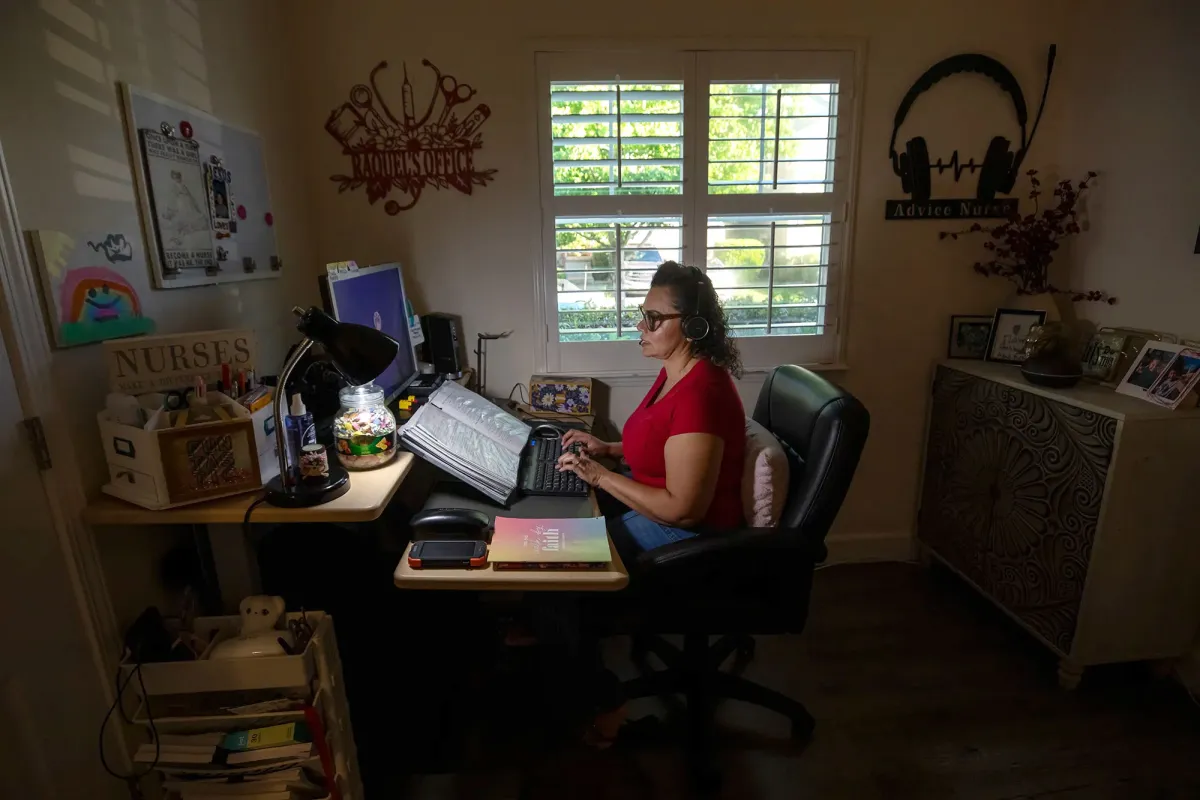
Raquel Alvarez Sanchez, a Vallejo advice nurse and union steward, described staying on the phone with a suicidal patient for more than an hour while waiting for police to arrive. Hanging up early was obviously not an option. Still, she told CalMatters she knew the extended call could distort her average call time for weeks and invite questions from management. In the Kaiser nurse surveillance debate, that is a grim calculation to impose on a clinician in a crisis.
‘The only thing I can think of is they’re doing it for profit,’ Sanchez said of the pressure around average handling time.
Another nurse, who requested anonymity out of concern about retaliation, recalled speaking with an older woman recently diagnosed with terminal cancer. At first, the nurse feared the caller might be suicidal; she soon understood the woman was in shock and needed a human being to listen. But instead of giving the conversation room to breathe, the nurse said she held back because of what a longer, more personal call could do to her monthly score.
That may be the most revealing detail in this whole story. The damage from Kaiser nurse surveillance does not require an algorithm to issue a direct order to end a call. Workers will preemptively change their behavior when they believe a metric will be used against them. Anyone who has worked under a timer knows the feeling. You stop doing the part of the job that can’t be neatly counted.
Why AI empathy scores should make everyone uneasy
There is a reasonable case for quality assurance in a medical call center. Managers need to know whether calls are answered, whether nurses follow safety protocols, and whether a caller gets routed to the right care. No serious person is arguing that a 24-hour advice line should operate without review.
But AI-based assessments of tone and empathy are a different proposition. Speech-analysis systems can identify patterns in words, pacing, interruptions, and vocal inflection. They cannot reliably determine whether a nurse delivered meaningful comfort to a grieving patient, or whether a caller’s cultural background, disability, accent, stress level, or poor phone connection distorted the model’s read. ‘Empathy’ is a particularly loaded thing to reduce to a score. It risks becoming customer-service theater: sound warm enough for the machine, then get to the next call.
The Kaiser nurse surveillance allegations land as policymakers are beginning to confront this broader problem of algorithmic management. California legislators are weighing workplace AI protections, including a proposal designed to shield doctors and nurses from retaliation when they override automated care recommendations. That is an essential protection, but it only addresses the obvious clinical decision. It does not fully capture the quieter coercion of scheduling, scoring, ranking, and constant measurement.
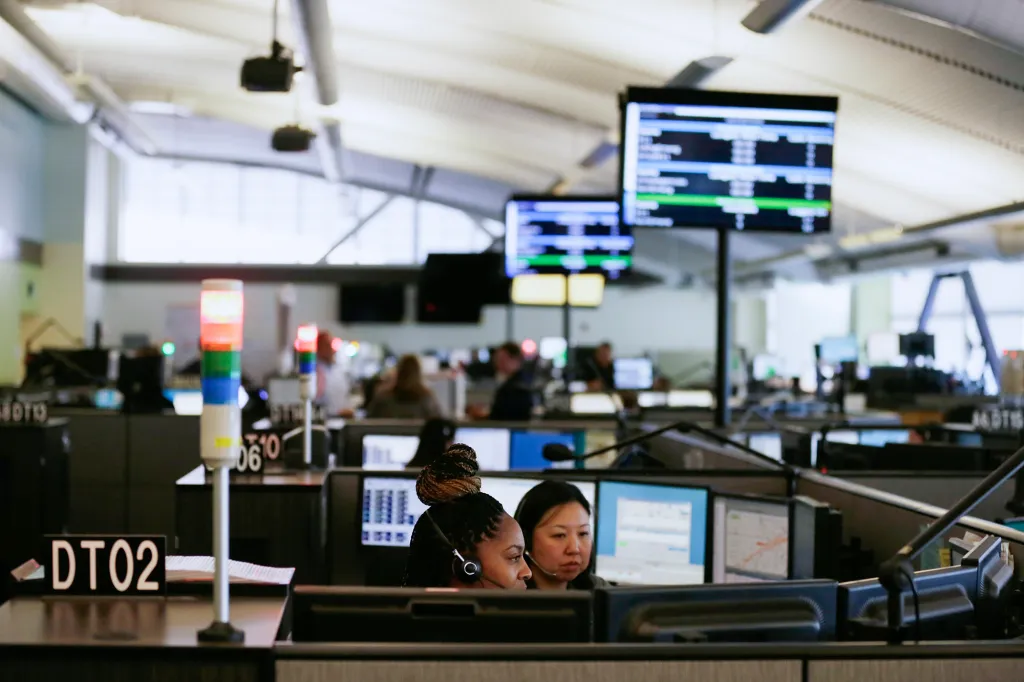
Healthcare has spent years borrowing operational habits from call centers, warehouses, and airline dispatch systems. Some of that borrowing is sensible. Triage needs consistency. Staffing needs forecasting. The mistake is assuming that because a tool can measure a worker’s activity, the measurement represents the value of the work. The Kaiser nurse surveillance concerns illustrate that an advice nurse is not selling broadband upgrades. A slow call may signal a problem; it may also signal that the nurse prevented a tragedy.
The concern is not merely theoretical. The guidance on work organization and worker health reflects an old truth that technology companies keep rediscovering: data collection is not neutral when it is tied to discipline, pay, or job security.
Kaiser disputes the account, but transparency is missing
Kaiser Permanente strongly contests the idea that average call duration is used as a blunt performance weapon. A company spokesperson told CalMatters that the organization does not use ‘Average Handle Time’ to assess agent performance or enforce call-time metrics. The spokesperson said contact-center tools support quality assurance with human review and oversight, and Kaiser says it uses AI responsibly while prioritizing ‘patient safety, privacy, and equity.’
That response carries some weight. Human review is better than a fully automatic system, and a raw call-length metric alone would be a terrible measure of clinical performance. But Kaiser has also declined to share specifics about its internal systems, citing security and operational reasons. That leaves nurses, patients, regulators, and the public unable to test the critical distinction between a metric that merely informs a manager and one that materially affects a worker’s career. Greater transparency is central to resolving the Kaiser nurse surveillance dispute.
My read is that the company needs to show its work. If it truly does not penalize longer calls, it should publish plain-language rules explaining which tools score nurses, what those scores influence, how errors are challenged, how often humans reverse machine judgments, and whether certain high-risk calls are excluded from productivity reporting. Healthcare organizations demand documentation from clinicians constantly. They should accept a comparable standard for the software judging those clinicians.

The patient-safety question is hard to measure — until it is too late
No public evidence currently proves that Kaiser nurse surveillance has caused a specific patient injury. A 2024 public-records request found no patient complaints to California’s Department of Managed Health Care tied directly to Kaiser call times. Nurses also face a practical barrier: once they end a call, they may never learn what happened next.
That absence of a neat paper trail should not be treated as a clean bill of health. Many failures in healthcare are difficult to trace to a single decision, especially at the front door of the system. A patient who feels brushed off may wait too long to seek care. Someone in emotional distress may not call back. A clinician who is repeatedly pressured to hurry may leave the job altogether, taking experience and institutional knowledge with them.
Kaiser has already faced serious scrutiny over access to behavioral healthcare. The company agreed to a $50 million settlement with California regulators over findings that it delayed behavioral-health appointments beyond legal limits and too often moved patients into group therapy instead of individual sessions. It also reached a settlement with the US Department of Labor following investigations into substance-use and mental-health services. Those cases do not establish that call-center monitoring is unsafe, but they make it harder to dismiss Kaiser nurse surveillance concerns from frontline nurses as mere resistance to new software.
The fight over Kaiser nurse surveillance is really a fight over what healthcare institutions believe care is worth. A hospital system can automate paperwork, flag potential risks, and make operations less wasteful. It cannot turn a vulnerable conversation into a race without changing the conversation itself. The next contract will reveal whether Kaiser sees AI as a tool that supports nursing judgment — or a quieter way to manage it out of the room.