- The Galaxy Z Fold 8 Ultra delivers an 8-inch tablet-like workspace, but asks buyers to accept familiar foldable durability compromises.
- Galaxy Z Fold 8 Ultra and Galaxy S26 Ultra reportedly share processor, memory and 5,000mAh battery options, putting hardware priorities under scrutiny.
- Samsung’s Galaxy S26 Ultra is the stronger choice for cameras, dust resistance and integrated S Pen convenience.
- The real decision is whether a pocketable large screen outweighs a conventional flagship’s easier, less fragile daily ownership.
Table of Contents
Galaxy Z Fold 8 or Galaxy S26 Ultra? Start with the compromise
Samsung has created a rather useful problem for anyone shopping at the top of its range. The Galaxy Z Fold 8 Ultra and Galaxy S26 Ultra are reportedly built around much the same flagship silicon, memory options and 5,000mAh battery capacity. Yet they could feel like entirely different products after a week in your pocket.
This comparison isn’t really about benchmark scores. It’s about what kind of inconvenience you’re willing to live with. The Fold 8 Ultra promises a compact phone that opens into an 8-inch work surface. The S26 Ultra takes the old-school slab design and refines it into a more dependable camera, note-taking and outdoor-use machine.
My read is that Samsung has finally made the split explicit. Calling the top foldable an Ultra acknowledges that it is no longer a quirky side project. But the name also invites a tougher question: can a folding phone truly be Samsung’s ultimate phone when its conventional sibling remains tougher and more camera-capable?
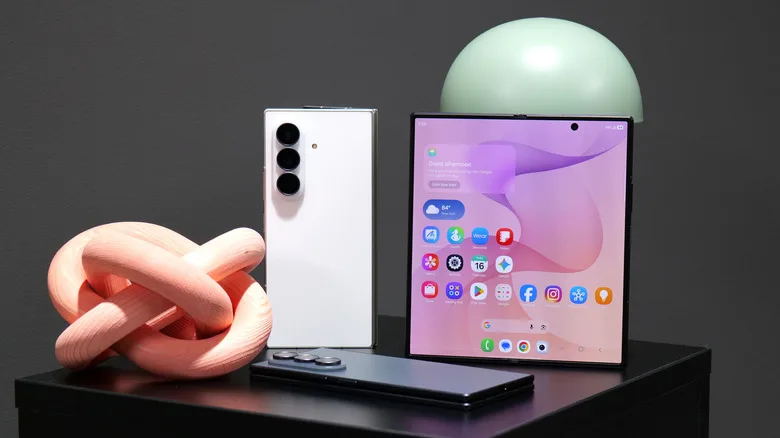
The Galaxy Z Fold 8 Ultra makes the screen the whole argument
The case for the Galaxy Z Fold 8 Ultra begins and, honestly, mostly ends with that inner display. Closed, it has a 6.5-inch 1080p cover screen that behaves like a normal phone. Open it and you get an 8-inch, near-square AMOLED panel running at up to 120Hz. That is a meaningful jump in usable room, not a spec-sheet rounding error.
If you spend a lot of time reading lengthy documents, comparing travel options, editing a presentation, managing a spreadsheet or keeping a chat visible beside a browser, the Fold’s format changes the experience. Three apps can sit on screen together. A video call need not consume the entire device. It is less like carrying a small tablet and more like having one that happens to fold into a jacket pocket.
Samsung is also said to use a ‘Flex Titanium’ structure behind the Galaxy Z Fold 8 Ultra’s inner panel, combining a titanium-alloy film and metal backing to reinforce the display and make the crease less obvious. That’s welcome. Foldable creases have gone from alarming to broadly tolerable over the past few years, but they are still there, and anyone telling you otherwise is selling something.
The Galaxy Z Fold 8 Ultra also reportedly carries anti-reflective coatings on its displays. This sounds like a small luxury until you have tried to read a bright screen outside on a train platform or beside a window. Samsung has plenty of experience here: its display business remains one of the company’s most formidable assets, and its phones routinely benefit from that work.
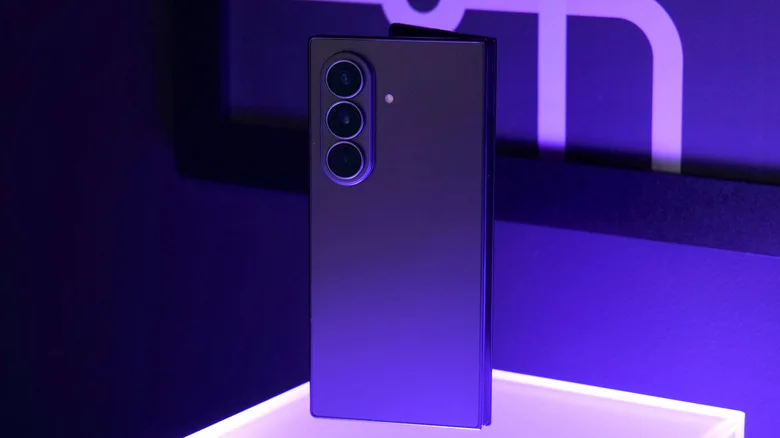
The price of folding is still durability
Engineering progress has made foldables less precious than they were in the early Galaxy Fold era. Remember the first model, when reviewers could accidentally remove part of the screen’s protective layer? We are thankfully past that chapter. Water resistance and hinge design have improved substantially across the category.
But physics has not signed a waiver. A conventional flagship can put a hard glass sheet over a display and seal a fixed chassis. The Galaxy Z Fold 8 has a flexible inner screen and a moving hinge, two things that demand care no matter how refined the hardware becomes.
The reported ratings are revealing. The Fold 8 Ultra is rated IP48. In practical terms, it should cope with water better than early foldables did, but dust remains the Fold’s weak spot. Sand at the beach, fine grit in a bag, a day of trail riding — these are not theoretical concerns when there is a hinge involved.
Samsung also appears to be keeping S Pen support off the Fold. That decision will frustrate longtime Note fans, and fairly so. A stylus and a big internal canvas sound like an obvious pairing. Yet a pen tip pressing into a flexible OLED panel is a harder durability equation than writing on the S26 Ultra’s glass. The company seems to have chosen caution over the feature checklist.
For a deeper look at Samsung’s current mobile hardware and product announcements, the company maintains its official global newsroom. The takeaway is straightforward: Samsung wants foldables to become mainstream, but it still cannot offer every conventional-phone advantage in the same package.
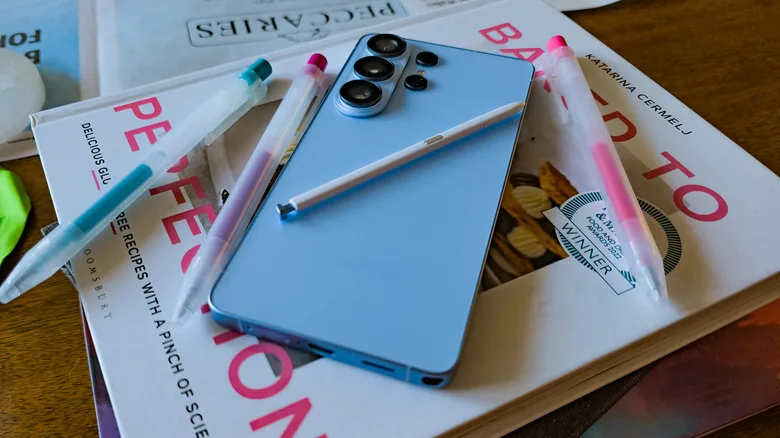
The S26 Ultra is the practical flagship, and that matters
The Galaxy S26 Ultra may look conservative beside the Galaxy Z Fold 8, but it is not short on hardware ambition. Its 6.9-inch 2K AMOLED display reaches 120Hz, and the rear camera system reportedly includes a 200-megapixel main camera, 50-megapixel ultrawide, 10-megapixel telephoto and 50-megapixel periscope telephoto. That is the sort of flexible camera arrangement foldables still struggle to match without becoming awkwardly thick or prohibitively expensive.
For people who take photos of children, pets, concerts, trips and everything else life throws at them, this is not a minor edge. A phone camera needs to be ready before the moment disappears. The S26 Ultra’s dedicated zoom hardware should give it a much stronger claim as Samsung’s mobile photography flagship than the Fold can make.
Samsung’s reported Privacy Display feature uses narrow pixels to reduce off-angle visibility. A person beside you on a flight or commuter train should have a harder time reading your screen. It’s a genuinely practical feature, though it comes with an amusing trade-off: the Fold’s anti-reflective treatment may make it nicer outdoors, while the S26 Ultra may be better when someone is peering over your shoulder.
The integrated S Pen is another win for the slab phone. Samsung has removed some of the older pen’s Bluetooth tricks, but the basic utility survives: jot a note, mark up a PDF, sign a document, circle an image. Best of all, it lives inside the phone. A pen that requires a separate case is the technological equivalent of an umbrella you left at home.
Who should actually buy each phone?
Buy the Galaxy Z Fold 8 if the unfolded display will change your daily routine. Not occasionally impress you at dinner. Change your routine. Maybe you work from your phone, consume a mountain of reading, manage multiple conversations at once, or simply hate the cramped feeling of a standard screen. Its central promise is unusually tangible.
Buy the S26 Ultra if you want the strongest all-round Samsung phone. It is likely to be the easier recommendation for most people because it combines flagship performance with better cameras, IP68 protection, a built-in pen and fewer behavioral rules. You will not have to think twice before taking it to the beach or tossing it into a bag with other objects.
The Galaxy Z Fold 8 is the more interesting device, and I’d argue it is still the better productivity device by a mile. But interesting is not the same as best for everyone. Samsung’s real challenge is no longer proving that foldables can work. It is making them feel as carefree as the phone nearly everyone already understands.
Frequently Asked Questions
Is the Galaxy Z Fold 8 better than the Galaxy S26 Ultra?
It depends on how you use a phone. The Galaxy Z Fold 8 is better suited to people who regularly read, multitask and work across several apps. The Galaxy S26 Ultra looks like the better all-purpose choice for photography, dust resistance, stylus storage and lower-stress daily use.
Does the Fold 8 Ultra support an S Pen?
No S Pen support is described for the Fold 8 Ultra. Samsung dropped S Pen support on last year’s Fold models and has not brought it back, possibly because the folding display is more vulnerable to pressure and sharp tips than the Galaxy S26 Ultra’s glass-coated screen.
Why does IP68 matter more than IP48 on a phone?
The important distinction here is dust resistance. The Galaxy S26 Ultra has an IP68 rating, while the Fold 8 Ultra is more vulnerable to dust with an IP48 rating. That makes sand and activities such as dirt biking riskier for the folding model.