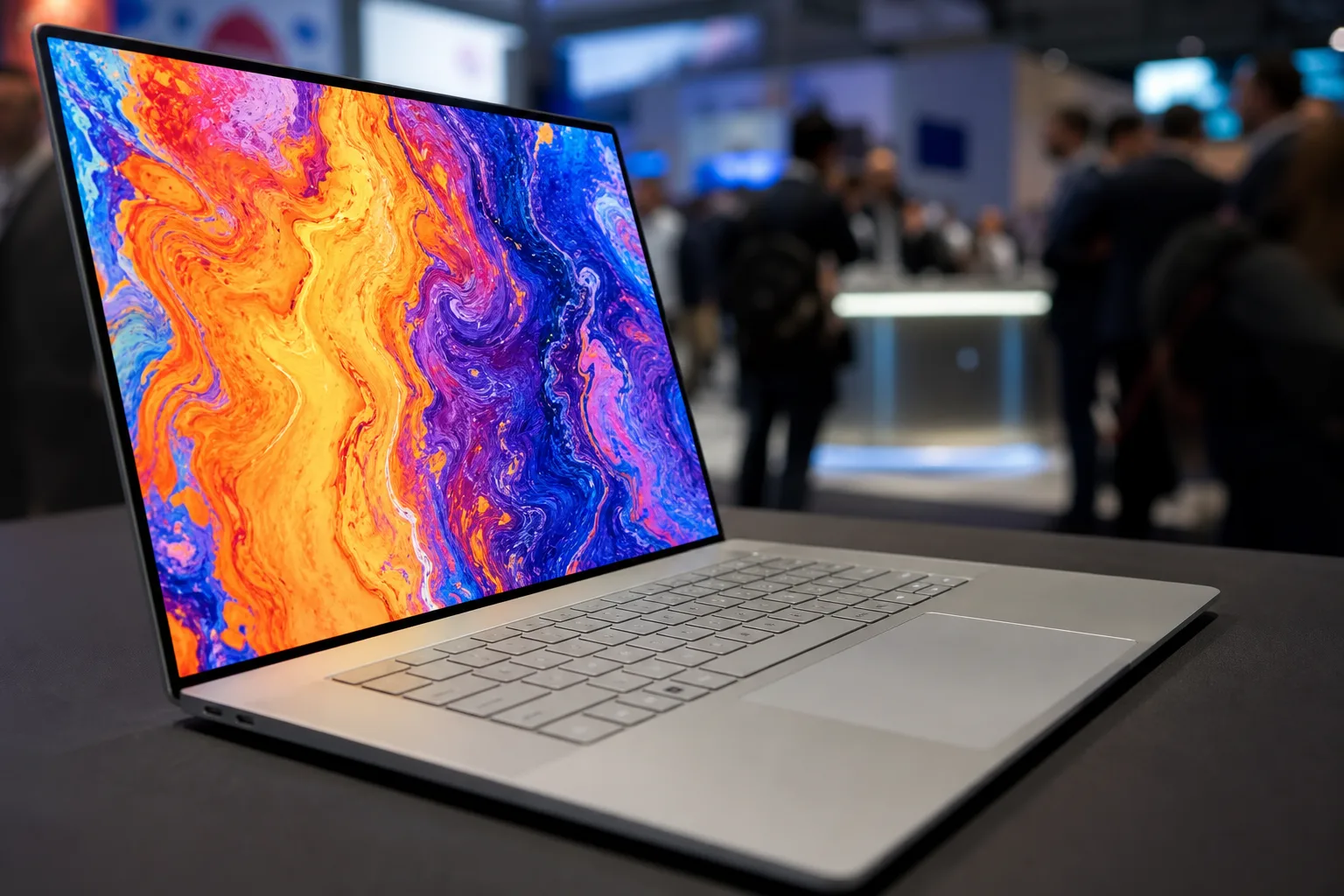
- The Surface Laptop Ultra is Microsoft’s flagship RTX Spark device, packing a 20-core CPU and up to 128GB of unified memory.
- The Surface Laptop Ultra was the only RTX Spark laptop allowed to run at Computex, powering every demo on the showfloor.
- Pricing is still unconfirmed, but a 64GB base configuration could push the starting price past $2,500.
- Battery life and real-world benchmarks remain open questions despite confident claims from Microsoft representatives.
Table of Contents
Surface Laptop Ultra Arrives at Computex With a Point to Prove
The Surface Laptop Ultra is Microsoft’s answer to a question the industry has been quietly asking for a while: can Windows finally field a premium laptop that doesn’t feel like it’s playing catch-up? At Computex 2026 in Taipei, Microsoft made its most aggressive move yet — a flagship machine built on Nvidia’s brand-new RTX Spark SoC that doesn’t just target Apple’s MacBook Pro crowd, but signals a fundamental rethinking of what a Windows laptop can be for developers, pro creators, and AI power users.
Nvidia’s RTX Spark is the chip at the centre of all of this. It’s an ARM-based processor that packs a 20-core CPU, delivers the rough GPU equivalent of a GeForce RTX 5070, and supports up to 128GB of unified memory — all while promising up to 1 petaflop of AI performance. That’s a serious set of numbers for a mobile chip, and it puts RTX Spark in direct conversation with Apple’s M-series silicon in a way that previous Qualcomm Snapdragon X efforts only partially managed.
What made the Computex showing particularly telling wasn’t just the specs. It was the theatre around them. Of all the RTX Spark laptops announced at the show, the Surface Laptop Ultra was the only one that was actually powered on. Every single demo across every product category ran on Microsoft’s machine. That’s either a statement of supreme confidence, or a quiet admission that the competition wasn’t quite ready. Probably both.
A Build That Means Business
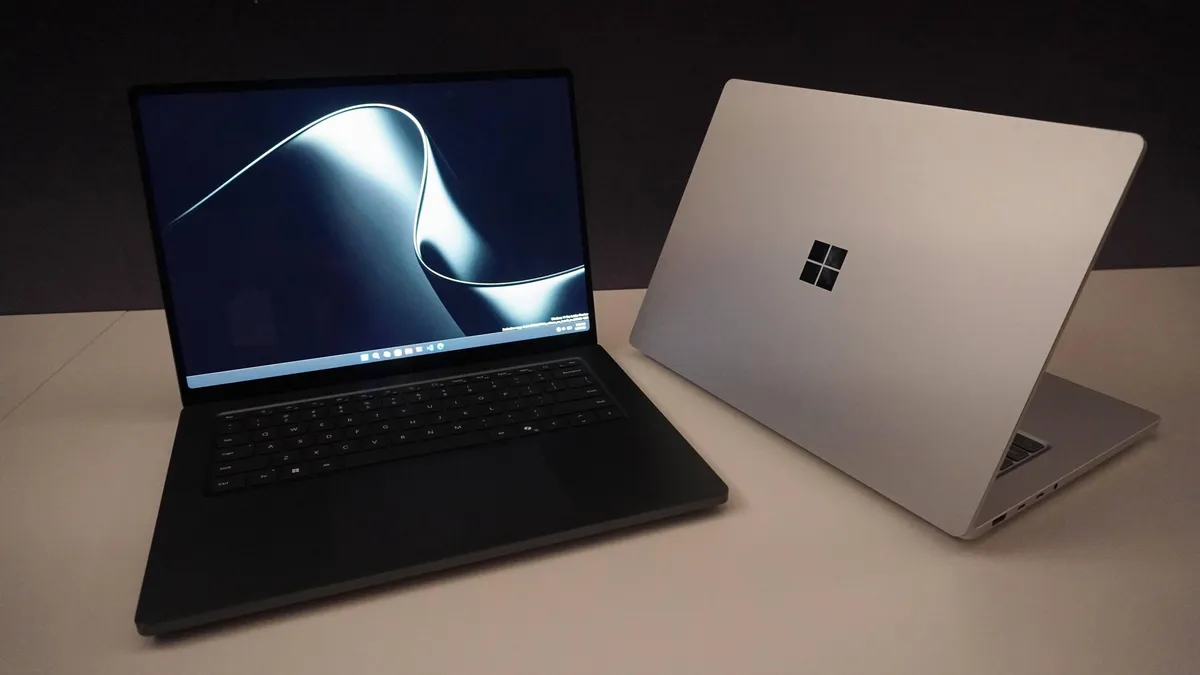
On the outside, the Surface Laptop Ultra won’t shock anyone who’s followed the Surface line. It’s a clean, aluminium-bodied 15-inch machine — solidly constructed, with an edge-to-edge glass panel and recessed black chiclet keys that draw an obvious, if unspoken, comparison to the MacBook. The haptic touchpad is well-sized and responsive, and Microsoft has included a port selection that actually makes sense for creative work: two USB-C, one USB-A, HDMI, an SD card reader, and a headphone jack. No dongles required. That alone puts it ahead of some of its competition.
The display, though, is where things get genuinely impressive. It’s a 15-inch mini-LED PixelSense Ultra touchscreen running at 262 pixels per inch in a 3:2 aspect ratio — the taller format that Surface has championed for years and that content creators consistently prefer over the widescreen panels that dominate gaming-oriented machines. Peak HDR brightness hits 2,000 nits, which is exceptional for a laptop. In hands-on time at the showfloor, the visuals were crisp and vivid in a way that’s hard to fake under the harsh lighting of a convention centre.
What the RTX Spark SoC Actually Means in Practice
Microsoft is positioning the RTX Spark not just as a faster chip, but as a platform purpose-built for a specific kind of work. Running large AI models locally — the kind that previously required cloud infrastructure or a dedicated workstation — is the headline promise. Tasks like intelligent video masking, real-time upscaling, and inference on models with billions of parameters are the use cases Microsoft has in mind. The 128GB unified memory ceiling matters enormously here: that’s the kind of headroom that lets you load a substantial language or image model entirely into memory without paging to disk, which kills performance in ways that raw compute numbers don’t capture.
Whether the real-world experience lives up to that promise is still unknown. The Computex demos were curated — graphically demanding games like Pragmata and Indiana Jones and the Great Circle were running on multiple Surface Ultra units simultaneously, and the machines had been running for hours. They were warm to the touch, which is expected. But the dual-fan, dual heat pipe cooling system — with air drawn in through the sides and exhausted out the back, with the chassis slightly raised off the desk for airflow underneath — appeared to be doing its job. Fans at full speed were quieter than you’d expect from a machine working this hard.
Microsoft also planned a smoke machine demo to dramatically visualise the airflow. The machine malfunctioned when they switched it on. It’s the kind of thing that would be embarrassing at a smaller event, but at Computex, where everything is performance, it was just an amusing footnote to what was otherwise a confident hardware showcase.
Repairability Is a Genuine Surprise
One detail that deserves more attention than it’s likely to get: the Surface Laptop Ultra is actually designed to be repaired. The backplate is removable, giving direct access to the SSD and battery without specialist tools. Internal components carry QR codes for individual part identification and ordering. In a market where most premium laptops are deliberately hostile to self-repair — Apple and Dell’s XPS line both have histories of glued-in batteries and soldered storage — this is a meaningful differentiator. It won’t shift units on its own, but for enterprise buyers and environmentally conscious consumers, it’s a real point in Microsoft’s favour.
The Questions That Computex Didn’t Answer
For all the polish of the Surface Laptop Ultra’s Computex debut, the gaps in the story are significant. Pricing hasn’t been announced, and the range could be wide. The RTX Spark SoC technically supports up to 128GB of unified memory, but what the base configuration looks like matters enormously for who can actually buy this machine. A 16GB option would be almost pointless given the platform’s ambitions. A realistic floor is probably 32GB, with 64GB being the more commercially sensible entry point — and at 64GB, you’re almost certainly looking at a starting price north of $2,500. Premium configurations with 128GB of memory and larger storage could push well past $4,000.
Battery life is the other elephant in the room. Every Microsoft representative at the show expressed confidence, but confidence isn’t a benchmark. A 2,000-nit mini-LED panel draws real power, and the RTX Spark’s GPU performance, however efficient the architecture, is doing serious work. ARM chips have generally been strong on efficiency — Apple Silicon’s battery life on MacBook Pro is the benchmark the industry measures against — but until independent reviewers run their own tests away from a demo environment, those claims can’t be verified.
Availability is equally vague. The current expectation is pre-orders opening in late summer or early fall, with shipping to follow. That’s a long runway, and a lot can happen between a Computex demo and a product landing on a customer’s desk. For now, the Surface Laptop Ultra represents Microsoft’s most serious attempt yet to own the premium end of the Windows laptop market — and if the hardware delivers in real-world conditions what it promised in Taipei, it could be the machine that finally makes that argument stick.
Frequently Asked Questions
What is the Surface Laptop Ultra and when does it launch?
The Surface Laptop Ultra is Microsoft’s flagship laptop built around Nvidia’s new RTX Spark SoC, unveiled at Computex 2026. An exact launch date hasn’t been confirmed, but pre-orders are expected to open in late summer or early fall, with shipping sometime after that.
How much RAM does the Surface Laptop Ultra support?
The RTX Spark SoC supports up to 128GB of unified memory. The minimum configuration hasn’t been confirmed, but the author estimates the base model may ship with at least 32GB, with 64GB being the more likely entry point given the AI workload demands of the platform.
What GPU power does the RTX Spark chip provide?
Nvidia’s RTX Spark delivers roughly the equivalent GPU performance of a GeForce RTX 5070, alongside up to 1 petaflop of AI compute performance. It’s an ARM-based SoC designed specifically for AI-heavy creative and developer workloads.
Is the Surface Laptop Ultra repairable?
Unusually for a premium laptop, yes — to a degree. The backplate is removable, providing access to both the SSD and the battery. Internal components are tagged with QR codes to make individual part identification and replacement easier.