Table of Contents
A screenless computer is a bold proposition
Hardware startup Humane launches AI Pin, its first commercial product after operating in secrecy since 2018. The device is a screenless, wearable AI product built around a simple but difficult idea: personal computing does not always need to begin with a phone display.
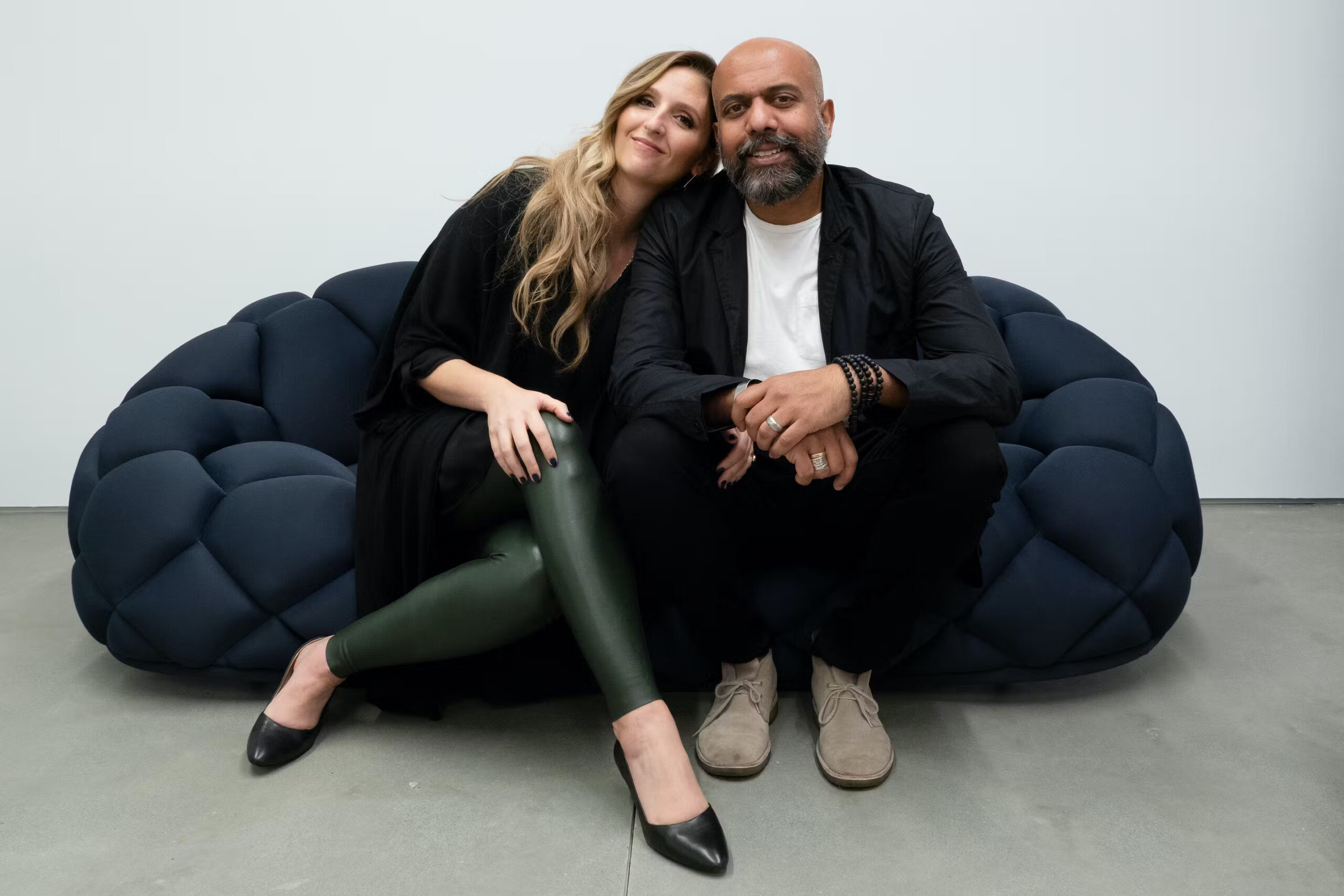
Founded by ex-Apple executives Imran Chaudhri and Bethany Bongiorno, Humane has spent years developing the Ai Pin, drawing on talent with experience in iPhone design and infrastructure. That background naturally raises expectations. Apple helped establish the smartphone as the dominant personal computer; Humane is now arguing that some of the habits created by the smartphone can be replaced by voice, cameras, sensors, AI, and a small projected interface.
The ambition deserves scrutiny as well as attention. Screens remain popular for a reason: they are precise, private, and useful when people need to read, compare, edit, or make decisions among many options. A screenless device has to prove that it is not merely novel. It has to make everyday interactions feel faster and less distracting than reaching for a phone.
Humane’s answer is a standalone device designed to free users from traditional screens. The Ai Pin handles tasks including summarizing emails, translating languages, and making calls with minimal effort. Rather than requiring a user to constantly navigate apps and menus, its premise is that computing can be more contextual: a request is made in the moment, and the system responds to what the user needs then.
That is a familiar promise in artificial intelligence, but the hardware changes the stakes. On a phone, AI is one feature among many. On a wearable device with no conventional screen, AI becomes the primary interface. If the interaction is quick, accurate, and understandable, the approach could feel liberating. If it is slow or unreliable, there is little else for the product to fall back on.
The Ai Pin’s interface is its central bet
The Ai Pin’s most visible departure from conventional wearables is its built-in projector and depth sensor. Together, they allow it to display an interactive interface on nearby surfaces, including a hand or a table. That gives Humane a way to provide visual information without placing a permanent display on the user’s wrist, face, or pocket.
It is a clever response to the central tension in screenless computing. Users may not want to stare at a display all day, but they still sometimes need to see information. A projection can offer a middle ground: information is available when needed, rather than persistently demanding attention.
Humane also uses a camera and computer vision software to recognize objects, analyze food labels, and interact with surroundings. Its sensors and AI capabilities are intended to support real-time, personalized interactions. In practical terms, this moves the device beyond a voice assistant. The Ai Pin is meant to take account of what is around the user, not just what the user says.
That capability also explains why Humane’s “human-centered design” language matters. Context-aware devices can be useful because they reduce the need to describe every detail manually. Yet they also need to earn trust. A camera-equipped wearable that is designed to understand surroundings will inevitably be judged not only by what it can do, but by whether people feel comfortable using it around other people and in ordinary public settings.
According to The Verge’s coverage of the Humane AI Pin, the device represents a bold new direction in wearable technology. “Bold” is the right framing. The product is not trying to become another smartwatch or a smaller phone. It is attempting to establish a different relationship between people and their devices, one in which the computer recedes until it is called upon.
AI partnerships give Humane reach, but also raise the bar
Humane’s Ai Pin relies on a group of major technology partners. To power the device, Humane partnered with Qualcomm, using a chip from the Snapdragon series. Qualcomm’s role is important because real-time AI interaction depends on responsive processing, particularly when a device is built to feel immediate rather than app-based. Qualcomm’s SVP, Ziad Asghar, highlighted the Ai Pin’s ability to deliver cutting-edge generative AI experiences.
Microsoft provides cloud computing services, while OpenAI contributes to enhancing the Ai Pin’s AI capabilities. These relationships point to a hybrid vision of personal computing: a wearable device on the user, supported by AI systems and cloud infrastructure behind it. That can make a compact product capable of handling requests that would once have required a larger computer, but it also means the quality of the experience rests on more than Humane’s industrial design alone.
Humane has also teamed up with SK Networks for global distribution. The company’s relationships extend beyond the initial wearable product. LG is integrating Humane’s technology into smart home devices, and Volvo is exploring its use in automobiles. Those efforts suggest Humane does not see the Ai Pin as an isolated gadget. It sees its technology as a possible interface layer across different environments.
That broader strategy is sensible. AI is increasingly valuable when it can carry context between devices and settings rather than being trapped inside one app. Still, expanding into smart homes and automobiles puts pressure on Humane to define what its technology does better than the existing interfaces people already use. A new computing model cannot survive on intrigue alone; it needs clear advantages in everyday use.
Funding signals confidence, not a finished category
Humane, based in San Francisco, employs over 200 people and has raised $230 million in funding. Its investors include Salesforce CEO Marc Benioff, Microsoft, Qualcomm Ventures, SK Networks, LG Technology Ventures, Volvo Cars Tech Fund, Tiger Global, and OpenAI CEO Sam Altman.
That is serious industry support for a company entering a notoriously difficult hardware market. Funding can provide time to develop an unusual product and build the partnerships required to support it. It does not automatically answer the harder question: whether people will change deeply ingrained technology habits for a new type of device.
The company’s approach to combining AI with everyday computing has nonetheless drawn attention from investors and industry leaders. With the Ai Pin’s launch on the horizon, Humane is positioned to lead the next generation of wearable AI technology. When the hardware startup Humane launches AI Pin to the public, it signals a major shift in how people interact with technology daily.
That shift is not guaranteed, but Humane has chosen a compelling place to test it. People are increasingly aware of the pull of screens, even as they depend on them for work, communication, and entertainment. A device that can handle useful tasks without adding another always-on display addresses a real tension in modern computing.
Imran Chaudhri and Bethany Bongiorno believe the Ai Pin represents a new era of computing: intelligent, screenless, and integrated into daily life. Humane promises to share more details as it prepares to redefine technology. The important measure will be whether the Ai Pin makes AI feel less like another destination demanding attention and more like a tool that appears only when it is genuinely useful.
Stay Updated: Startups and Entrepreneurship – Artificial Intelligence