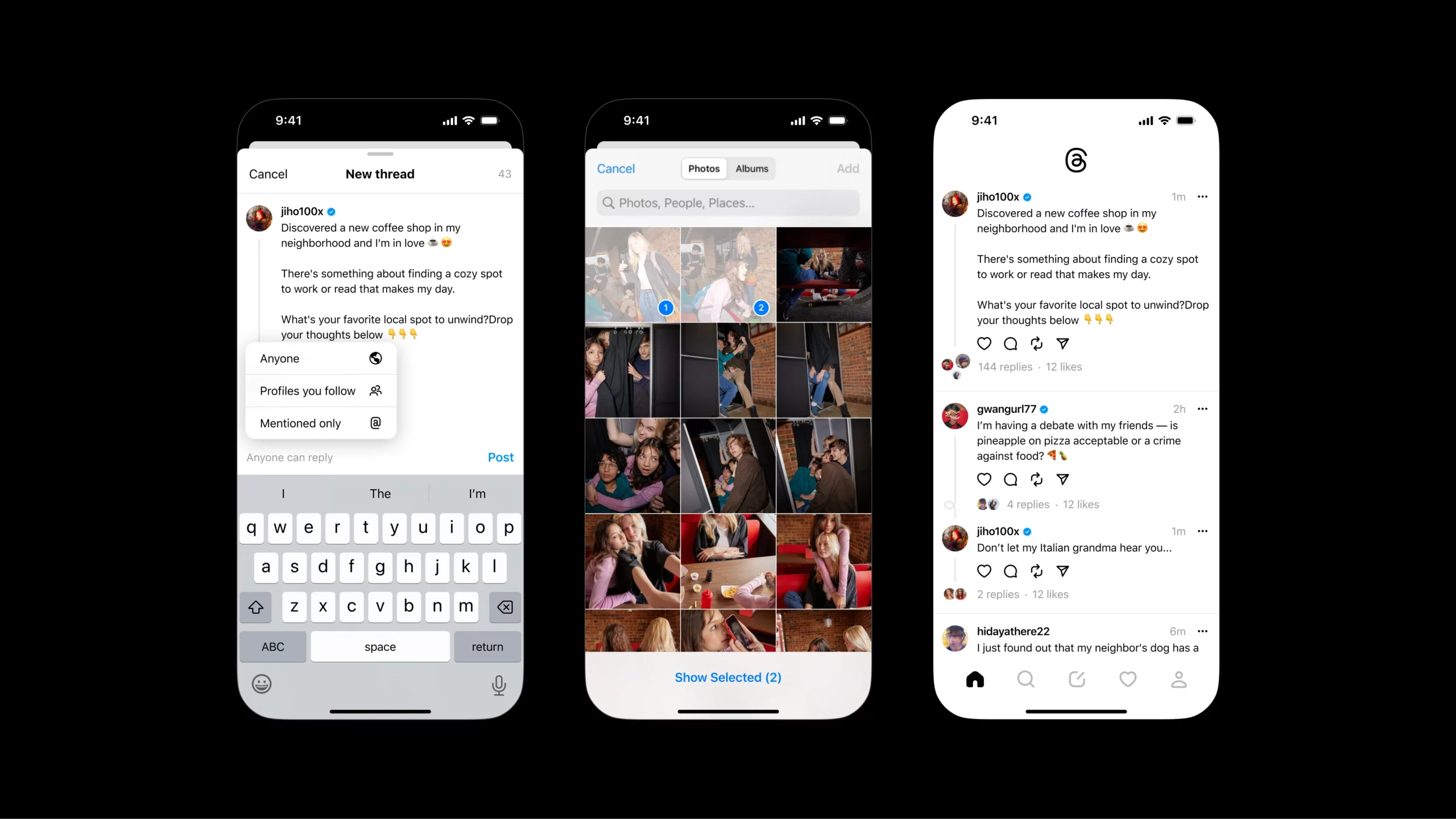
Threads arrived as Meta’s highly anticipated Twitter competitor and quickly drew attention: within 24 hours, it had already gained over 23 million sign-ups. That early rush reflects the unusual advantage Meta brought to the launch. Rather than asking people to build a new social graph from scratch, Threads sits alongside Instagram, a service where many users already have identities, audiences and established habits.
Yet the early version of Threads also made a conspicuous product choice. It is similar to Twitter, but it lacks one feature that many people regard as basic: a feed limited to posts from accounts they have chosen to follow. Threads has a single feed containing posts from both people users follow and people they do not. Twitter, by contrast, offers separate “Following” and “For You” feeds.
That distinction is not a minor matter of interface preference. A “For You”-style feed is designed to surface material an algorithm thinks may hold attention, including posts from outside a person’s existing network. A following-only feed serves a different purpose. It gives users a predictable way to catch up with friends, creators, reporters or organizations they intentionally selected. When the two experiences are merged, discovery may improve, but control becomes harder to find.
For an app positioning itself near Twitter’s territory, that tension was always likely to become an early complaint. Twitter’s split feeds made the trade-off visible: users could accept recommendations when they wanted them, then switch to a chronological or more deliberate view of the accounts they followed. Threads initially asks its users to accept both in one place.
Table of Contents
A Following feed is on the list
Adam Mosseri, head of Instagram, addressed the issue in a response to a post by Marques Brownlee. Mosseri said that adding a Following feed to Threads is “on the list” of features Instagram plans to add in the future. Instagram already offers a “Following” list view alongside its algorithmic feed, so the request is not foreign to Meta’s own product design.
The wording matters. “On the list” is not a launch commitment or a timetable. It does, however, acknowledge that a following-only view is a legitimate expectation rather than a niche request from power users. For Threads, the challenge will be deciding whether such a feed is merely an alternate view buried in the interface or a first-class choice that users can reach quickly. The answer will shape whether the app feels like a social network organized around personal connections or one organized primarily around recommendations.
Mosseri also listed the ability to switch between different Threads accounts and the option to edit posts as features that are “on the list.” Those are practical omissions, particularly for people who maintain separate personal, professional or public-facing accounts. Editing is equally consequential in a text-led service. Without it, users who spot a typo, phrase something badly or need to clarify a post are left with the familiar choices of deleting, reposting or living with the original.
He noted that the app still lacks several basics, including the ability to search hashtags. Hashtags have long been an imperfect organizing tool on social platforms, but they remain useful for following live events, communities and recurring conversations. Without search, Threads has less of the navigational infrastructure that makes a fast-moving public discussion network useful beyond the accounts already shown in the feed.
Small interaction choices can create larger problems
Mosseri also noted that users have requested the ability to double tap to like a post, and Meta attempted to implement this. The problem arises when tapping on a thread to open the full thread. As Mosseri explained, “you don’t want to have an element that you can both tap and double tap.”
It is an unusually revealing detail because it shows how Threads is still working through the mechanics of being a conversation app rather than simply borrowing familiar gestures. A double tap is second nature to many Instagram users. Opening a thread is also central to a service built around replies and ongoing discussion. Putting both actions on the same element can turn a quick browse into an accidental like, or force users to hesitate before opening a conversation. These are small frictions, but social apps are made of them.
Instagram users can use their existing credentials to authenticate in Threads and post updates including text of up to 500 characters, links, photos or videos of up to 5 minutes. That combination makes Threads broader than a plain text feed while keeping the basic post format relatively constrained. The character limit encourages short updates, but links, images and video give the service room to compete for the kinds of posts that might otherwise live in a photo-sharing app, a video app or a conventional microblogging network.
Threads launched on iOS and Android in 100 countries, excluding the EU because of worries about following local data privacy laws. The absence of the EU illustrates that a global launch is not simply a matter of making an app available in app stores. Social platforms increasingly have to account for different regulatory environments, particularly where identity, profile data and social connections move between services.
The network question sits behind the feature list
Threads is entering a market that has not stood still. In the past few months, the Jack Dorsey-backed Twitter rival Bluesky has gained traction through its decentralized protocol, the AT Protocol. Soon, Instagram’s new app, Threads, will also offer support for the ActivityPub protocol. ActivityPub is the same social networking protocol used by the open source Twitter rival Mastodon and other federated apps.
The comparison is important, even if these services take different routes. A centralized platform can offer a polished onboarding experience and a large existing user base. A federated approach raises the possibility that people and communities are not confined to one company’s service. Support for ActivityPub places Threads in a conversation about interoperability that has become increasingly relevant as users question whether any one platform should control their audience, identity and access to public discussion.
There is a tension here. Threads requires users to first log in with their Instagram credentials, tying entry to Meta’s existing ecosystem. At the same time, ActivityPub support points toward an eventual connection with a wider network of federated apps. Whether those two ideas feel complementary or contradictory will depend on how much control users ultimately have over their identities, audiences and interactions.
After downloading the app, users can log in with their existing Twitter account and populate their profile with existing information such as name, username, photo and followers. The verification process will transfer over to the new app as well. That account-transfer framing speaks to the competitive logic around Threads: reducing the effort required to leave one social service for another is often as important as adding a new feature.
For now, Threads’ rapid sign-up figure is a strong opening, not a final verdict. The app has the reach of Instagram behind it, but retention will depend on the less glamorous work Mosseri’s list suggests: letting people choose how they read, manage multiple accounts, correct posts, find conversations and interact without second-guessing a tap. A Following feed would not solve every issue. It would, however, give users a clearer sense that the network belongs to the people they decided to follow.