

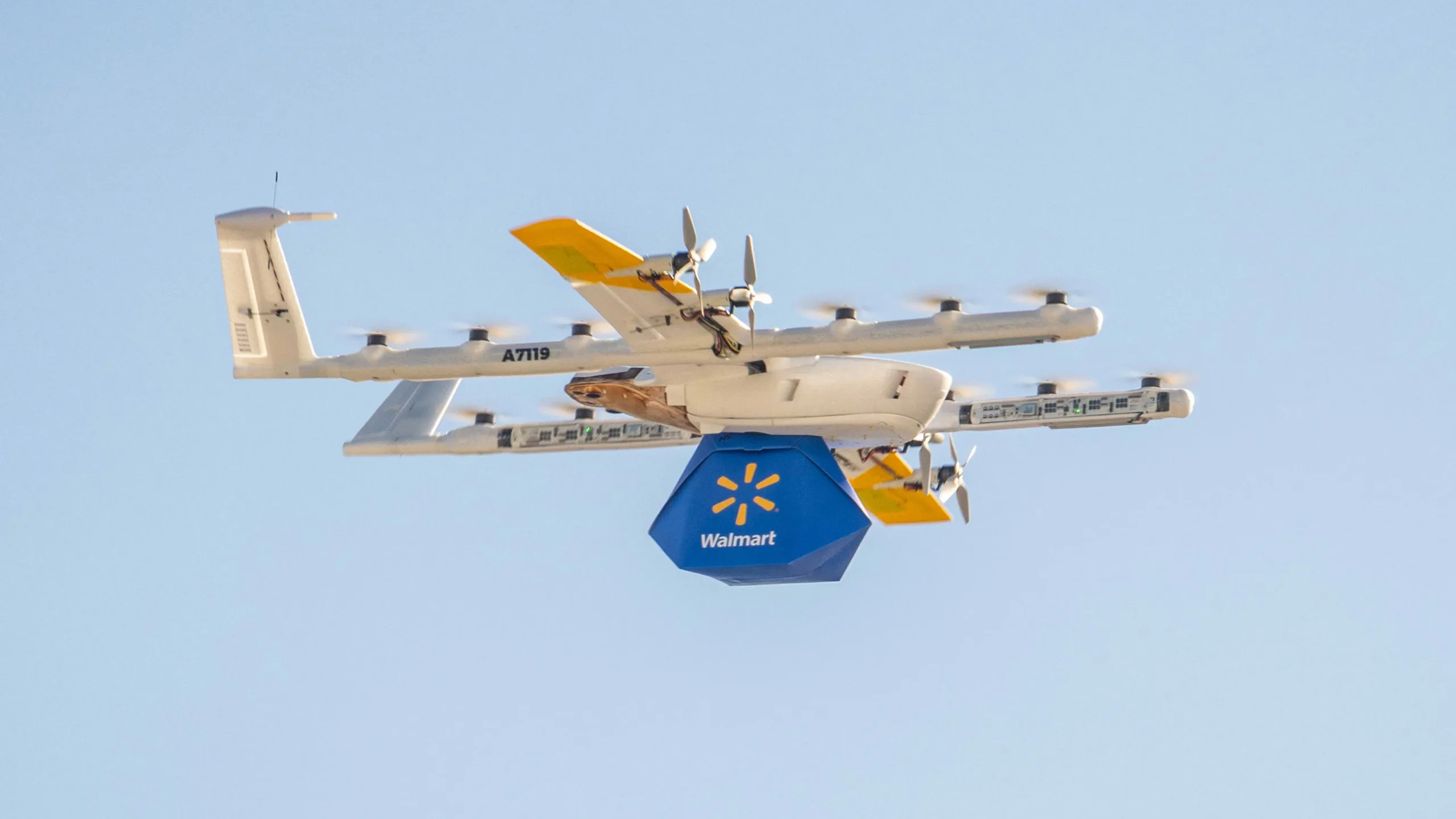
Table of Contents
At Squaredtech we follow retail transformation closely because rapid fulfillment shapes customer behavior in visible ways. Alphabet’s drone division Wing continues taking bold steps in that direction. Wing to expand drone delivery beyond existing metro zones reveals how the parent company sees confidence in aerial logistics.
The company that once lived inside Alphabet research now flies thousands of missions per week. Wing began with controlled pilots in Texas and Georgia. The growth was quiet at first but the reaction from local shoppers appears strong enough that Wing wants broader reach.
Wing to expand drone delivery across Walmart cities
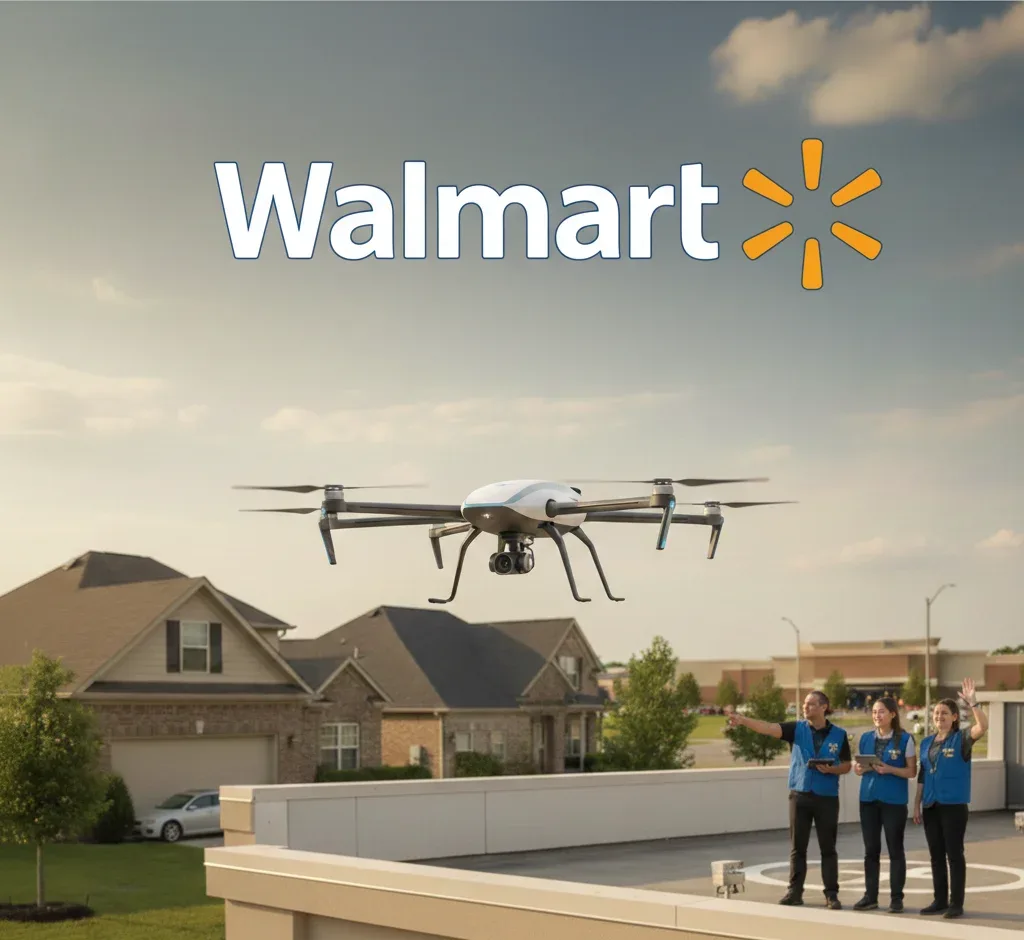
Wing to expand drone delivery with Walmart brings two giants into alignment. Walmart brings stores sitting within fifteen minutes of nearly every major population cluster. Wing brings a fleet that drops items into driveways within minutes of ordering. The combined effect places pressure on rivals who rely on cars and vans to move goods across suburban neighborhoods.
Wing and Walmart confirmed the new move on Sunday. The agreement takes the aerial service to an additional one hundred fifty store rooftops across the United States. Every site will contain a staging hub that launches Wing aircraft to surrounding homes. The plan stretches from the present day through 2027. Heather Rivera who took over as chief business officer confirmed the pace during a discussion with TechCrunch.
The decision tells us something simple. The existing program proved valuable enough to justify expansion. Wing to expand drone delivery implies users are embracing the speed and consistency. Rivera shared usage data that Amazon or Instacart would envy. A quarter of Wing customers order three times a week. That pattern reflects a shift from novelty to habit.
These shopping lists are humble but revealing. Customers send Wing deliveries for eggs ground beef tomatoes limes and other produce. People call for snacks such as Takis or lunch kits. These items share traits. They are light. They fit a household pattern. They cater to immediate need rather than bulk restock. Wing fills the short gap between running out and needing to drive to a store.
When a customer forgets an item or wants one ingredient for dinner that night the drone makes sense. Rivera’s data shows that many households trust the aircraft to handle these micro requests. If the service keeps gaining fans the natural outcome is more stores and more regions.
The Wing partnership with Walmart reaches meaningful scale
We at Squaredtech see the bigger signal behind Wing to expand drone delivery. Walmart has one store within ten miles of nearly every American household. For drone delivery that density matters more than anything. Wing can attach its operations to top of store infrastructure and extend range across local roads without buying real estate or building depots.
The partnership is not new but the speed of growth stands out. Wing and Walmart first aligned in 2023 with a pilot across two stores in the Dallas metro region. Engineers and store staff worked out routing timing customer pickup communication and packaging challenges. That early test reached sixty thousand households.
The program widened to eighteen Walmart Supercenters across Dallas Fort Worth. Later it advanced into Atlanta. Wing confirmed plans last summer to enter Houston Orlando Tampa and Charlotte. Rivera shared that Houston will begin flights this January. Once all expansions finish Wing will operate from more than two hundred seventy stores including Los Angeles St Louis Cincinnati and Miami. That coverage connects to ten percent of the national population.
Wing to expand drone delivery places the Alphabet project inside the commercial transportation category firmly rather than in a research department. Formerly a Google X skunkworks concept Wing needed a partner capable of real scale in daily consumer markets. Walmart offers that channel more reliably than food apps or pharmacy only chains. Although Wing signed an agreement with DoorDash the Walmart connection still acts as the primary path.
We see why. Walmart owns retail space at the edge of suburban communities where detached homes leave backyard landing zones. DoorDash works well with apartments and dense city blocks that still challenge drone flight. Thus Walmart gives Wing space air clearance and accessible customers.
Wing continues to improve hardware and software steadily. The company flew its first commercial missions using a larger aircraft capable of carrying five pounds. That weight class covers nearly all quick service groceries and small household items. The ability to handle several pounds of tomatoes or poultry removes a major limitation and broadens market fit.
Rivera gave no revenue details and avoided profitability questions but said volume drives the business flywheel. In her view scaling access produces efficiency. More flights reduce cost per mission. More stores reduce ferry distances. More customers increase utilization during peak hours. Every flight produces data on wind routing packaging and flight path optimization.
The key point for consumers is that Wing to expand drone delivery turns an experimental service into a routine benefit. Households who adopt the feature soon see a drone as normal as a delivery van. This perception supports further acceptance of aerial logistics beyond small groceries. Wing could eventually carry household cleaning supplies pet food and over the counter medical items without strain.
The future impact of Wing to expand drone delivery
At Squaredtech we study why these expansions signal more than consumer convenience. This is a new phase of retail logistics. Wing to expand drone delivery builds a map for how Alphabet expects the supply chain to function. Every store becomes a micro warehouse for real time fulfillment. Workers pack a bag or a box then attach it to a tether. The aircraft lifts then follows a programmed path through local airspace until it reaches a customer lawn or driveway.
It lands or lowers the package using cable release and returns to a hub for the next job. Each operation avoids traffic and does not require a driver waiting through lights or parking. This means a small increase in orders does not create large increases in human labor. That is a competitive advantage during a hiring crunch.
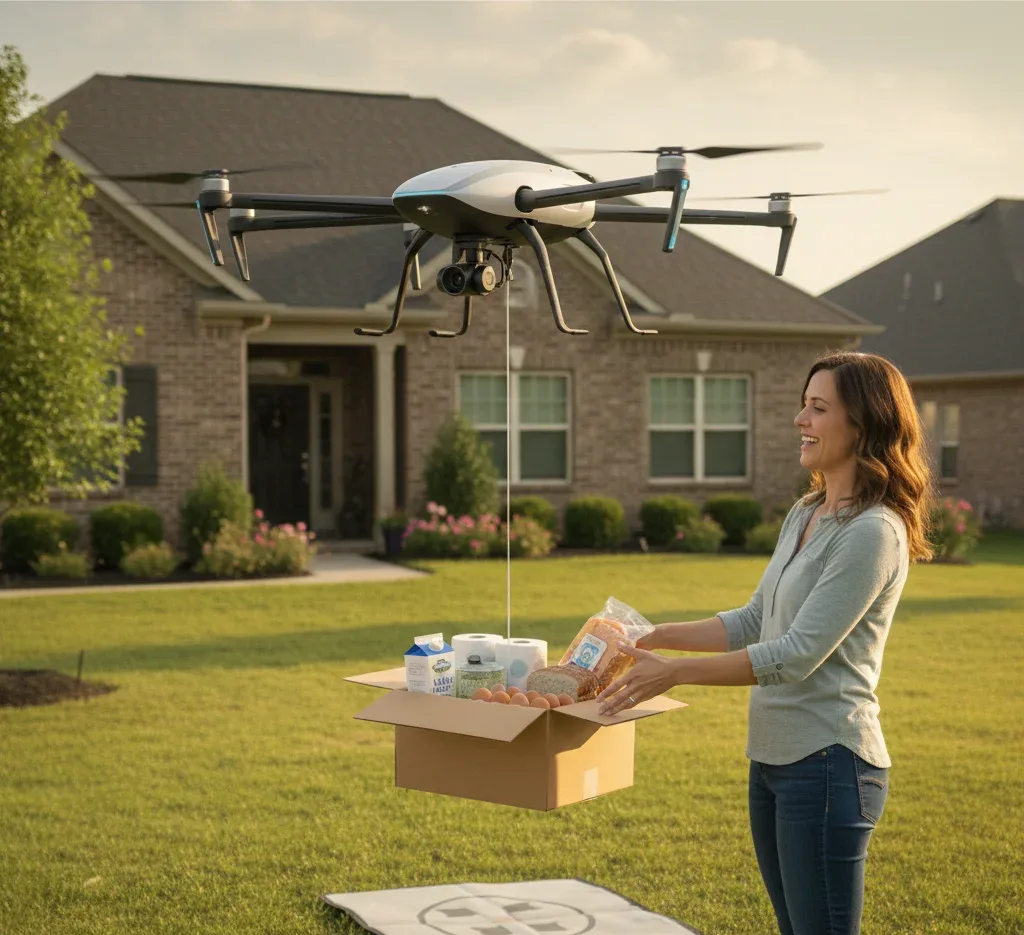
Amazon and Walmart built giant networks to deliver next day boxes. Wing to expand drone delivery pushes even faster windows. A customer can see groceries arrive in less than half an hour. Very little waste takes place. Little fuel burns. Even weather risks can be managed through predictive routing and regional backup fleets.
Wing also receives free marketing because drones get attention. People step outside and watch the device land. Neighbors see how quick it moves. Curiosity turns into first trial and eventually recurring orders. Rivera admitted that most growth comes from people trying the service and repeating. Three weekly orders for one customer may sound small but multiplied across thousands it becomes meaningful.
Wing to expand drone delivery allows Walmart to intercept that moment and avoid losing small purchases to convenience stores or gasoline stations. Once Walmart captures those visits digitally the app becomes habit and loyalty rises. That trend can fuel growth far outside this early phase.
There is risk. Drone fleets require local acceptance. Noise and privacy concerns may appear in neighborhoods. Weather disruptions may spoil reliability. And any incident involving a crash will raise questions. Wing has prepared for these limits through repeated test flights and controlled rollouts. But the true test begins once two hundred seventy stores go live and millions of missions follow.
Still Rivera expressed excitement. Volume powers the business. The quote reveals a core truth. Drone logistics cannot stay small. Either the network grows boldly or it stagnates. Wing chose growth.
Wing to expand drone delivery signals a turning point
Wing to expand drone delivery marks a moment where aerial fulfillment transitions from trial to strategy. Walmart sees customer appetite. Wing sees technical readiness. Together they create a market template that rivals must respect.
Target might explore similar moves. Kroger and Costco may consider drone partnerships. Amazon currently tests aerial programs but lacks Walmart’s store density in suburban communities. Every step Wing takes may influence the future plans of these competitors.
At Squaredtech we will follow Wing closely because the implications extend far beyond groceries. If Wing can carry meals tools first aid supplies or parts for home repair it may reinvent retail. A service that drops a needed item within minutes changes decision making for millions of households.
Wing to expand drone delivery therefore matters for consumers investors technologists and regulators. This move shares a message. Retail is now a race for speed and proximity. Wing places Alphabet near the finish line. Walmart controls real estate close to the customer. Together they form a powerful combination that could shape the next chapter of American shopping.
If more markets adopt this habit the drone may become the familiar sight above rooftops everywhere. We will continue tracking progress and analyzing how this shift affects shopping behavior supply chain design and consumer expectations.
Stay Updated: Tech News

