Table of Contents
Compact Design With Flagship Internals
Xiaomi’s decision to take the Black Shark Gaming Tablet global is a calculated attempt to extend its gaming hardware footprint beyond China. The device is now sold worldwide through the official Black Shark store on AliExpress, with shipments to the United States included. That matters because compact Android gaming tablets remain a fairly narrow category: most tablets are designed first for video, browsing, reading, or work, while dedicated gaming hardware often moves in the opposite direction and prioritises physical controls or a console-like design.
The Black Shark Gaming Tablet sits between those approaches. It is still recognisably a tablet, but its appeal depends on treating portability as a performance feature rather than a compromise. An 8.8 inch screen is easier to carry than the larger displays that dominate premium Android tablets, while still offering more room than a phone for games with busy interfaces, on-screen controls, or split-screen multitasking. Xiaomi is not presenting this as a general purpose media slate first. The global release positions it as a premium portable gaming device.
That framing follows a quiet listing earlier this month that confirmed the specifications but left pricing and availability unclear. The formal global sales push fills in the practical part of the story: buyers now know where the tablet is being sold, where it can be shipped, and what the single global configuration costs in several markets. For a product aimed at enthusiasts, those details are often as important as the chipset. A gaming tablet can have the right hardware on paper, but its reach is limited if prospective buyers cannot easily order it.
The Black Shark Gaming Tablet uses an 8.8 inch display with a 2,560 x 1,600 resolution and a 144 Hz refresh rate. The specification mix is central to its pitch. Resolution affects the clarity of text, game assets, and menus, while a high refresh rate can make motion appear smoother when a game can take advantage of it. Competitive mobile games are the obvious use case, but the benefit is broader than that: fast scrolling, animation, and responsive-looking interfaces are part of what makes a device feel quick in daily use.
There is a useful distinction here between a high-refresh display and guaranteed high frame rates in every game. The display gives the tablet room to show smoother motion; the actual result still depends on the game, its settings, and how it uses the available hardware. Xiaomi has at least paired the panel with a processor that belongs in a performance-focused product. The tablet runs on the Snapdragon 8s Gen 3 chipset, the same processor found in devices such as the Xiaomi Pad 7 Pro. That chip offers strong CPU and GPU performance for high frame rate gaming and multitasking.
The rest of the hardware avoids an obvious weak link. Xiaomi pairs the processor with LPDDR5X RAM and UFS 4.0 storage, standards intended to move data quickly and reduce the wait around app loading, game launches, and switching between tasks. The global configuration includes 12 GB of RAM and 256 GB of storage. For a gaming device, that balance is sensible: modern games can take up substantial space, and a tablet meant to handle demanding titles also needs enough memory to keep background activity from becoming an immediate annoyance.
The microSD card slot is particularly notable. Expandable storage has become less common in premium tablets, where buyers are often pushed toward fixed storage tiers from the start. Here, the slot gives owners a more flexible route to carrying a larger game library or storing media without treating the internal 256 GB as a hard ceiling. It does not change the fact that Xiaomi offers only one global configuration at launch, but it softens the limitation and makes the device more practical for people who expect their storage needs to grow over time.
Battery capacity reaches 7,300 mAh and charging is rated at 20 W. Those figures should be read in the context of the tablet’s intended use: gaming places a sustained demand on the display and processor, so battery capacity matters more than it does on a device used mainly for occasional browsing. Charging speed is only one part of the experience, but Xiaomi’s in-box package is a welcome departure from the stripped-down accessory bundles that have become common at the higher end of the market. The charger, cable, protective case, and ejector tool are all included. That reduces additional accessory costs and makes the tablet ready to use without immediately asking buyers to source basics separately.
Pricing Strategy and Market Impact
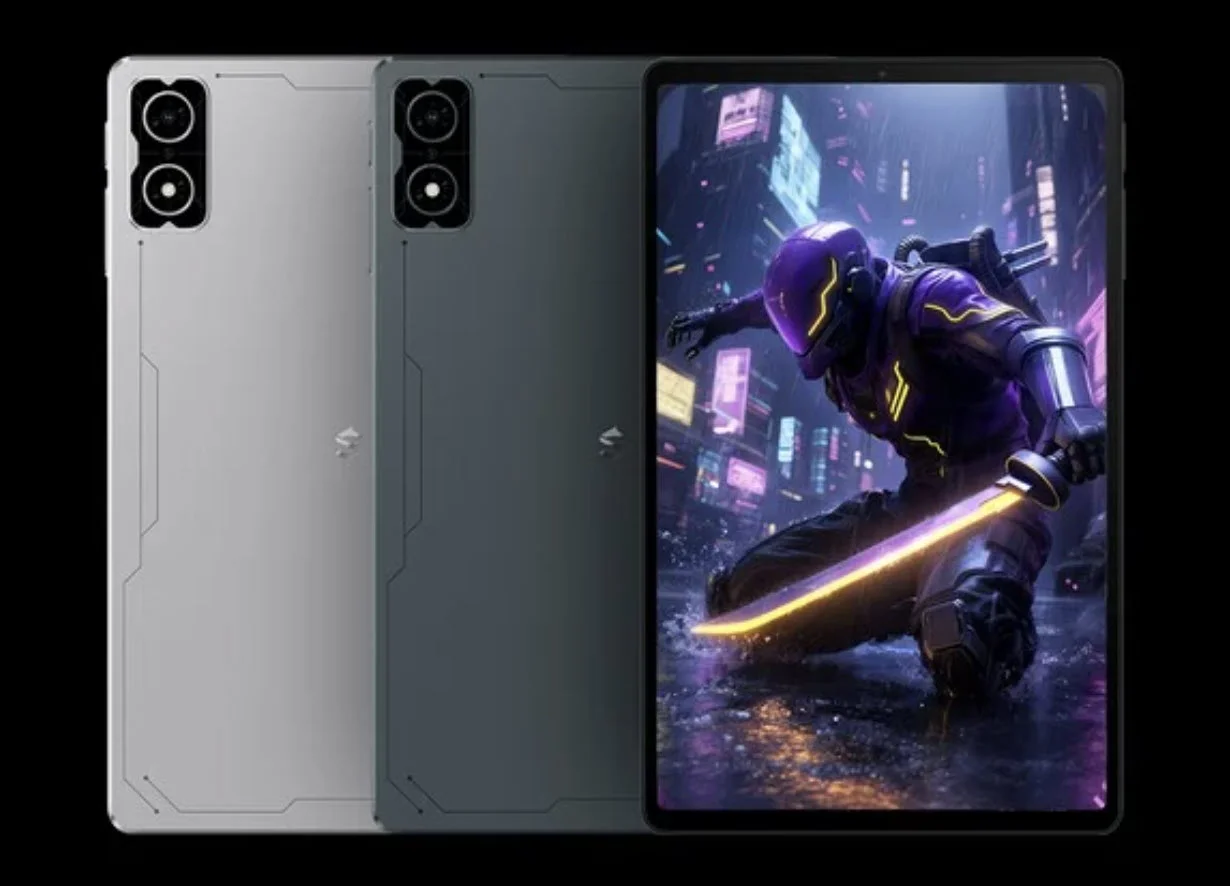
The Black Shark Gaming Tablet launches at 670.97 dollars including import charges for US buyers. In the United Kingdom, the same configuration costs 558.59 pounds, while Eurozone pricing reaches 635.69 euros. Xiaomi offers black and silver colour options, keeping the lineup simple at launch. The pricing puts the device in direct competition with higher end Android tablets and some entry level gaming laptops, which is where the product has to make its case on focus rather than sheer category breadth.
A larger tablet may offer more screen space for work or streaming. A gaming laptop may offer a different type of flexibility altogether. Xiaomi’s answer is neither of those things: it is a compact device built around an unusually fast display, a strong mobile chipset, expandable storage, and a package that includes the essentials. Buyers are paying for a particular balance of size and capability. That is a defensible niche, but it is still a niche, especially at prices where consumers have plenty of alternatives.
The near term outlook depends on demand for compact gaming tablets. Most recent tablet releases emphasise larger displays for productivity and streaming, often treating gaming as one feature among many. Xiaomi is taking the opposite path by making portability and high refresh rate performance the core of the argument. If gamers respond positively, other brands may revisit smaller premium tablets with flagship chips. If they do not, the category may remain a specialist corner of Android hardware rather than a broader trend.
At SquaredTech.co, we expect Xiaomi to monitor sales closely before expanding storage variants or introducing regional price adjustments. The Black Shark Gaming Tablet does not need to replace a work tablet or a laptop to justify its existence. It needs to convince players that a compact screen, capable internals, and fewer accessory purchases offer a better portable gaming proposition than the usual larger-tablet formula. Its global availability gives Xiaomi the chance to test that argument well beyond China.
Stay Updated: Gadgets