Table of Contents
We regularly track data breaches and security failures. This newly uncovered exposure stands out due to its scale, content depth, and the risks it creates for everyday users and institutions alike. A publicly accessible database containing 149M logins and passwords exposed online was discovered by cybersecurity researcher Jeremiah Fowler. The dataset held nearly 96 GB of raw credential data and lacked any form of encryption or access protection.
The exposed records included email addresses, usernames, passwords, and direct login URLs tied to widely used services. This incident highlights how credential theft continues to grow as a silent threat that affects individuals, businesses, and public sector systems.
149M Logins and Passwords Exposed Online Reveal Scope of Infostealer Activity
The database contained 149,404,754 unique login records collected from victims worldwide. Fowler confirmed that the exposed data appeared to originate from infostealer malware and keylogging tools that operate silently on infected devices. These tools collect credentials and send them to cloud based storage systems controlled by attackers.
In this case, the database remained open to the public. Anyone who discovered it could have accessed the full dataset. The records covered nearly every type of online account imaginable. Social media platforms such as Facebook, Instagram, TikTok, X, and dating services appeared frequently. Entertainment and gaming accounts such as Netflix, Disney Plus, Roblox, and HBO Max were also present.
Financial exposure added serious weight to the discovery. Fowler identified banking logins, credit card portals, crypto wallets, and trading accounts. The dataset even included credentials tied to OnlyFans creators and subscribers. Each record also listed the exact login page URL, which makes automated attacks easier to execute.
Government related accounts raised additional concerns. The presence of credentials linked to dot gov domains across several countries creates potential risks tied to impersonation, targeted phishing, and unauthorized access attempts. Even limited access accounts can create serious problems if attackers exploit them with precision.
How the Database Was Found and Why the Exposure Lasted So Long
Fowler reported the unsecured database directly to the hosting provider through an abuse reporting channel. The response process took several weeks. The provider initially claimed it did not host the IP address and cited a subsidiary operation. During this delay, the number of exposed records continued to grow.
Action was eventually taken and public access was removed. The hosting provider did not disclose ownership details, usage intent, or how long the database had been exposed before discovery. It remains unknown whether the data supported criminal activity or research collection. What remains clear is that this open access created a high risk window for abuse.
A breakdown of email providers showed the scale of exposure. Gmail accounted for roughly 48 million records. Yahoo, Outlook, iCloud, and education domains followed. Popular platforms such as Facebook, Instagram, Netflix, Binance, and OnlyFans also appeared in large volumes.
The database used a reversed host path format to organize stolen credentials. This structure helps attackers index victims and sources while reducing detection from simple monitoring tools. Each record used a unique hash identifier, which prevented duplicate entries and confirmed the dataset was actively maintained.
What 149M Logins and Passwords Exposed Online Means for Users

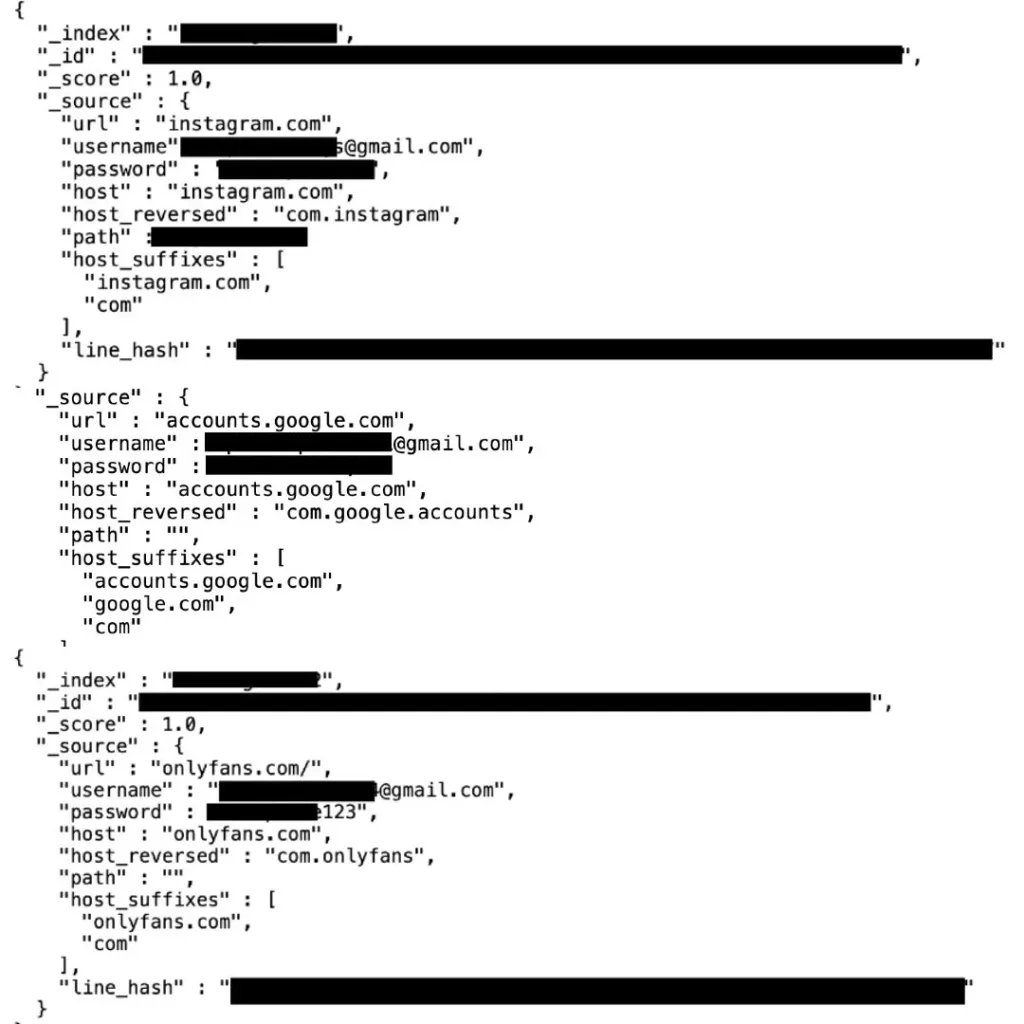
This image shows screenshots of accounts and credentials including Instagram, Google accounts, and OnlyFans.
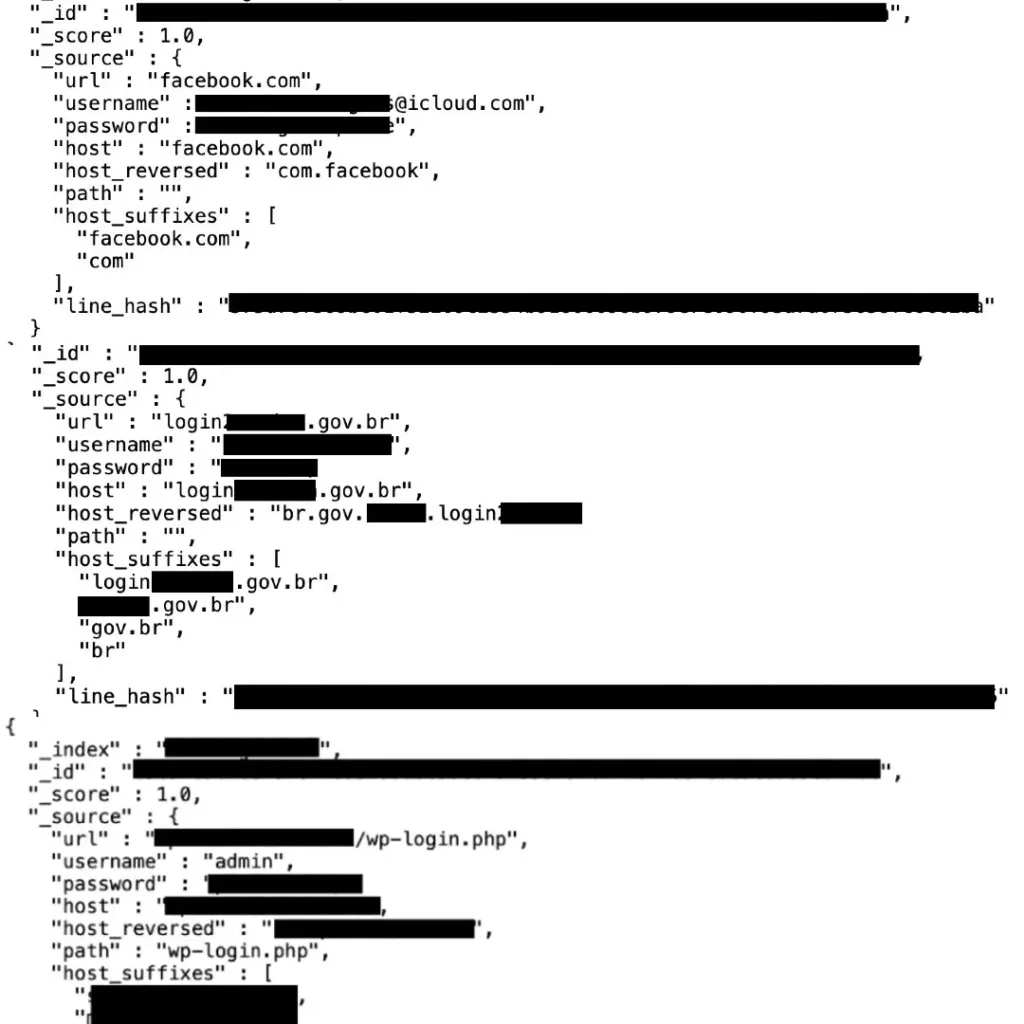
This image shows screenshots of accounts and credentials including Facebook, a government account from Brazil, and a WordPress administrative login.
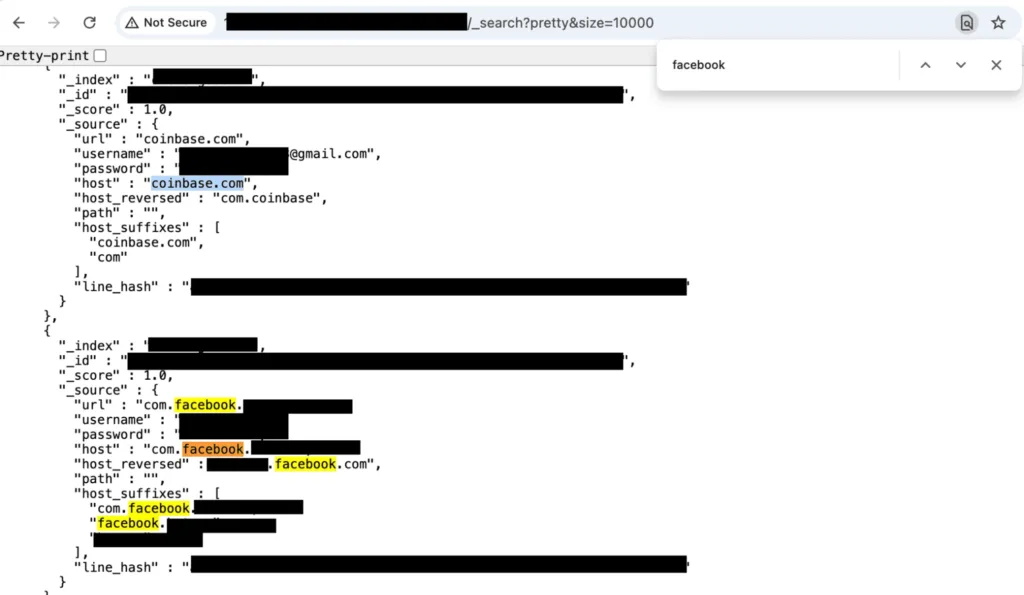
This screenshot shows how the index was searchable using nothing more than a web browser.
The exposure of 149M logins and passwords exposed online creates immediate and long term risks. Criminals can automate credential stuffing attacks across email platforms, financial services, social networks, and enterprise systems. Because the dataset includes correct login URLs, attackers can scale attacks with speed and accuracy.
Identity theft, financial fraud, and account takeovers become more likely when users reuse passwords. Email accounts remain a primary target because they often act as recovery hubs for other services. Once an attacker gains access to email, they can reset passwords across multiple platforms.
Malware distribution remains the primary source of these stolen credentials. Infected devices capture keystrokes, clipboard data, browser memory, session tokens, and form submissions. Changing passwords alone does not fix the problem if malware remains active. Security software plays a critical role. Studies show that a significant portion of users still operate devices without antivirus protection. This leaves systems exposed to silent credential harvesting for extended periods. Password managers offer partial protection.
They reduce password reuse and limit exposure to basic keyloggers. However, advanced malware can still extract session data and memory content. Password managers work best alongside updated operating systems, endpoint security tools, and regular device reviews.Privacy risks extend beyond financial loss. Exposed credentials allow criminals to build detailed profiles based on services used, affiliations, and communication history. Access to dating accounts, private images, or messages can lead to harassment or extortion years after the initial breach.
After any exposure event, users should review account activity, enable multi factor authentication, and avoid password reuse. These steps do not eliminate risk but reduce the chance of full account compromise. , This incident reinforces a familiar pattern. Criminal operations often prioritize speed over security. Misconfigured cloud storage remains common, even within illegal operations. Once exposed, such datasets often spread quickly across underground channels.
The discovery of 149M logins and passwords exposed online serves as another reminder that credential theft operates at industrial scale. Defensive habits such as security software, unique passwords, authentication layers, and regular system checks remain essential. Hosting providers also carry responsibility. Abuse reports require timely human review to prevent prolonged exposure.
This case stands as a warning for users and infrastructure providers alike. Data protection failures do not always begin with large companies. Sometimes, they begin with unsecured systems that remain invisible until someone looks closely enough.
Stay Updated: Tech News