
Bitcoin wrapped up last week on a quietly optimistic note, tagging $63,960 — its highest print since June 23 — as the weekly candle closed. But for anyone hoping that signals a clean trend reversal, the latest Bitcoin price analysis from traders and macro strategists tells a more complicated story. The real test, most agree, lies lower: specifically in a $500-wide price band that one prominent trader is already calling the most important support zone in the market right now.
- Bitcoin price analysis puts the $60,400–$60,900 range as the most critical support zone to hold heading into this week.
- This Bitcoin price analysis comes as retail risk appetite in US options markets hits all-time highs, a potential tailwind for BTC.
- Crypto market sentiment has climbed to monthly highs, sitting on the edge of exiting ‘extreme fear’ territory.
- Bitwise’s European research head says crypto may have already priced in a stock market correction and potential US recession.
Table of Contents
Why $60,400 Is the Number Everyone’s Watching
That zone sits between $60,400 and $60,900. Trader Killa, who has been vocal on X about BTC’s structural risks, put it plainly to his followers: ‘If we cannot hold this price region on a revisit, I’m afraid we are going to trend directly to the lows again.’ It’s a blunt warning, and it captures something real about where Bitcoin’s order book looks thin. Any thorough Bitcoin price analysis has to start with whether this zone holds.
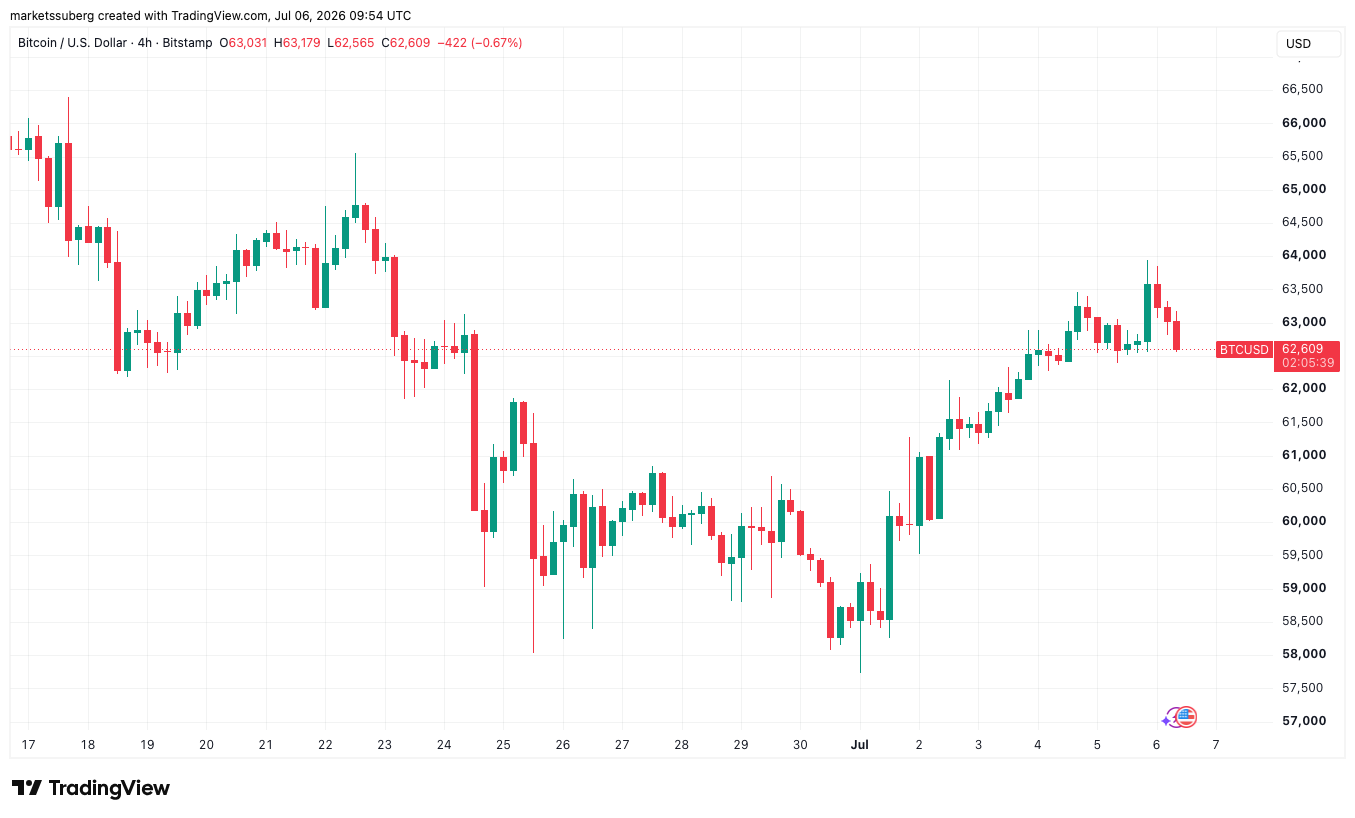
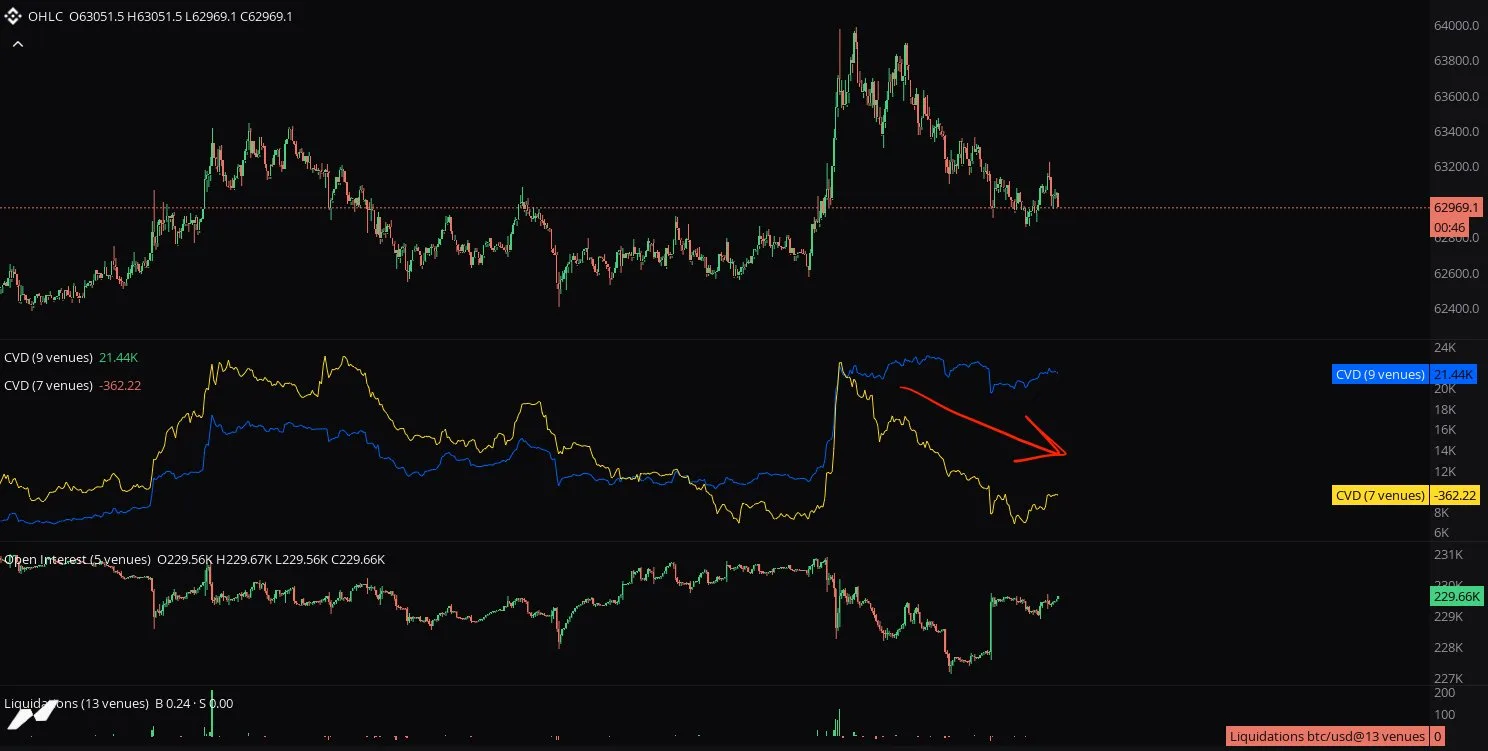
Part of what’s making this week’s Bitcoin price analysis tricky is the question of who’s actually moving price. X account Exitpump flagged ‘aggressive selling from spot markets’ over the weekend, pointing to spot cumulative volume delta trending downward while perpetual futures CVD stayed flat. That divergence — spot sellers dominating while futures traders sit still — is a classic sign of liquidity hunting rather than genuine directional conviction. In plain English: someone’s pushing price around to trigger stop orders, not necessarily because they have a strong view on where BTC is heading.
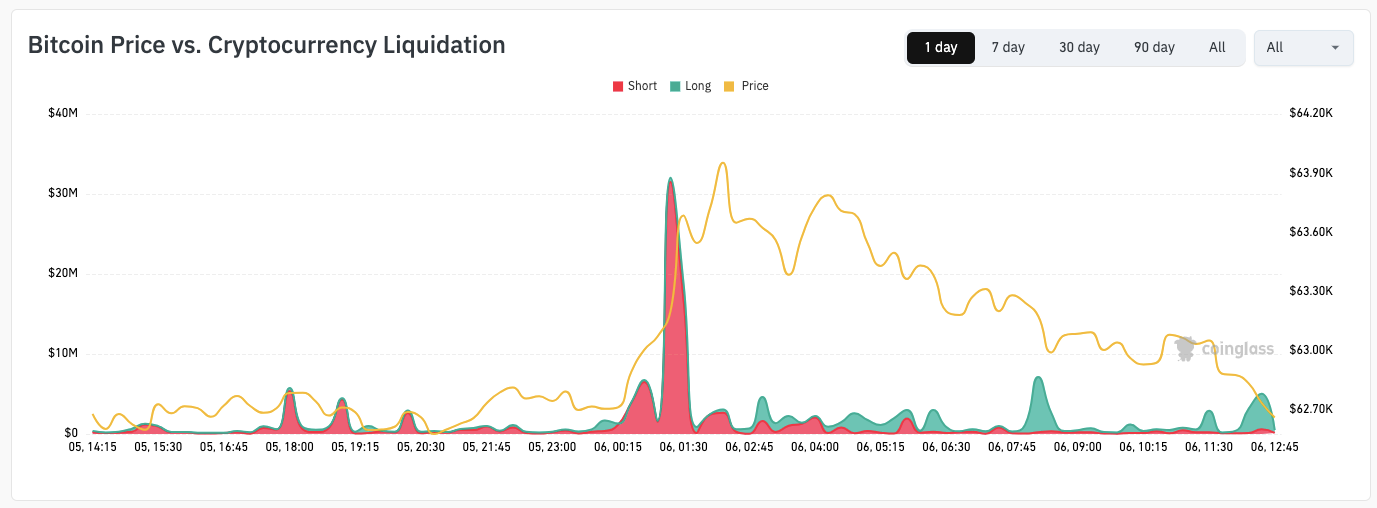
Short liquidations for the 24-hour window around the weekly close came in just above $100 million across the broader crypto market, according to CoinGlass data. That’s meaningful but not extreme by 2024 standards — for context, the market saw single-day liquidation events north of $500 million during the more volatile stretches of Q1. So the pressure is real, but it’s not yet the kind of capitulation that tends to mark genuine bottoms. A comprehensive Bitcoin price analysis of liquidation data suggests we’re not there yet.
Trader Roman, who spent much of the past few months in the bearish camp on BTC/USD, struck a more constructive tone this week on longer timeframes. ‘Still looking excellent to continue our reversal to see higher prices in the interim,’ he wrote on X, though he was careful to add: ‘I still have a feeling we put in one more macro low before the bottom is officially in, but there are dozens of macro reversal signs all over HTF.’ That’s a useful framing — cautiously bullish on near-term price action, still unconvinced that the cycle low is behind us.
Bitcoin Price Analysis and the Macro Backdrop: Retail Risk Appetite at Record Highs
Whatever happens at the chart level, the macro environment heading into this week is worth taking seriously. US stock futures opened higher after the holiday weekend, with Nasdaq 100 futures adding around 1%. More striking is what’s happening with retail investor behaviour in the options market. Trading resource The Kobeissi Letter, which tracks positioning data across asset classes, described retail demand for short-term options as being ‘at record levels’ — a characterisation that carries real weight when you’re thinking about broader risk appetite. From a Bitcoin price analysis standpoint, this surge in retail risk-taking is one of the more encouraging macro signals of the week.
For Bitcoin, this creates an interesting tension. Retail has largely exited crypto in 2024 — that’s been well-documented through on-chain metrics and exchange flow data — yet these same retail investors are apparently buying short-term equity options at a pace never seen before. If even a fraction of that risk appetite rotates back toward digital assets, it could provide meaningful demand. The question is whether crypto’s recent underperformance relative to equities is keeping retail on the sidelines, or simply delaying an eventual return.
Mosaic Asset Company’s newsletter, The Market Mosaic, offered a measured take on equities: while the S&P 500 topped in early June without making a new high, the index is ‘trading within a bullish continuation pattern’ and has been finding support at a key technical level. Equally telling is that the equal-weight S&P 500, the Russell 2000 small-cap index, and the NYSE advance/decline line have all been hitting record highs — suggesting the rally has broadened out beyond just mega-cap tech, which is generally a healthier sign for the bull case.
On the monetary policy front, recent US inflation and labour market data have taken some of the edge off hawkish Fed expectations. CME Group’s FedWatch Tool currently prices in the Fed holding rates steady at both the July and September meetings. The Fed will also release minutes from its June meeting this week, alongside PMI data and employment figures — a packed calendar that Kobeissi expects will produce ‘another volatile week ahead as markets brace for earnings season.’ Each of these events feeds directly into any credible Bitcoin price analysis for the days ahead.
Could a Pre-Midterm Correction Hit Stocks — and How Much Does Bitcoin Care?
Not everyone is buying the bull case for equities, and that matters for any honest Bitcoin price analysis right now. Andre Dragosch, European head of research at crypto asset manager Bitwise, raised a pointed question on X this week: ‘What if there is a bigger stock market correction right before the Midterms?’
Dragosch cited data from BCA Research’s MacroQuant Equity Risk Model, which he says is ‘flashing a bear market warning signal.’ The readings, he noted, are comparable to those seen in late 2021 — which, as any crypto observer will remember, coincided with Bitcoin’s previous cycle peak before the brutal 2022 bear market. That’s an uncomfortable parallel to draw.
But here’s where Dragosch’s analysis gets genuinely interesting. Despite that warning, he argues that crypto markets may have already done the heavy lifting of pricing in the downside. In a detailed X post, he reasoned that even in a scenario where an AI-sector crash triggers a broader US recession, ‘much of that pain appears to be already reflected in Bitcoin prices, which points to reduced downside from here.’ On a relative basis, he gives Bitcoin ‘a decent chance’ of outperforming the Nasdaq over the coming months — a view that would have seemed contrarian even a few weeks ago.
It’s a thesis worth sitting with. The idea isn’t that Bitcoin is immune to macro stress — it clearly isn’t — but that the asset may have front-run the fear cycle that equities haven’t fully worked through yet. BTC dropped from above $73,000 in March to the high-$50,000s in recent weeks, a drawdown of roughly 25%. The Nasdaq, by contrast, has barely blinked. If stocks do eventually reprice downward, this dimension of the Bitcoin price analysis — relative drawdown versus equities — could look very different on the other side of that move.
Sentiment and On-Chain Data: Is the Panic Fading?
Beyond price levels and macro positioning, the internal health of the crypto market is showing some tentative green shoots. Exchange inflow data — which measures how much Bitcoin is being sent to trading platforms, often a signal of intent to sell — is showing a cooling trend for both retail wallets and large whale addresses. Lower inflows typically indicate that holders are choosing to sit tight rather than rush to exit, which reduces near-term sell pressure. This on-chain cooling is a key input for any forward-looking Bitcoin price analysis.
Crypto market sentiment indices have also climbed to their highest readings in a month, sitting right on the boundary of exiting ‘extreme fear’ territory. That’s not euphoria — not even close — but it does suggest the capitulation psychology that dominated sentiment in late June is starting to ease. Markets tend to be forward-looking, and when fear readings are this elevated, the asymmetry often favours the upside simply because so much negativity is already baked in.
Bulls, though, still need to do more work. The clearest signal that the trend has genuinely shifted would be a sustained close above $65,000 — a level BTC has failed to reclaim convincingly since its March all-time high run. Until that happens, the path of least resistance is sideways-to-lower, with $60,400 as the critical line Killa and others will be watching. Break that, and the Bitcoin price analysis conversation changes quickly. Hold it, and Bitcoin might just be building the base that longer-timeframe traders have been waiting for.
Frequently Asked Questions
What does the latest Bitcoin price analysis say about the $60,400 level?
Traders consider $60,400–$60,900 the most critical support zone for Bitcoin right now. If BTC revisits this range and fails to hold it, analysts warn the price could trend directly back toward its recent lows, making it the key line in the sand this week.
How does Federal Reserve policy affect Bitcoin’s price outlook?
Markets currently expect the Fed to hold interest rates steady in both July and September, according to CME Group’s FedWatch Tool. Stable or falling rates tend to support risk assets like Bitcoin by reducing the appeal of cash and bonds relative to higher-risk investments.
Has crypto market sentiment improved recently?
Yes. Crypto market sentiment has risen to its highest levels in a month and is on the verge of exiting the ‘extreme fear’ category. Alongside cooling exchange inflows from both retail and whale investors, this suggests panic selling may be subsiding.
Could a US stock market correction drag Bitcoin lower?
Bitwise’s Andre Dragosch argues that much of the potential downside from a stock market correction or US recession may already be reflected in Bitcoin’s price. He gives BTC a ‘decent chance’ of outperforming the Nasdaq on a relative basis over the coming months.