

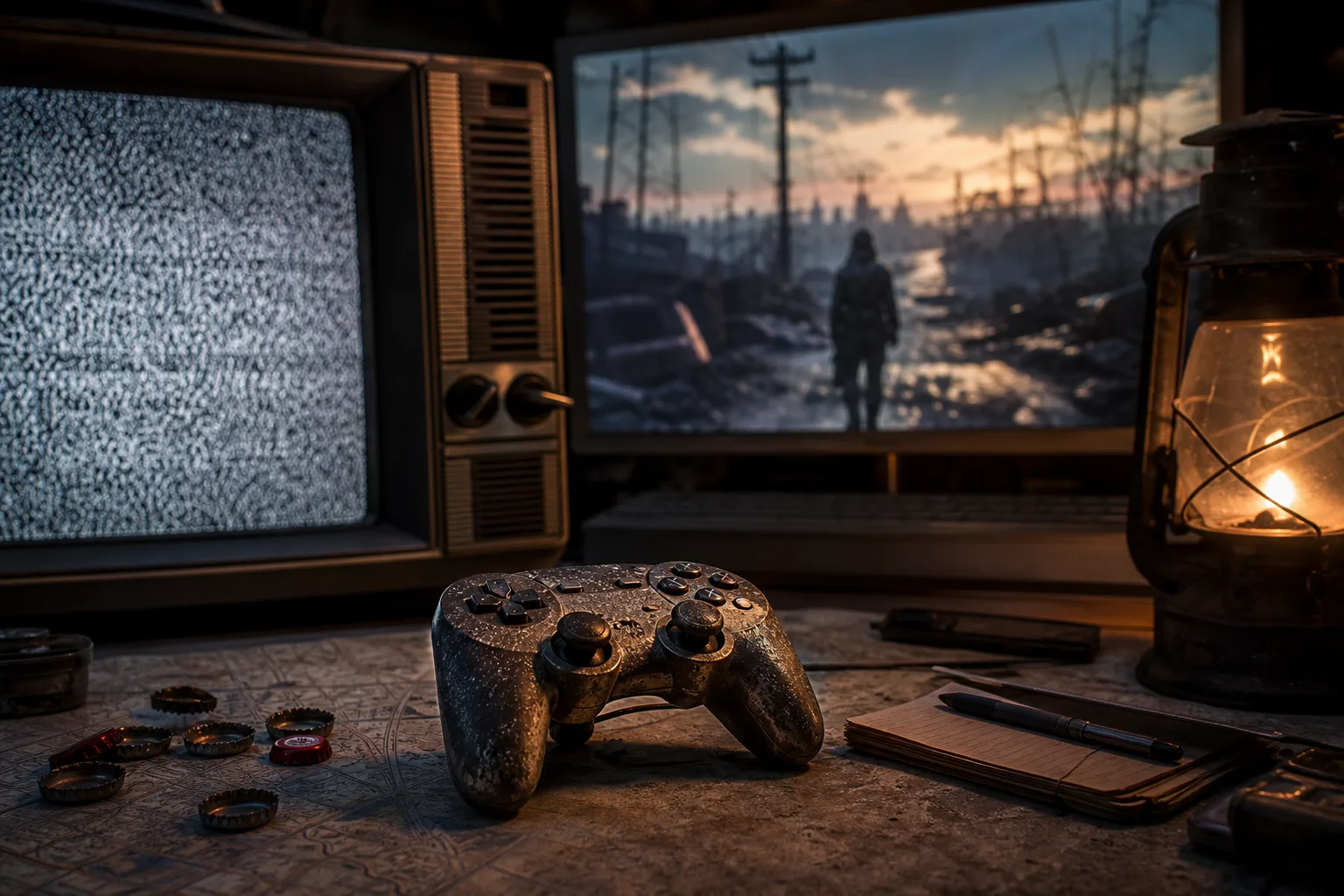
- Fallout 5 has entered preproduction, though Bethesda says its next mainline wasteland adventure remains a long-range project.
- The Fallout 5 announcement arrives as Xbox plans roughly 3,200 layoffs and trims teams across its game-development organization.
- Bethesda also confirmed Fallout 3 and New Vegas remasters, plus another Fallout project being developed at Obsidian.
- The Elder Scrolls VI remains Bethesda’s primary production focus, leaving fans facing a very long wait for its next major RPGs.
Table of Contents
Fallout 5 is real, but it is nowhere near close
Fallout 5 is officially part of Bethesda Game Studios’ future. That’s the good news for anyone who has spent the last decade wandering Fallout 4’s Commonwealth, tolerating Fallout 76’s early turbulence, or wondering whether Amazon’s TV hit might be the closest thing the series gets to a new chapter for years.
The catch is substantial: Bethesda director Todd Howard has described the next numbered Fallout as a ‘long-range destination’ that is still in preproduction. In plain English, don’t start clearing space on your console. Bethesda’s major single-player RPGs take years to build, and the studio has made clear that The Elder Scrolls VI, first announced in 2018, is its central development priority.
Howard said Bethesda is ‘investing more deeply in the worlds players love’ and wants to get games to players sooner, support them longer, and keep building alongside communities for decades. That is an appealing pitch. It also lands at a distinctly uncomfortable moment, after Microsoft’s gaming division began a broad reset expected to eliminate around 3,200 jobs over the next year.
So the Fallout 5 news deserves to be read two ways at once. It is a genuine confirmation of a project fans have wanted for more than ten years. It is also Microsoft showing investors, players, and nervous employees that the expensive Bethesda acquisition still has a plan.
Bethesda’s own official channels have long treated Fallout as one of its defining properties. That was never in doubt. What had become less clear was whether the company could make room for another enormous single-player Fallout while maintaining Starfield, expanding Fallout 76, finishing Elder Scrolls VI, and operating inside a Microsoft organization now demanding sharper financial discipline.
Why the Fallout 5 announcement feels like damage control
Microsoft bought Bethesda parent ZeniMax Media for $7.5 billion in 2021, a price that made sense only if franchises such as Fallout, The Elder Scrolls, Doom, and Starfield could become reliable pillars of Xbox’s future. Four years later, that investment is being judged in a harsher climate. Growth has slowed, subscription economics remain messy, and the games business is in the middle of a brutal contraction.
Xbox chief Asha Sharma has said the company wants to put more attention on its biggest franchises and ultimately reach more than one billion people daily. Frankly, that ambition sounds more like a corporate aspiration than an operating plan. But the direction is unmistakable: fewer bets, larger brands, longer tails. Fallout 5 fits that model almost perfectly, especially after the television show gave the franchise a fresh mainstream audience.
The timing, though, makes the announcement hard to separate from the layoffs. Bethesda itself was affected, while cuts have also reached teams connected to studios players care deeply about, including id Software and Obsidian Entertainment. ZeniMax workers rallied in Maryland this week to protest the reductions. Announcing beloved projects during that backdrop may reassure consumers, but it cannot erase the contradiction for the people being asked to build them.
We have seen this pattern before: a publisher cuts costs, then points to a familiar logo as proof that the future is secure. Sometimes it works. Sometimes it produces the kind of cautious, over-managed sequel pipeline that turns once-distinct studios into content factories. My read is that Microsoft has not earned the benefit of the doubt yet.
Obsidian’s return changes the Fallout conversation
The more intriguing part of Bethesda’s update may not be Fallout 5 at all. Howard also said Obsidian Entertainment is making a new Fallout game, with more details promised later. Obsidian developed 2010’s Fallout: New Vegas, still the series’ cult favorite for many players because of its dense role-playing systems, sharp writing, and willingness to let a player’s choices create real consequences.
That does not mean Obsidian is simply making New Vegas 2. It would be foolish to assume that from one tease. But putting an Obsidian-made Fallout alongside Bethesda’s eventual numbered entry is a sensible move. It gives Xbox a way to keep the series active without forcing Bethesda to rush its flagship project, and it acknowledges something the company should already know: Fallout can support different tones and creative voices.
Bethesda has also confirmed remasters of Fallout 3 and New Vegas. Those could be straightforward technical refreshes, or they could be more ambitious reworks; there are no release windows or meaningful details yet. Still, the projects are an obvious response to the franchise’s renewed visibility. Fallout’s TV audience is discovering stories from a universe that has decades of history, and Microsoft would be leaving money on the table if those older games remain awkward artifacts of their original hardware eras.
The Elder Scrolls VI is still the bottleneck
Anyone hoping for a near-term Fallout 5 release should look at the order of operations. Howard says Elder Scrolls VI is Bethesda’s ‘primary development focus today,’ with most of the studio working on it. He added that the team is playing the game daily and likes how it looks, but offered no launch date. That is progress in the vaguest possible sense.
Both Elder Scrolls VI and the next Fallout will use the same technology platform, according to Howard. That could reduce some future setup work, but shared tools do not magically make a 100-hour open-world RPG quick to produce. Ask anyone who watched the gap between Skyrim and Starfield stretch into more than a decade. Big Bethesda games are less like annual movie sequels and more like renovating a house while people are still living in it.
Starfield, meanwhile, ‘remains an important part’ of Bethesda’s future. That wording is deliberately broad, and it should be. The space RPG has committed players and a capable modding community, but it has not become the cultural phenomenon Skyrim did. Microsoft needs it to be a durable platform without pretending every major Bethesda release will automatically capture the same audience.
Microsoft is betting on a wasteland that can last
The sprawling roadmap has one clear advantage. A smaller Fallout project from Obsidian, modern versions of Fallout 3 and New Vegas, ongoing Fallout 76 support, the TV series, and eventually Fallout 5 could give Microsoft a steadier rhythm than waiting a decade between Bethesda blockbusters. That is a far smarter use of the brand than treating every game as a once-in-a-generation event.
But brands are not self-sustaining. They need studios with enough time, staff, and creative confidence to make something players actually remember. Microsoft can announce all the familiar names it wants. The real test is whether its reset leaves the teams behind those names stronger, or merely leaner. Fallout has survived nuclear war, corporate satire, and a famously rocky online launch. Xbox’s management strategy may prove to be its next endurance test.

