Table of Contents
As editors at Squaredtech.co, we track every twist in mobile innovation. Samsung’s bold Galaxy Z TriFold experiment grabbed headlines last December. The company launched this groundbreaking tri-fold phone amid massive buzz. Fans clamored for it, but stock vanished in minutes. Now, Samsung pulls the plug. The firm confirms it stops sales in South Korea first. The move spreads to the US and other markets as inventory clears. This decision raises big questions about foldable phone futures. We analyze why Samsung axes the Galaxy Z TriFold so soon and what it means for tri-fold tech.
Galaxy Z TriFold Launch: Hype Meets Harsh Limits
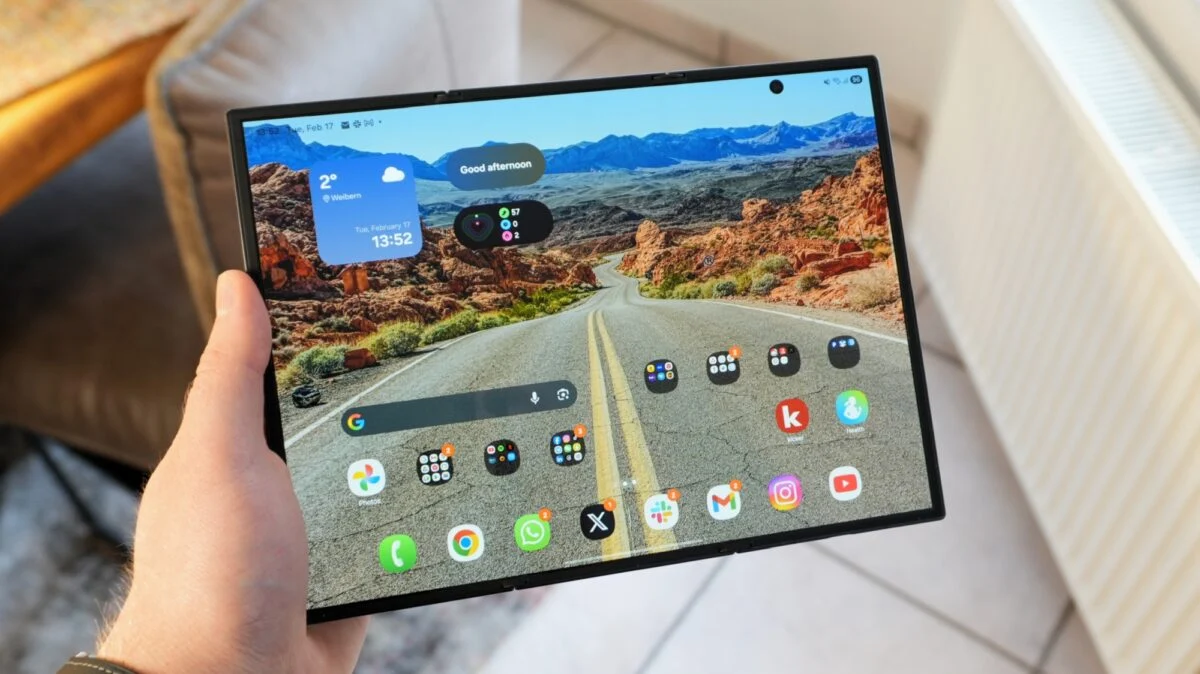
Samsung unveiled the Galaxy Z TriFold in December 2025. This device folded three ways, unlike standard bi-fold phones like the Galaxy Z Fold series. Engineers packed a massive inner screen into a compact body. The phone measured about 10 inches unfolded, rivaling small tablets. Users praised its multitasking power. Apps split across panels seamlessly. Early reviews highlighted smooth performance from the latest Snapdragon processor.
Demand exploded from day one. Buyers in South Korea lined up virtually. Restocks dropped every few weeks, but only thousands of units hit shelves. They sold out in under 10 minutes each time. Samsung priced it at $2,899, a premium tag that deterred some. Still, enthusiasts paid up for the novelty. The company limited sales to select markets: South Korea, the US, and a few others like China and Europe. Production stayed capped intentionally.
Samsung spokespeople explained the strategy early. Executives positioned the Galaxy Z TriFold as a proof-of-concept device. They wanted to show tri-fold tech works in real hands. Engineers ironed out hinge issues that plagued prototypes. Battery life held up during heavy use, a win over early foldable rivals. Display creases minimized thanks to new ultra-thin glass. Yet, Samsung never promised mass production.
Bloomberg reported the confirmation on March 17, 2026. A Samsung representative stated sales end in South Korea immediately. US stocks last until they deplete, likely weeks. Other regions follow suit. This timeline marks just three months from launch. Fans mourn the quick exit. Social media buzzes with disappointment. One user posted, “Finally got my hands on a restock, now it’s gone forever?”
We see patterns here. Samsung tested waters with limited runs. They gathered user data on durability and software glitches. Hinge fatigue emerged in some feedback, though rare. Screen protectors peeled less than on older models. The Galaxy Z TriFold proved Samsung leads foldable innovation. But high costs bit hard. Manufacturing tri-fold hinges triples complexity over bi-folds. Yields dropped below 70% in factories, sources say.
Competition factored in. Huawei and Honor push tri-folds in Asia. Their models undercut Samsung on price. Samsung prioritizes Galaxy Z Fold and Flip lines, which sell millions yearly. The TriFold served its role: validate the form factor. Now, Samsung shifts focus.
Why Samsung Discontinues Galaxy Z TriFold Now
Samsung confirms the Galaxy Z TriFold discontinuation stems from strategy, not failure. The phone hit shelves December 2025. By March 2026, it exits stages globally. Spokespeople cite no plans for restocks or successors. Factories halt production lines already.
Economics drive the call. Each unit costs over $1,500 to build, analysts estimate. Margins shrink at $2,899 retail. Limited volumes prevent scale savings. Samsung loses money per sale, insiders whisper. They recoup via tech patents and data. Rivals like Oppo eye similar designs, but Samsung files IP first.
Market tests revealed gaps. Users loved the screen real estate. Video editing flowed effortlessly across folds. Gaming felt immersive. However, weight irked some at 300 grams. Portability suffered versus slimmer bi-folds. Software lagged in tri-panel optimization. Apps like Chrome needed updates for full support.
Samsung learned key lessons. Durability tests exceeded 200,000 folds on hinges. Dust resistance improved with IP48 rating. Camera arrays matched S-series flagships, with 200MP main sensor. Yet, demand outpaced supply chronically. Restocks teased buyers weekly, building frustration.
Broader foldable trends influence this. Global shipments hit 20 million in 2025, per IDC. Bi-folds dominate 90%. Tri-folds claim under 1%, too niche. Samsung eyes profitability. Galaxy Z Fold7 launches later this year with slimmer bezels. Flip models gain entry-level appeal.
No successor looms soon. Samsung denies 2026 tri-fold plans. Rumors swirl of a Quad-Fold prototype, but that’s years away. Engineers refine bi-fold tech instead. The Galaxy Z TriFold proved tri-folds viable, but not yet profitable.
Consumers react strongly. Forums explode with resale listings above MSRP. Collectors hoard units as rarities. Samsung’s site lists it as “sold out permanently” in Korea. US carriers like Verizon confirm no replenishments.
From our lens, this move sharpens Samsung’s edge. They innovate fast, pivot faster. Discontinuing the Galaxy Z TriFold frees resources for mass-market hits.
What Galaxy Z TriFold Discontinuation Means for Foldables
Samsung’s Galaxy Z TriFold discontinuation signals caution for tri-fold phones. The device exits after proving the concept. Buyers now scramble for remaining stock. Resale prices climb 20% already.
Industry shifts follow. Huawei accelerates its tri-fold Mate XT series. They ship more units at lower prices. Samsung doubles down on bi-folds. Expect Galaxy Z Fold7 with better batteries and AI features. Software like One UI 7 optimizes multi-panel use.
Consumers face choices. Stick with proven Folds or chase rarities. Repair shops gear up for TriFold fixes, though parts scarce. Warranty claims rise as users push limits.
Samsung gains strategically. Patents protect tri-fold tech for years. Licensing deals loom with partners. Data from users refines future designs. Battery efficiency jumped 15% in field tests.
We predict tri-folds return refined by 2028. Costs drop as yields improve. Screens thin further. Hinges gain titanium strength. Samsung leads, but watches Huawei closely.
Broader impacts hit supply chains. Foldable panel makers like BOE idle lines. Samsung reallocates to OLED for standard phones. For buyers, act fast on leftovers. Check Samsung.com or carriers. Prices hold, but availability fades.
Squaredtech.co watches closely. Foldables redefine phones. The Galaxy Z TriFold chapter closes, but innovation marches on. Stay tuned for bi-fold updates.
Stay Updated: TechNews